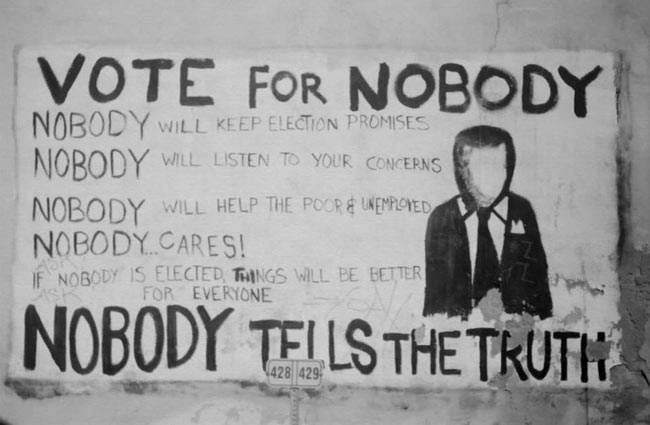
Why I Won’t Vote ~ A SYMPOSIUM #1

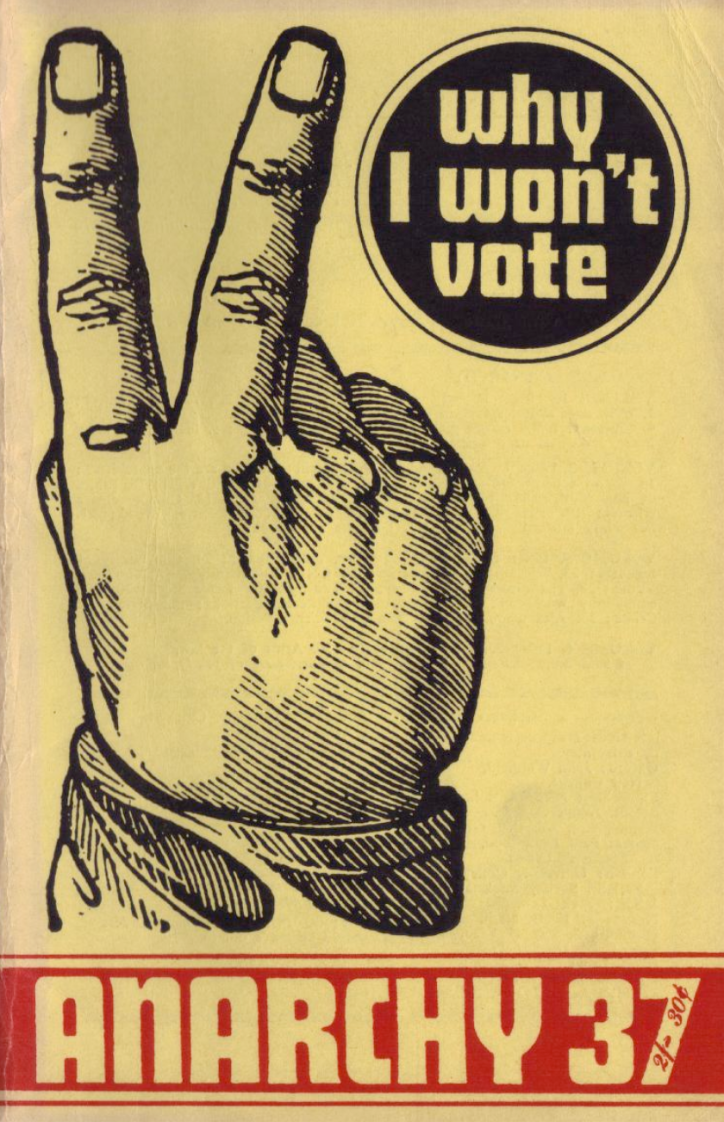
Anarchy 37, March 1964,
Why I Won’t Vote

Voting : “The instrument and symbol of a freeman’s power to make a fool of himself and a wreck of his country”

The saying that ” only a fool would put a loaded gun into the hands of an idiot ” is an especially apt analogy of government. An idiot (usually well-meaning) considers himself clever enough to run the affairs of a large number of people by taking a seat in parliament. A large number of people, acting like fools, vote for his party’s policy then spend the next few years grumbling about the results. The error in approach is that the voter thinks that he will get what he voted for. If he could vote for those who in fact control the country, say the Governors of the Bank of England, the directors of the industrial corporations and those behind the ministries, the illusion of democracy would be more understandable.

The real centres of power lie far beyond the people’s influence at elections. These remain constant whatever Party is ” in power “. In the terms of centralised ” democracy ” the only possible argument to justify voting is that marginal benefits may be gained. The state only incidentally attends to the well-being of its subjects. Its main concern is its power relation to other states, of which the most perfect expression is in war.

I am on the side of people anywhere who are prepared neither to live nor die for something that in the long run can only militate against survival and the conditions that make life worth living. Our immediate action must, by its nature, be to oppose that pathetic gesture, voting. It must be direct and direction. We can learn to live as free men and women only by organising against the condition we are in.

The Tenants Association, Consumers Association, and Direct Action in industry all provide opportunities for people to experience directing their own lives in positive ways towards positive ends.

Only by direct involvement in society can the individual hope to transform himself and his world. Freedom cannot be given, it must be taken; and the free society can only grow from experiments in the problems (ethical and organisational) of community.

Voting does not, and cannot, mean government by consent. By voting, one acts on the assumptions that certain men are fit to govern, and that a majority is necessarily right. Also should the state, acting in the name of a (frequently fictitious) majority, declare war, the individual loses the right to live, if he ever had it.

To me, voting is complicity with the State and a negative action, therefore I do not vote.

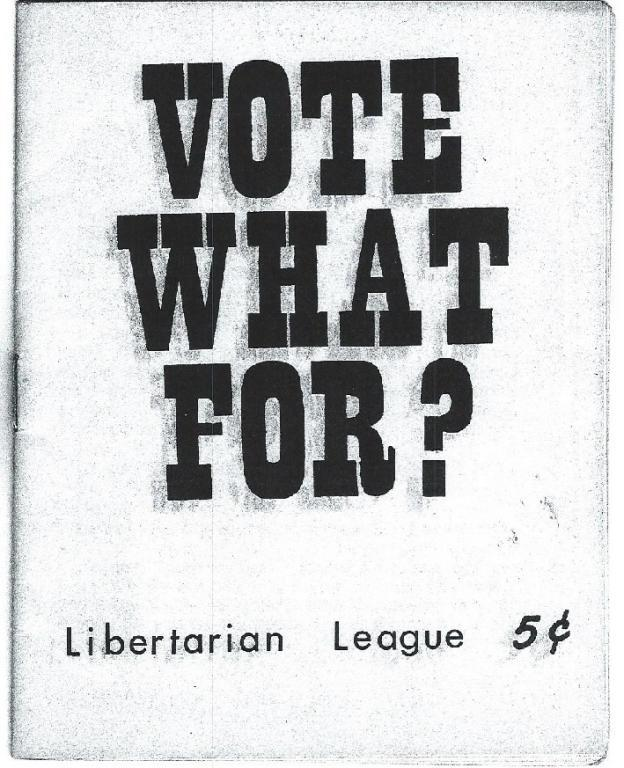
Errico Malatesta – Vote? What For?

George: This beer’s not too bad, is it?

Jack: Yes, it’s alright, but what a price!

George: Shocking – especially when you remember what things used to cost. Still, you can’t wonder with all these taxes. It costs you twice as much to live as it used to. They put up the price of some things, and say you can do without them. But you can’t do without bread, and food, and clothes – you have to pay the rent all the same, and then there are the taxes on this and the rates – on our wages too! What a life! And it’s our own fault! If we wanted to we could alter things. The working class has the remedy in its own hands.

Jack: Why, what’s your remedy?

George: Easy enough! You’ve got a vote?

Jack: What’s that got to do with it?

George: Have you, or haven’t you?

Jack: Well, I’m entitled to a vote – but I never make use of it.

George: There you are! You’ve got a vote, but you just won’t take the trouble to use it, and then you wonder why things are so bad. You deserve all you get, honestly! People like you are responsible for all the trouble in the world!

Jack: Alright, alright, keep your hair on! Just tell me what’s the good of voting?

George: It’s obvious. Who makes the laws? The M.P.’s. Elect good M.P.’s and you get good laws.

Jack: Good councillors and good M.P.’s? We’ve heard that for a long time. But you’d have to be deaf, dumb, and blind not to notice it’s the same stooges that always get in. Oh, it’s wonderful to hear them when they’re after votes at election time. They pat you on the back, ask after the wife and kids, kiss the baby, promise you railways, bridges, work, cheap bread, less taxes, higher wages, protection – absolutely everything! And once they get in, they’re no better than anyone else. Goodbye promises! The wife and kids may starve, there’s no more or less work than before, the whole town can be falling to pieces for all they care. They’ve other things to think about than your troubles! Then a few years later they start the ballyhoo again. It doesn’t matter what colour the party is: they’re all the same. As soon as they’re elected, they forget all about you. They’re in their clubs and at their select dinners, and they don’t even trouble to come and have a look at you until the next election.

George: That’s correct! But why elect the rich? Don’t you know that the rich only live on the work of the masses? So how do you expect them to worry about the masses? All they think of is getting as much out of the ordinary man as they can.

Jack: Now you’re talking! But it’s not only the rich. There’s the other type, who want to get elected so they can become rich.

George: That’s true. So don’t let’s vote for them. Let’s elect workers, experienced friends of ours, as you might say, and then we won’t be fooled.

Jack: Oh, we’ve got some of your “experienced friends” in now, and they’re no different from our acknowledged enemies! Anyhow, what do you mean, “let’s elect – let’s elect.” As if we – you and me – could do as we like!

George: But it’s not only us two. If each one of us tried to convert other people and they would do the same, labour would have a majority, and we could elect whoever we liked. And that’s when we could form a government of the workers, and then . . .

Jack: And then it would be a paradise – I mean for those who were in Parliament! You’re arranging things a bit too quickly! Those in command always have the majority. The rich are always in power. Just imagine a poor worker, perhaps with an ill wife and four hungry kids, and you tell him to risk his job and get thrown out of his house to starve; just to give his vote to a candidate his master doesn’t like. Just try and convince those poor devils who can be thrown out of work by their boss whenever he likes. They’re never free; if they want to be free, they don’t want to waste their time voting – just take what they need.

George: But if we didn’t do that, no-one would vote. We couldn’t go to the workers and ask them to vote for our party, and say at the same time that votes were useless.

Jack: That’s just it! And on top of that you have to make election promises you know you can’t keep. And then you have to stand in with the Government, and mix with the well-to-do, and all the rest of it. As soon as any of your men are elected they have to kow-tow to the people you admit are the opponents of the workers. So why the hell talk about propaganda when the first thing you do is to counteract propaganda?

George: But you must admit, it’s an advantage to have our own men with a voice in affairs.

Jack: An advantage for themselves. And may be for some of their friends! But for the mass of the people? Tell it to the marines! You can see what happens as soon as the M.P.’s get elected. Socialists go over to the Tories; they become Independents and other brands of opportunists.

It’s these rascals who hoodwink the whole of their followers – worse even than the church can do. As soon as socialists, who have perhaps been persecuted like criminals when they were out of office (like Ramsay MacDonald was) get appreciated and estimated by the rich, and shake hands with Royalty, they’re won over. When they do run foul of the Government, it’s always with kid gloves – they know they’re all pals together. They all sit together smugly in the smoking-room the best of friends – you can’t imagine them getting too rough even in the debating chamber – and you’re the devil of a long way from seeing them having their heads bashed in by the police as they used to get in the old days.

George: Oh, you’re too severe. We know men are only men, and we have to stand for some weaknesses. But the thing to do is to choose the best men, not always the same ones.

Jack: At that rate you’ll be mass-producing racketeers, if you keep changing the candidates! Haven’t we got enough traitors? All those who pass through the mill are ground to flour! As soon as you send someone to office they turn traitor. They mix with the rich, and want to keep up with them. I’m willing to admit a man is a genuine socialist when he gives up his time and his energy, his money and his ability, exposes himself to imprisonment and victimisation, just to fight corruption and capitalism. But these M.P.’s of yours are only professing socialists, running with the hare and hunting with the hounds, on par with the professing Christians, who preach loving kindness and are the worst swindlers of the lot!

George: Now you’re going too far. Among the socialist leaders you insult, are men who have known what it is to go hungry, who have worked and suffered for the cause, who have given proof . . .

Jack: Get away with your proof! Even Hitler went hungry, and worked for his cause – have we got to respect him now he’s become a scoundrel of the lowest order? Why, every whore was a virgin once!

It’s this respect for leaders that has brought socialism down. Socialism should have been the hope of the people, and your leaders have made it a curse, as soon as you get Labour men in Government. Do you call that propaganda?

George: Still, if you’re not satisfied with certain leaders, you can get rid of them. The voters can choose whom they like.

Jack: Can they? What choice has anyone ever got? You can vote for Tweedledum and if you don’t like him you can have Tweedledee! Instead of throwing smoke in people’s eyes about this voting business, you ought to destroy their confidence in the whole electoral set-up, whether for Parliament or the councils.

The most important causes of misery are first, private ownership, which prevents a man from working unless he submits to those who own the land and tools, and accepts their conditions: and secondly, Government, which protects the exploiters and takes part in exploitation.

George: Well, of course, you have to convince people that their interests are in voting for their own candidate in order to defy their bosses. We have to organise to prevent the exploiter from crushing the liberties of the people. . . .

Jack: Just in order to vote for Mr. Jones or Mr. Brown? Of course, we should organise, but not just to add one more member to Parliament. We want to organise to convince the people that we’ve been robbed of all the good things of the world; that we have the right to take the whole of our own products, and we can do it without taking orders from anyone.

George: Yes, but you must always have someone in charge, to get things organised.

Jack: Not at all!

George: But the people are too ignorant to run the whole affairs of life themselves.

Jack: Ignorant! If they weren’t ignorant they would soon see through these people who want to run the whole affairs of life for them! If you only left them alone, and didn’t mislead them, you can be sure the people would run affairs much better than these racketeers, who say they want to govern us for our own good, and then treat us like cattle. Besides – you say the people are too ignorant to have freedom. But you think they are cleaver enough to elect M.P.’s – and if they vote for your candidates you say they’re full of wisdom!

Isn’t it easier to look after your own business than get someone else to do it? If the M.P.’s wanted to defend our interests, they’d ask what we wanted, and how we wanted it, and not ask us to get them to act as they like – and betray us if and when they like.

George: Still, people can’t do everything themselves. There must be someone to look after the public interest and politics.

Jack: What do you mean, “politics”? If you mean the art of fooling the people all the time, I can assure you that we don’t mind doing without it. If you mean by “politics” the general interest and welfare of everyone – we can look after that ourselves. We all know how to eat and drink and to amuse ourselves. I’m damned if I’ll go to a specialist if I want to blow my nose, and then give him the right to squeeze it if I don’t blow it the way he likes it: the shoemaker makes the shoes and the builders make the house; but nobody ever thought of giving shoemakers and builders the right to order us around and starve us out!

These men who want to get into Parliament for the sake of the public welfare – what do they do for the people? When were the Socialist M.P.’s and borough councillors ever better than anyone else? No, they’re all the same breed!

George: So you attack the socialists too! You forget that they are so few in number. They have to have a majority. And besides, their hands are tired.

Jack: Then why do they accept office when their hands are tied? There’s only one reason – they want to look after their own interests!

George: You’re an anarchist, of course.

Jack: Yes, I am. So what?

George: Well, anarchism seems to me to be too advanced. I’m a socialist. You’re right in a lot of things, but if I’d known you were an anarchist at first, I wouldn’t have told you that we could get better conditions through Parliament, because I know that so long as there are poor, the laws will be made by the rich, and always to their own advantage.

Jack: Oh, I see – you know improvement won’t come through Parliament, but you still tell people to vote. When you know I’m an anarchist, you know I won’t believe that fairy-story about voting for progress, so you admit that you know yourself you’re getting the people to vote for certain candidates will never bring what you promise them. I know you’re not being paid to lie and deceive the masses – so what makes you do it then?

George: No, no! Hold your horses! If I tell the people to give their votes it’s for the sake of propaganda. Don’t you see how good it is to have some of our own men in Parliament? They can make propaganda better than anyone else – they can say things that we’d be run in for, and when they speak all the papers report it.

Jack: Oh, so it’s for propaganda you turn election agent, is it? Some propaganda! Listen: First you tell the people to hope and expect everything from Parliament, that revolution isn’t necessary, that all the worker has to do is slip a piece of paper in a box and then you’ll do the rest. Then you admit that this won’t really achieve anything, it’s only propaganda. Isn’t this propaganda exactly opposite to your own ideas?

The rich will always defend these two institutions desperately, whatever the cost. Deceit and lies have always been used – and they don’t stop at the jail, the gallows and machine-guns! Elections are no use against that. We don’t want a change of masters, but a complete revolution, making an absolute break with the past. We must have a genuine commonwealth; where everyone is certain of food, clothing and shelter. The landowners must be ejected by the farmworkers, so they can work the land for themselves and everyone else. The workers must kick out their bosses and organise production for the common good. They must get together and refuse to tolerate any government whatever. Agreement must be made in every district between everyone in the same job. The workers must run the places of work, and every district must be linked up in a common bond of industrial unity – and it will certainly succeed when everyone’s interests depend on it. We won’t fight amongst ourselves any longer or tolerate war between workers of different nations. War and competition will disappear. Machinery won’t turn people out of work, but will help work, make it more agreeable, and productive, and less wearisome.

There’ll be no more untilled land, we won’t just produce a tenth of what we need, as we do now. On the contrary, we shall employ all known methods in order to increase the quantity of food, and the quality of products. The whole of society will be one union of producers and consumers.

George: All this is very well, but it’s very difficult to bring about. Your ideal is magnificent, but there’s one drawback: how are you going to put it into practice? I agree that revolution is the only salvation, whatever we do, but as it’s impossible now we must make the best of what we can – and that’s electioneering. It’s propaganda after all.

Jack: You’ve the nerve to call it propaganda? Haven’t you noticed what your propaganda leads to? You’ve deserted our socialist programme, joined the ranks of the worst exploiters of the workers, gone in with the political imposters who make a noise to gain power! You bring trouble within the socialist ranks, and your headquarters fights its own rank-and-file while it fraternises with the Tories. You’ve forgotten all about revolution – you’re only thinking of electing Jones and Brown and when you talk about change, you’ve no intentions of doing anything drastic. Oh, the road to Westminster doesn’t lead to the social revolution! All you’ve done with your propaganda is to tempt some people who might have been decent socialists to go to Parliament and turn M.P.’s. You’ve created the parliamentary illusion that blinds any sight of revolution. You’ve discredited socialism, as everyone looks on the socialist party as a part of the government they suspect and despise. It’s the end of everyone who looks to getting in power.

George: Well, what do you want us to do? Why don’t you come in and help us, instead of remaining outside and criticising?

Jack: Now I haven’t yet spoken of what we anarchists are doing. But I’ll tell you this; that you socialists are one of our big obstacles. Our activities have been paralysed for years because of your propaganda for parliamentarianism, and you’re deluding the workers to trust those who have betrayed them. We have to waste time counteracting your propaganda, when we could be pushing forward to a social revolutionary change. I hope more and more people get disgusted with trusting your party! It’s only that way we’ll ever get a revolutionary feeling.

George: Well, hurry up and make your revolution! And you can be sure the mass of our people will be on your side if it ever came to a revolution, the rank-and-file, anyhow.

Jack: Oh, I see – “make the revolution and we’ll join you.” If you believe in revolution, why not help us make it?

George: To tell you the truth, if I thought revolution was in any way practicable now, I wouldn’t mind going over to you. I admit this election business makes me sick, and I’d like to let some of our leaders go to hell, but I honestly can’t see where we could do anything about revolution to-day.

Jack: All you want to know is what you want, and put energy into it, and you’ll soon find what could be done! First of all we have to propagate real socialism, and instead of spinning yarns about trusting politicians, and voting for people, getting people to despise the parliamentary racket, and the whole political machine. Let the rich do the electing by themselves – while the whole public despises them for it. When the workers lose faith in the ballot-box swindle, they’ll see the necessity for the social revolution.

Let’s go to the election meetings, if you like, and expose the lies and pretences of the various candidates. Let’s make propaganda, not among the rich in Westminster, but among the workers’ organisations and in the factories, and create new groups, and explain to everyone how the workers can emancipate themselves. Let’s take an active part in strikes and create a gulf between the wageslaves and the bosses! Let’s be on the spot whenever there’s a struggle between the people and their rulers, and give the movement of struggle a conscience. Let’s get among the masses suffering injustice, forced discipline, privations, no matter where it is, and create a movement that’s going to struggle against the ruling class.

Once we have the movement going, ideas come by themselves. Let’s always be in the midst of the masses, and let them understand what they should be after. They themselves must struggle for freedom: it can’t be done for them, and we must be in their midst. And while we do all this, let’s approach people who feel like we do, and who slowly and steadily begin to understand and accept our ideas – with those we must unite, and prepare the elements for general and decisive action, for the emancipation of the working classes.

George: Let’s shake hands on that: They can go to hell with their elections! I want to learn more of anarchism!

1959 English translation of Errico Malatesta’s pamphlet “Vote. What For?” by the New York based Libertarian League.

https://libcom.org/article/vote-what-errico-malatesta

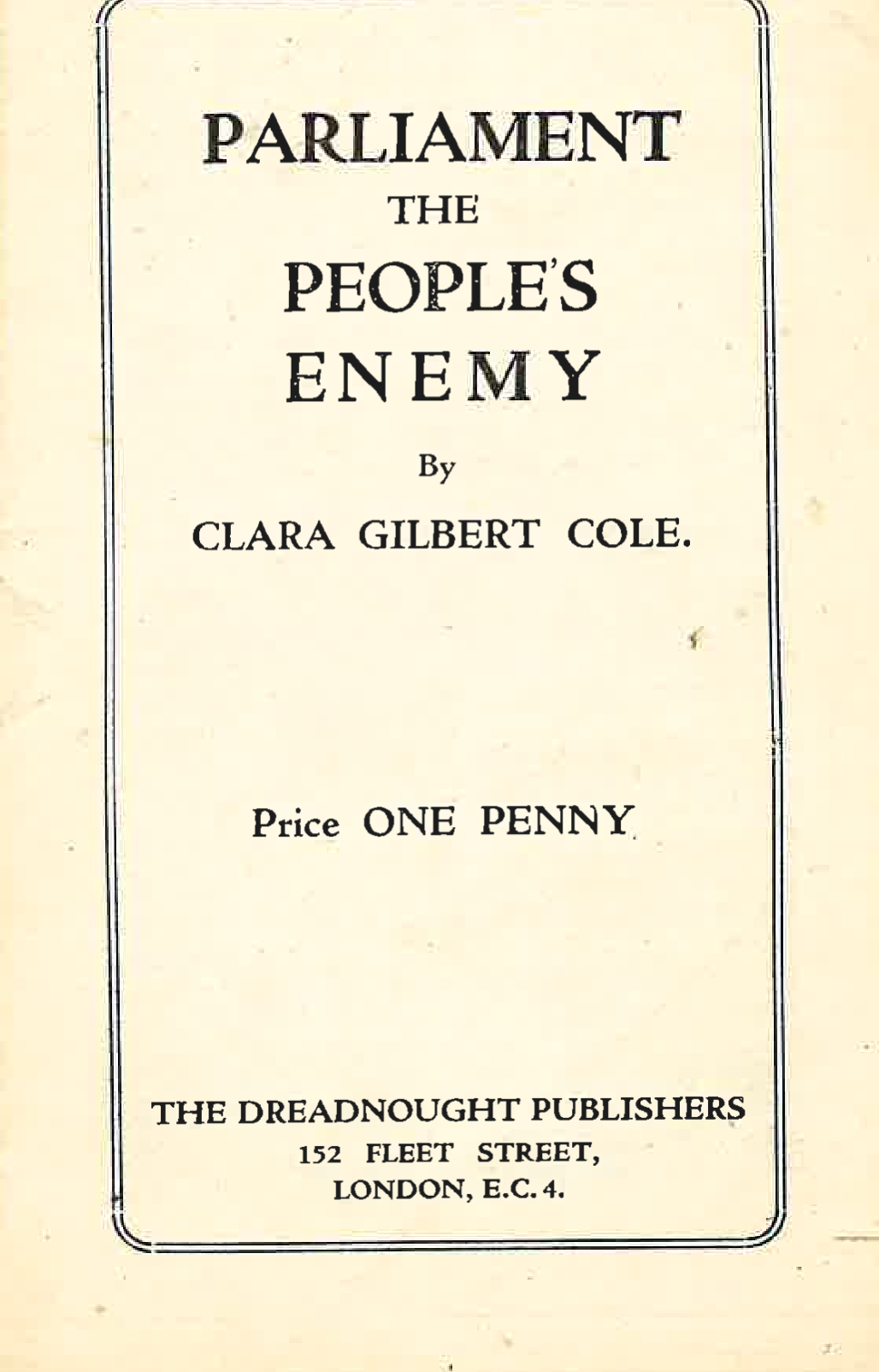
The anarchist case for abstentionism in elections

The right to vote is seen by most as a necessary prerequisite for freedom across the world. People have fought and died for the right to vote in elections. Women across the world fought bitter battles for the right to vote. So why should anarchists question this as a right worth having?

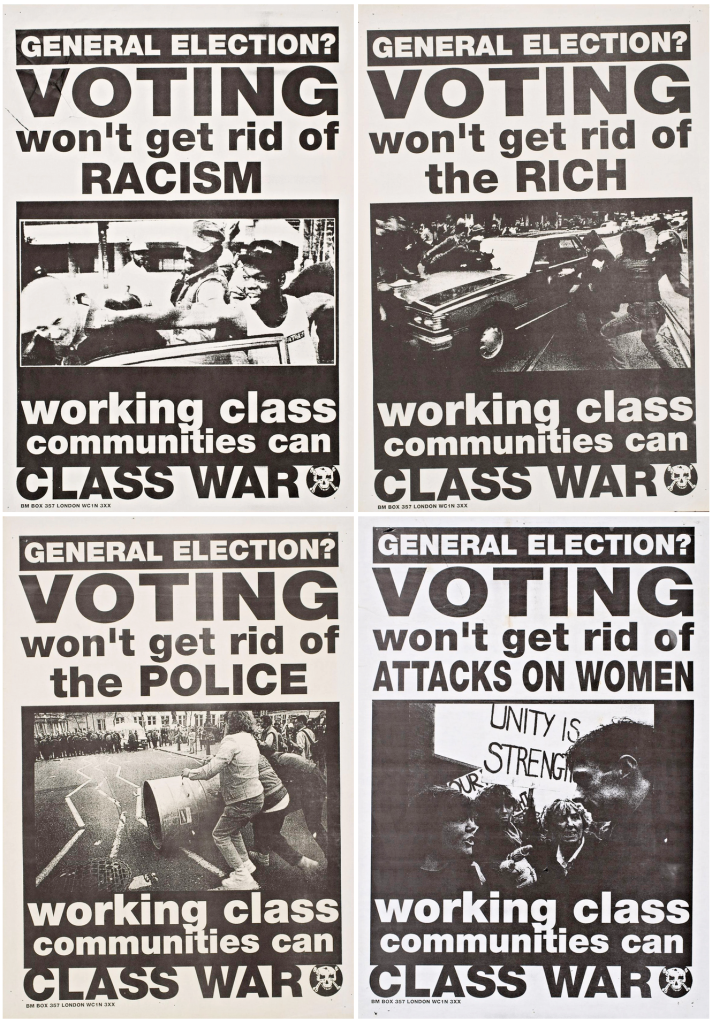
The entire electoral show is designed to encourage us to believe that not only does our vote matter, but that it is the most important decision we could possibly make. Indeed, voting is held so sacred by many that the mere mention of not voting is enough to cause outrage. Pointing out that our vote makes no difference anyway, will see you accused of being apathetic, privileged, immature, and even being part of the alt-right!

But as noted anarchist Vernon Richards wrote,

“So long as we have capitalism and government, the job of anarchists is to fight both, and at the same time encourage people to take what steps they can to run their own lives.” [“Anarchists and Voting,” pp. 176–87, The Raven, No. 14, p. 179].

Electoralism ensures that a statist perspective becomes dominant. Everything is seen in terms of state intervention and following the decisions of the leaders, which has always proved deadly to encouraging a spirit of revolt, self-management, and self-help – the very keys to creating change in a society. Rather than being something other people discuss on behalf of working-class people, anarchists argue that politics should not be a specialised activity in the hands of the so-called experts (i.e., politicians) but instead lie in the hands of those directly affected by it in the process of participation, direct action, and self-management. Those that channel any “political” conclusions into electoral politics distort discussions into only what is possible within the current system. Given this, is it surprising that anarchists argue that the people “must organise their powers apart from and against the State?” [Bakunin, The Political Philosophy of Bakunin, p. 376].

Abstentionists get told, “If you don’t vote, you have no right to complain about the outcome,” but we consider the opposite to be true. It is those who have voted, who have agreed to the rules, and agreed to be governed by the winners who cannot complain. It is those who do not participate who have the right to complain about the outcome more than anyone else.

We get told that the reality is that voting does change things, but we can, and do, deny that. Voting attempts to provide the population with the illusion of change while in reality it reinforces the current system. A policy here and there may change, the faces may change, but the system of a wealthy minority ruling a poorer majority remains. People will continually be telling us that abstaining from voting will help the right-wing win the election, that it is better if the lesser evil wins. This may possibly be the case (although the argument is far from convincing), but why should we base our society on a compromise with evil? In fact, the “progressive” left wing party you vote for will often be ready to take the same actions as a right-wing government when it comes to imposing anti-working-class action upon us, (as we shall show later in this essay the state has a corrupting effect on those who enter politics with high principles). There should be a better way, and we say the dismantling of government, in all its existing and potential forms is that way.

Most of the left wing in Aotearoa, and quite a few people who claim to identify as anarchists, will support reformist parties in the upcoming election. You will hear them saying things like “vote Labour (or Green) without illusions,” or “vote Labour/Green but build a socialist alternative.” The slogans that these others may shout only reflect the idea that change can and should be brought about by a small number of elite politicians. Abstentionists do not say things like this. There are many problems with our electoral system of democracy, which we shall run through, but we must state that first and foremost, as anarchists, we see voting as against running contrary to our anti-statist and anti-hierarchy principles, and we see electoralism as contrary to our goals and practice. It reinforces the idea that society is divided into order-givers and order-takers. Famed French anarchist, Elisee Reclus, put it well when he said,

“Everything that can be said about the suffrage may be summed up in a sentence. To vote is to give up your own power. To elect a master or many, for a long or short time, is to resign one’s liberty… Instead of entrusting the defense of your interests to others, see to the matter by yourselves. Instead of trying to choose advisers that will guide you in future actions, do the thing yourselves, and do it now!…. Do not vote!”

We are against is a system that allows for us to tick a box every few years for candidates that are selected for us, and policies that are chosen for us, which gives whoever received the most X’s to make decisions that affect our lives in all ways. Much of our so-called “democracy” is bogus and undemocratic, as many of the hundreds of thousands of kiwis who do not vote understand. Politicians, once elected, have no compunction to keep their promises they made while campaigning, they can, and do, pretty much what they like because we have no power to recall them until the next election comes along, when again we will be given a barrage of promises that don’t have to be kept, and mostly won’t be kept. To call this democracy and representative of our demands is a blatant falsehood.

So, to continue, voting in government elections is an inherently authoritarian activity, and authoritarian means can never yield libertarian results. In the words of Emma Goldman, “participation in elections means the transfer of one’s will and decisions to another, which is contrary to the fundamental principles of anarchism.” [Emma Goldman, Vision on Fire, p. 89]. The very act of voting is an attempt on the part of the voters to delegate control over their own life to another person. While states of various sorts provide some services and benefits to their citizens, the institution of government also maintains and makes use of the police, the courts, the prison, the military, etc, to coercively interfere in the lives of its subjects. For anarchists, it is a basic belief that individuals should not have the authority to coerce others, and therefore they should not put themselves in a position to delegate such authority to anyone else, which, after all, is the essence of voting. Noone, whether in or out of government, should have such power. Anarchists who oppose political power and coercion of any sort cannot advocate voting in national elections and stay true to the principles of anarchism. This is a system that divides us into a massive majority ruled by a tiny minority, and which allows for power, wealth, and privilege to be ever more concentrated into the hands of that minority. The state is not a neutral body which can be used by all classes in society to protect their interests, rather it is an instrument of class rule that exists to protect the wealth and power of the ruling class and enforce their property rights and authority.

What we are offered as democracy is a farce, a dictatorship of capital devoid of any real choice. Even worse is that this form of democracy gives the illusion that we, the people, have the power to change it, while simultaneously reinforcing it. No wonder all politicians agree on one point – that we should vote. They want you to sanction the process by which they acquire their position, because without that sanction they have no legitimacy, and it is that claim to legitimacy they use to dismiss any actions taken by oppressed or marginalised groups outside of parliament as illegitimate. Before going to cast your vote remember that there is a real limit to what governments can do anyway – winning an election is not taking power. The real decision-making takes place in the boardrooms of corporations, not in parliament. Political parties, even in a majority government, can only do what capitalism allows them to. The politicians’ only argument is to organise capitalism in a “kinder way,” but anarchists want to smash capitalism, not waste our time trying to make it kinder.

MPs are little more than the committee for managing the affairs of capitalism. We cannot elect the revolution, or even a radical government, because capitalism will use its economic power, in the form of things such as sanctions and the flight of capital, to punish anyone who wishes to radically reform society, regardless if the majority voted for it or not. Even worse, in some situations the elected government may well see itself undermined by outside influences, even facing invasion and war. Realistically though the nature of the state means that capitalists rarely have to use these tactics.

While many radicals may be tempted to agree with this analysis of the limitations of electioneering and voting, very few will automatically agree with the anarchist arguments of not voting. Instead, they argue that we should combine direct action with electioneering, and they will suggest that the state is too powerful to leave in the hands of right-wingers. Those that say this though ultimately fail to take into account the nature of the state and the corrupting effect it has on politicians. If history is anything to go by, the net effect of radicals using elections is that by the time they are elected to office the radicals will happily do what they once would have condemned the right-wing for doing.

Given that we have had many decades of universal suffrage, not only in Aotearoa but worldwide, and we have seen the rise of Labour and other so-called progressive parties aiming to use that system to effect change, it is sad to say that we are probably further away from socialism than ever. The simple fact is that these parties have spent so much time trying to win elections that they have stopped even thinking about creating socialist alternatives in our communities and workplaces.

The state shapes people. As Noam Chomsky argues, “within the constraints of existing state institutions, policies will be determined by people representing centres of concentrated power in the private economy, people who, in their institutional roles, will not be swayed by moral appeals but by the costs consequent upon the decisions they make — not because they are ‘bad people,’ but because that is what the institutional roles demands.”

It was Bakunin who predicted in 1869 (three years before Marx hoisted his parliamentarianism onto the First International) that when “the workers … send common workers … to Legislative Assemblies … The worker-deputies, transplanted into a bourgeois environment, into an atmosphere of purely bourgeois ideas, will in fact cease to be workers and, becoming Statesmen, they will become bourgeois … For men do not make their situations; on the contrary, men are made by them.” [The Basic Bakunin, p. 108] Similarly, Krotpotkin argued that “in proportion as the socialists become a power in the present bourgeois society and State, their socialism must die out.” [Kropotkin’s Revolutionary Pamphlets, p. 189]. History has undoubtedly proven the anarchists correct.

We cannot repeat this often enough, electioneering results in the party using it to become more moderate and reformist — indeed the party often becomes the victim of its own success. In order to gain votes, the party must appear “moderate,” “responsible” and “sensible” and that means working within the system. This has meant that (to use Rudolf Rocker’s words),

“Participation in the politics of the bourgeois States has not brought the labour movement a hair’s-breadth nearer to Socialism, but thanks to this method, Socialism has almost been completely crushed and condemned to insignificance… Participation in parliamentary politics has affected the Socialist Labour movement like an insidious poison.” [Anarcho-Syndicalism, p. 49]

Every time a so-called or Labour party has come to power, they have acted in a way that makes them almost indistinguishable from their more right-wing opponents. Despite their promises to act for the working class, once in government they always seem to be more concerned with being ‘respectable’ and ‘reasonable,’ and not doing anything that would offend the rich, the real rulers of our society. Nowadays we have ‘progressed’ to the stage where parties do not even pretend to campaign on the basis of representing the working class, limiting themselves to saying they are more “trustworthy,” or are a “safe pair of hands” to control the economy. Socialism is an embarrassment from the past.

The Labour Party in Aotearoa has been one of a history of compromise with capitalism and anti-working class action. Three quotes from Peter Fraser, early once a self-proclaimed revolutionary socialist and Labour prime minister 1940–49 demonstrates this. In 1913 Fraser was writing: “Industrial Unionism plus revolutionary political action, in my opinion, provide the most effective and expeditious means of reaching [socialism].” By 1918, Fraser had moderated his views. Instead of revolution he called for “the peaceful and legal transformation of society from private to public ownership and the increasing of democratic control over land and industry.” By the early 1930s Fraser saw Labour’s main objective as a simple one: jobs for the unemployed.

Janet Biehl sums up the effects on the German Green Party of trying to combine radical electioneering with direct action:

 “The German Greens, once a flagship for the green movement worldwide, should now be considered stink normal, as their de facto boss himself declares. Now a repository of careerists, the Greens stand out only for the rapidity with which the old cadre of careerism, party politics, and business-as-usual once again played itself out in their saga of compromise and betrayal of principle. Under the superficial veil of their old values – a very thin veil indeed, now – they can seek positions and make compromises to their heart’s content… They have become ‘practical,’ ‘realistic’ and ‘power orientated.’ This former New Left ages badly, not only in Germany but everywhere else. But then, it happened with the S.P.D. in August 1914, then why not with Die Grunen in 1991? So it did.” [“Party or Movement?,” Greenline, no. 89, p. 14]

Here in Aotearoa the effect has been the same on our own Green Party, whose evolution has seen it tie itself firmly to sensible budgeting and relying on market forces to solve our problems and moved from something of an activist party to one of “professional politicians.”

It is not enough to blame the individuals elected to office for these betrayals, arguing that we need to elect better politicians, or select better leaders. For anarchists nothing could be more wrong as it is the means used, not the individuals involved, which is the problem. Writing of his personal experience as a member of Parliament, Proudhon recounted that,

 “[a]s soon as I set foot in the parliamentary Sinai, I ceased to be in touch with the masses; because I was absorbed by my legislative work, I entirely lost sight of the current events … One must have lived in that isolator which is called a National Assembly to realise how the men who are most completely ignorant of the state of the country are almost always those who represent it. “There was “ignorance of daily facts” and “fear of the people” (“the sickness of all those who belong to authority”) for “the people, for those in power, are the enemy.” [Property is Theft!, p. 19]

Ultimately, as syndicalist Emile Pouget argued, this fate was inevitable as any socialist politician “could not break the mould; he is only a cog in the machine of oppression and whether he wishes it or not he must, as minister, participate in the job of crushing the proletariat.” [quoted by Jeremy Jennings, Syndicalism in France, p. 36]

Ultimately, supporters of using political action can only appeal to the good intentions and character of their candidates, and hope for the best. Anarchists, however, in contrast to Marxists and other radicals, continually give an analysis of the structures of government and the other influences that will determine how the character of the successful candidates and political parties will change. Only anarchists continually present an analysis of the effects of electoralism and its effects on radicals. History is our proof, electoralism, as Bakunin put it, “inevitably draws and enmeshes its partisans, under the pretext of political tactics, into ceaseless compromises with governments and political parties; that is, it pushes them toward downright reaction.” [The Basic Bakunin p. 288].

Not only is making use of the ballot box as a tactic harmful to politicians and their parties, but it also has a negative effect on the rest of the population too. Support for electioneering is at odds with us being in favour of collective mass action. It hinders the arguments for collective organisation and action as the voters expect their representative to act and fight for them. Political actions become solely considered to be parliamentary activities, made for the people by their representatives. There is no other role for the people than that of passive support and spectators. So, instead of working-class self-activity and self-determination, there results in a non-working-class leadership acting for the people. The real causes and solutions to the problems we face are not understood and ignored by those at the top of the party and rarely discussed in the open, less they damage their chance of re-election.

There is nothing more isolated and individualistic than voting. It is the act of one person in a booth by themselves. It is the total opposite of collective struggle. The individual is alone before, during and after the act of voting. Indeed, unlike direct action, which, by its very nature, throws up new forms of organisation in order to manage and coordinate the struggle, voting creates no alternative forms of working-class self-management. Nor can it. It simply empowers an individual (the politician) to act on behalf of a collection of other individuals (the voters). Political parties forsake direct action in favour of success in elections (indeed, winning elections will soon enough become the be-all and end-all of their activity). Also, if radicals are elected the whole focal point of struggle changes. Rather than direct struggle against the state and the boss, this is seen as being no longer needed as the elected representatives will act, or people will think they will act, and so do not act themselves. They have elected someone to fight for them and so do not see, or realise, the need to fight themselves.

In a lot of ways, direct action is a more effective means for people to have a say in society than voting is. Voting is a lottery, your preferred candidate may not get elected, and all the time and energy put into supporting them is wasted. With direct action, you can be sure that your work will offer some kind of results, and the experience you gain, the lessons learnt, and networks and connections built up in the process, cannot be taken away from you.

Also voting is only possible when election time comes around, direct action can be applied whenever the need rises. Relying on electoralism means you can only address whatever topics are current in the political agendas of candidates, while direct action can be applied to deal with the issues in every aspect of your life.

In other words, our support for direct action is linked with our rejection of voting, and our call to not vote stresses the importance of direct action, as well as having an important educational effect in highlighting that the state is not neutral, but serves to protect class rule, and that meaningful change only comes from below. So just not voting is not enough, we need to organise and fight. In the words of an anarchist member of the Jura Federation writing in 1875,

 “Instead of begging the State for a law compelling employers to make them work only so many hours, the trade associations directly impose this reform on the employers; in this way, instead of a legal text which remains a dead letter, a real economic change is effected by the direct initiative of the workers … if the workers devoted all their activity and energy to the organisation of their trades into societies of resistance, trade federations, local and regional, if, by meetings, lectures, study circles, papers and pamphlets, they kept up a permanent socialist and revolutionary agitation; if by linking practice to theory, they realised directly, without any bourgeois and governmental intervention, all immediately possible reforms, reforms advantageous not to a few workers but to the labouring mass — certainly then the cause of labour would be better served than … legal agitation.” [quoted by Caroline Cahm, Kropotkin and the Rise of Revolutionary Anarchism, p. 226]

So, we urge people to not vote in order to encourage activity, not apathy. Instead of spending our time urging people to vote for one set or another of groups offering slightly different ways to manage capitalism, we raise the option of choosing to rule yourself, to organise with others in your workplace, in your community, everywhere. We offer the option of something you cannot vote for, a new society. Instead of waiting for others to make some changes for you, along with all anarchists we urge people to do it themselves. In this way, we can build an alternative to the state, which can reduce its power now and, in the long run, replace it. This is the core of our anarchist principles and why anarchists say do not vote.

By making the principled choice not to participate in the election, we open an opportunity to question the acceptance of the status quo. We consider it is important to stand up and remind people what is wrong with voting. Maybe by consciously not voting, and explaining to others why we are not voting, we can change people’s beliefs about government. We use this opportunity to say that there are better, more meaningful ways to achieve a fairer, freer, more meaningful life; that we do not need to resort to the state to solve problems.

As anarchists we simply think that our policy should be the destruction of the State rather than looking to work with it. We believe this stance is essential if we are to be able to promote anarchism, and if we are going to mark a divide between others and ourselves and place ourselves firmly outside the activity and the political games of all the other parties. We believe this is essential so as not to be seen as another bunch of leftists after votes, and to avoid being tainted by the inevitable failure of any government to meet our needs. We believe in revolution and have a revolutionary ideology and we want to win people over to anarchism. If people started associating Anarchism with the political parties, then it would be difficult for people to understand what Anarchism actually is.

By arguing for our anti-electoral position, we can get our ideas across about the nature of the current system, how elected politicians are controlled and shaped by the state, and how the state acts to protect capitalism. In addition, it allows us to present our ideas of direct action and encourage those disillusioned with political parties and the current system to become anarchists by presenting a viable alternative to the sham of party politics. For, after all, a sizeable percentage of not just non-voters but voters too are disillusioned with the current set-up. Many who do not vote do so for essentially political reasons, such as being fed up with the political system, failing to see any major differences between the parties, or recognition that the candidates do not represent their interests. Many who do vote do so simply against the other candidate, seeing them as the least-worst option. This is an opportunity when people are talking a little more about politics to challenge the notion that important decisions can only be made by a few and put across our anarchist ideas.

This essay started with a quote from Vernon Richards, and will finish with one,

“If the anarchist movement has a role to play in practical politics it is surely that of suggesting to, and persuading, as many people as possible that their freedom from the Hitlers, Francos and the rest, depends not on the right to vote or securing a majority of votes ‘for the candidate of one’s choice,’ but on evolving new forms of political and social organisation which aim at the direct participation of the people, with the consequent weakening of the power, as well of the social role, of government in the life of the community.” [“Anarchists and Voting,” pp. 176–87, The Raven, no. 14, pp. 177–8]

So… Do not vote and let us start making a real difference.

the anarchist case for abstentionism in elections _ now available as downloadable pdf
A Community in the Cracks of Capitalism

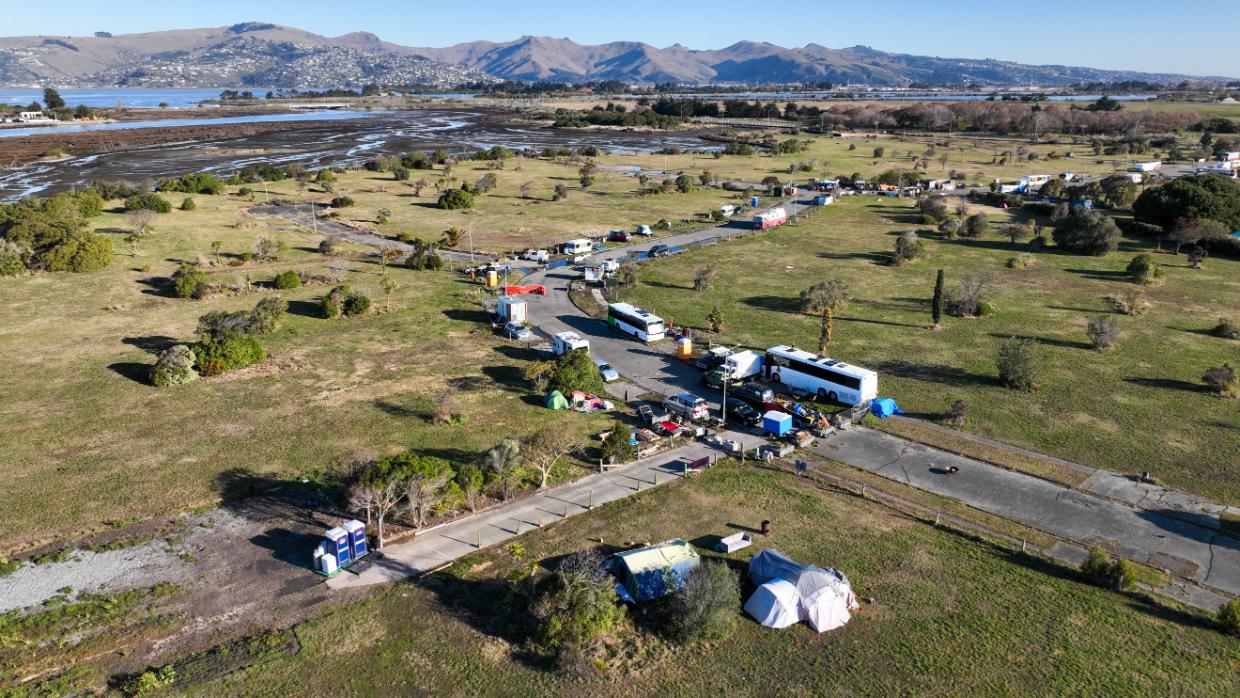
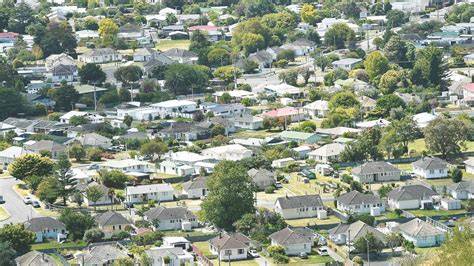
A piece of Christchurch that the property market abandoned after the earthquakes has become home to people abandoned by the property market. The old Bexley neighbourhood was largely cleared after liquefaction made conventional residential development impossible. Houses disappeared, streets remained and the land sat waiting for whatever official purpose would eventually be found for it. Into that gap came people who needed somewhere to live. They arrived in cars, vans, buses and tents. Some were working. Some were retired. Some had children. They did what people have always done when the institutions around them fail, they improvised. A community grew. Earlier this year about 40 people were living around Wetlands Grove; reports now put the number at more than 100. Christchurch City Council has told them they must leave by 28 February 2027 because the area is intended for wetland development. There is an obvious temptation to treat this as a story about homelessness, council planning or the difficulties of finding somewhere suitable for a group of people living in vehicles. It is all of those things, but underneath them sits a much simpler question. What is land for? The answer given by our economic system is that land belongs to whoever has legal title to it, and its legitimate use is determined by owners, planners and institutions. The people actually living on it remain secondary. They may sleep there, look after one another there and make the place usable through their own effort, but none of that gives them any meaningful claim to it. Their relationship to the place exists only for as long as the legal owner tolerates it. That distinction between ownership and use lies close to the heart of the anarchist criticism of private property.

The people living at Wetlands Grove have already demonstrated something that governments spend enormous amounts of money trying unsuccessfully to manufacture through policy documents – people can organise social life themselves. Earlier reporting described an informal community growing around buses, vans and cars, with neighbours helping one another through winter and a communal tent being established as shared space. One man who had been sleeping in a small tent was helped into an old car when the cold became severe. Council rubbish collection and portable toilets made conditions more bearable, but the social organisation of the place came largely from the people living there. Moko, one of the informal figures in the community, was working full-time on an on-call road crew. Others were pensioners. Ngawai Timu described abandoning a $470-a-week rental because she felt she was spending her life paying somebody else’s mortgage. Polly Stewart was surviving on the pension in a bus. Families were living there too, including a woman with several children living from a bus. These details matter because homelessness is constantly spoken about as though it were primarily a pathology of homeless people. Addiction, mental illness, poor budgeting, antisocial behaviour and bad choices are summoned as explanations because those explanations leave the social order intact. They allow us to imagine that housed people possess some quality that homeless people lack. Wetlands Grove makes that story harder to sustain. When people with jobs cannot obtain housing, when pensioners decide rent leaves too little for ordinary life, and when families find themselves competing with dozens of others for a private rental, the problem is no longer plausibly located inside the individual. There are certainly people living rough who struggle with addiction or serious psychological distress. There are also people who get up and go to work from a tent. A housing system that cannot reliably house either has failed at the most elementary level.

New Zealand has become remarkably skilled at describing this failure without challenging the institution producing it. We talk about housing supply, affordability pressures and housing need. We devise eligibility categories and waiting lists. We construct administrative pathways through emergency housing, transitional housing, community housing and social housing. Every stage acquires its own assessments and rules. The language becomes more sophisticated while people remain without homes. At the 2023 Census, Statistics New Zealand estimated that at least 112,496 people were experiencing severe housing deprivation, around 2.3 percent of the usually resident population. The estimate itself is likely conservative because hundreds of thousands of people could not be conclusively classified. As of 30 June 2026 there were still 19,002 applicants on the Housing Register, meaning people already assessed as eligible for social housing and waiting to be matched with somewhere suitable. Behind every administrative term is the same physical requirement humans have had for as long as there have been humans – somewhere safe to sleep. Capitalism has managed to turn that requirement into an investment class. A house can simultaneously be a place necessary for human survival and an asset expected to generate rent, capital gain or both. When those purposes conflict, ownership wins. Ngawai Timu’s remark about paying somebody else’s mortgage is therefore more politically perceptive than most discussion of the housing crisis. Rent appears to be payment for accommodation, but economically it transfers part of a tenant’s income to somebody who controls access to land and housing. The tenant works. The landlord owns. Money moves from the former to the latter because the legal structure of property permits one person to charge another for access to something they need in order to live.

Anarcho-communists have always distinguished personal possession from property used to extract income or control the lives of others. Nobody is proposing that a person should lose the bed they sleep in or the home they actually occupy. The argument concerns the social power created when houses and land can be accumulated and withheld by people who do not use them, then rented back to those who do. Wetlands Grove shows the opposite principle operating almost accidentally. The residents occupy land because they need it. Their claim arises from use. They have created relationships there and made forms of mutual aid possible there. Under capitalist property law none of this ultimately counts for much. Christchurch City Council owns the land and has another use planned for it, so the residents must go. There is an environmental complication here that should not be ducked. The council intends to restore tidal wetlands in an area profoundly altered by earthquake damage, and wetland restoration is worthwhile. The answer cannot be to demand that ecological restoration be sacrificed so people can remain indefinitely on land without proper sanitation or infrastructure. The revealing part is that we are being offered a choice between the wetland and the people living there. A wealthy society ought to be capable of restoring an ecosystem while guaranteeing every person displaced by that work somewhere secure to live. If it cannot do both, the problem is political. The ecological project becomes another deadline imposed upon people who already have almost no control over the circumstances of their lives.

This is where the word “choice” begins doing dubious work. Some Wetlands Grove residents have said they prefer living there. Ngawai Timu spoke about the freedom of the place. Polly Stewart compared the prospect of living in a Kāinga Ora apartment unfavourably with her life in the bus. Those views should be taken seriously. People should be allowed far greater freedom over how they live than either the private housing market or the bureaucratic state usually permits. Cooperative settlements, tiny homes, communal land, papakāinga, vehicle-based living and other arrangements should not automatically be treated as deviant because they fail to resemble a suburban house with a mortgage. Yet freedom requires genuine alternatives. Choosing a bus because conventional rent would consume most of your pension is a peculiar form of freedom. Choosing a tent because every rental viewing has another 30 applicants is not the same as freely deciding to camp. Capitalism routinely transforms constrained decisions into evidence of personal preference. A worker is “free” to accept an employer’s conditions because technically nobody forces them to take that particular job. A tenant is “free” to accept the rent because another landlord might charge the same amount down the road. A homeless person is “free” to reject temporary accommodation that is unsuitable for their life. Formal choice conceals the distribution of power underneath it.

The state cannot easily solve this because the state is one of the institutions maintaining the property relations that produced the problem. Governments can build public housing, and they should. They can regulate landlords, fund Housing First, provide emergency accommodation and prevent evictions. Those measures can keep people alive and they matter enormously to anyone who needs them. An anarchist criticism of the state does not require indifference to whether somebody has a warm house tonight. We should support measures that materially improve people’s lives while refusing to mistake them for the resolution of the underlying conflict. The current Kāinga Ora programme illustrates the contradiction. The Government says around 900 state houses a year may be sold as part of stock renewal while new construction and redevelopment will prevent the total national stock from declining. From an administrative viewpoint this is portfolio management. From the viewpoint of someone sleeping in a vehicle while houses are treated as units in a managed asset base, the language feels rather different. Housing remains something allocated through institutions according to scarcity. The scarcity itself becomes normal.

Wetlands Grove also unsettles another comfortable assumption that order flows downward from authority. The community appeared before the council had a plan for it. People found the place, negotiated relationships with one another and established ways of getting by. That does not mean it is an anarchist commune, nor should people living in poverty be turned into political mascots. There will be arguments there, difficult personalities and all the problems found anywhere humans live together. Anarchism does not depend on romanticising people. What matters is that social organisation emerged without a landlord designing it or an agency assigning everyone a place. The residents discovered one another through a shared material predicament and began constructing a community around it. Their circumstances are harsh, but the impulse underneath what they have made is recognisable. Mutual aid begins with the discovery that another person’s survival is connected with your own.

The bitter part is that once people create something workable in the gaps left by capitalism, authority often arrives to remind them that the gap was never theirs. Squatted buildings are emptied while people sleep outside. Informal settlements are cleared because they breach regulations written for a world in which everyone supposedly has conventional housing. People living in vehicles are moved from one parking area to another. Public space is made hostile to anyone attempting to remain there too long. None of this creates housing. It manages visibility. The homeless person disappears from one street and appears in another, allowing the first location to be recorded as a successful intervention. Wetlands Grove could easily follow the same pattern. On 1 March 2027 the council may possess an empty road ready for ecological work while the people who lived there are scattered across cars, spare rooms, emergency accommodation and some other piece of land where they will eventually be noticed again. If that happens, nothing will have been solved. Geography will have changed.

The anarcho-communist response begins somewhere else. Housing should be organised around use rather than profit. Land should cease to function primarily as a commodity. Housing that people need should not be held from them because somebody else possesses a stronger legal claim backed by money. Communities should have the power and resources to shape the places where they live, with decisions made by those affected rather than handed down through property ownership or distant administration. That does not supply a magic blueprint for Wetlands Grove. It does tell us what a decent outcome would look like. Nobody currently living there should be made homeless by its closure. People who want conventional housing should receive secure, permanent homes before they are required to leave. Those who prefer communal or vehicle-based living should be involved in establishing another legal, serviced site rather than being forced back into a model of housing they have rejected. Families should not have to demonstrate months or years of escalating desperation before they become sufficiently urgent for assistance. A pensioner should be able to rent without sacrificing the income needed to live. A full-time worker should not finish a shift and return to a tent.

Perhaps the most revealing sentence spoken at Wetlands Grove came from a resident who rejected the description of the people there as homeless. “We’re refugees in our own country,” he said. The phrase is uncomfortable, but it captures something important about dispossession. These are people surrounded by houses, roads, supermarkets and all the accumulated wealth of a developed society, yet somehow unable to secure a small portion of it in which to live. Nothing has physically disappeared. New Zealand has timber, builders and land. We have engineers and electricians. We know how to construct houses. What stands between the person and the home is a network of ownership, prices, debt and permissions that we have been taught to regard as natural.

There is nothing natural about it. Property is a social arrangement. Rent is a social arrangement. The rule that one person may own several houses while another sleeps in a car is a social arrangement. These things continue because institutions enforce them and because we have lived with them long enough to mistake familiarity for inevitability. Wetlands Grove briefly exposes the arrangement by turning it upside down. People found unused land and used it. They made homes where there were no houses. They built a community in the remains of one destroyed by an earthquake. Now the official city has returned with plans for the land and the authority to move them on. The question facing Christchurch is therefore larger than what should happen to a hundred people beside an old road in Bexley. It is whether the right to exclude people from land should continue to carry more weight than the human need for somewhere to live. Until we are prepared to answer that question, New Zealand will keep treating homelessness downstream. We will fund programmes, adjust waiting lists and move people from one temporary arrangement to another while leaving the machinery producing housing insecurity largely untouched. Then we will act surprised when another Wetlands Grove appears.

It will appear. It has to. People need somewhere to go.

A Kiwi Dies in Ukraine: The War Between Empires and the People Sent to Fight It

The death of a New Zealand man, Samuel Haines,  fighting in Ukraine was reported in the familiar language used whenever ordinary people are consumed by war. He was described through his personal history, his motivations, his family and his decision to travel across the world to take part in a conflict that had nothing to do with the daily lives of most people in Aotearoa. What was not highlighted was the fact that the tragedy of war is that those who suffer most are usually not the people who create wars. Politicians, generals and corporate interests make decisions from offices far away from the front lines, while working-class people are asked to sacrifice their bodies in the name of nations they did not create and systems they do not control.

The death of a Kiwi volunteer in Ukraine raises questions that go beyond one individual. Why are people from countries on the other side of the world being drawn into a conflict between major powers? Why has a war involving Russia, Ukraine, NATO and competing geopolitical interests been presented to millions of people as a simple battle between good and evil? And what does the presence of far-right nationalist forces within Ukraine’s military tell us about the way states use ideology and violence when they prepare societies for war?

For anarchists, the answers do not begin with choosing which flag deserves our loyalty. The history of the twentieth and twenty-first centuries shows that nationalism has repeatedly been used to convince ordinary people that the interests of their rulers are their own. Workers who have more in common with each other than with their own governments are encouraged to see each other as enemies because states require obedience, sacrifice and the willingness to kill. The war in Ukraine is no exception. It is a conflict shaped by Russian imperial ambitions, Ukrainian nationalism, NATO expansion, Western strategic interests and the wider competition between global powers. The people trapped inside this struggle are paying the price for decisions made by governments that claim to represent them.

Sam Haines ended up fighting and dying as a volunteer militia as part of the Azov battalion that emerged in 2014 during the conflict in eastern Ukraine. Its early period was associated with individuals and organisations connected to far-right nationalist politics. Some of its founders had histories linked to ultranationalist movements, and the organisation used symbols and imagery that attracted criticism because of their associations with European fascist traditions. Scholars, journalists and human rights organisations have documented these connections. When Azov was incorporated into Ukraine’s National Guard, it became an official military unit rather than an independent militia. Some argue that integration changed the organisation and that its fighters have since played a significant role in defending Ukrainian territory. Critics sttae that formal incorporation does not erase its ideological origins or the influence that nationalist movements gained through wartime conditions. Denying or minimising the reality of these movements serves the interests of those who want war narratives to remain simple and unquestionable.

The uncomfortable truth is that states have often relied on extremist movements when those movements are useful. Governments that present themselves as defenders of civilisation have repeatedly made alliances with forces they would condemn under different circumstances. During wartime, groups willing to use violence are often granted influence because military effectiveness becomes more important than political principles. This pattern is not unique to Ukraine. It has appeared throughout history wherever states have faced crises and sought to mobilise society around national struggle. The machinery of war creates conditions where authoritarian ideas can grow because war rewards hierarchy, obedience and the belief that violence can solve political problems.

The debate around NATO’s role in Ukraine is another area where discussion is often reduced to slogans. One side argues that NATO is a defensive alliance whose support for Ukraine is a necessary response to Russian aggression. The other argues that NATO expansion after the collapse of the Soviet Union created a security crisis that helped produce the conditions for war. An anarchist analysis should be sceptical of both state narratives because both begin from the assumption that the interests of governments and military institutions should determine the future of ordinary people.

NATO expansion did not happen in a vacuum. After the end of the Cold War, Western governments continued to extend their political and military influence into Eastern Europe. Countries that had once existed within the Soviet sphere joined a Western military alliance that Russia had long viewed as a strategic threat. From Moscow’s perspective, NATO’s movement closer to its borders represented a challenge to its regional power. From the perspective of countries that had experienced domination by the Soviet Union, joining NATO represented a search for security against future Russian aggression.

Great powers have always justified their actions as defensive. The United States has built military bases around the world while claiming to protect global security. NATO presents itself as a shield against authoritarianism while expanding its influence through military alliances. States rarely describe themselves as aggressors. They present their actions as necessary responses to the actions of others. This is how imperial competition operates. Each power claims it is responding. Each claims it is acting reluctantly. Each claims that its violence is necessary because the other side started it. Meanwhile, ordinary people are sent to die.

The idea that a worker from New Zealand, Britain, Poland, Russia or Ukraine should risk their life because of disputes between governments is one of the central illusions of nationalism. Nationalism asks people to identify with a territory, a flag and a ruling structure rather than with the people who share their workplaces, communities and struggles. A Ukrainian worker and a Russian worker may be told they are enemies, even though both face similar problems created by economic systems that concentrate wealth and power among elites.

The same applies to those who travel overseas to fight. Foreign volunteers often believe they are acting according to their values. Some are motivated by genuine opposition to invasion. Some are driven by adventure, ideology or a desire to find meaning through conflict. Some are drawn towards nationalist movements that promise belonging and purpose. War attracts people who are searching for something because war offers a powerful illusion, that that individual struggles can be transformed into a heroic mission. But the reality of war is rarely heroic. It is exhaustion, trauma, injury and death. It is young people being transformed into weapons by governments that will replace them when they are gone.

The arms industry understands this better than anyone. Every modern war creates opportunities for those who profit from weapons production. Governments spend billions on missiles, tanks, aircraft and military technology while claiming that such spending is necessary for security. The companies that manufacture these weapons do not lose when wars continue. Conflict becomes an economic system in itself, with entire industries dependent on permanent preparation for violence.

This is one reason anarchists have always opposed militarism. The problem is not simply that wars are tragic. The problem is that war is built into a political and economic order where power is concentrated in the hands of states and corporations. A society organised around competition, domination and profit will repeatedly produce conflicts because those conflicts serve the interests of powerful institutions.

The ordinary soldier is placed in an impossible position. They may genuinely believe they are defending their community. They may believe they are standing against injustice. They may have personal reasons for being there that outsiders cannot understand. But individual courage does not change the nature of the systems that send people into battle. A worker carrying a rifle does not become powerful because a government gives them a uniform. They become a tool of someone else’s power.

This is why anarchists reject the idea that the answer to imperialism is simply supporting a different imperial power. Opposing Russian aggression does not require celebrating NATO militarism. Criticising NATO expansion does not require supporting Russian nationalism. Rejecting far-right movements in Ukraine does not require accepting the authoritarian politics of the Russian state. A consistent anti-war position must reject the logic that ordinary people should become soldiers in struggles between competing rulers.

The tragedy of Ukraine is that millions of people have been forced into a conflict where their choices are shaped by forces far larger than themselves. Ukrainian civilians face the consequences of invasion and destruction. Russian civilians face the consequences of their government’s decisions and international isolation. Soldiers on both sides experience the reality of industrialised warfare. Refugees are displaced. Families lose loved ones. Meanwhile, political leaders continue to speak the language of victory.

The lesson anarchists draw from wars like Ukraine is not that people should ignore oppression or accept domination. The opposite is true. People have every right to resist invasion, exploitation and authoritarianism. But resistance does not have to mean replacing one hierarchy with another. The liberation of ordinary people will not come from stronger states, bigger armies or more powerful alliances. It will come from solidarity across borders.

The working class has no interest in endless competition between national elites. A Russian factory worker and a Ukrainian factory worker do not benefit from each other’s deaths. A New Zealand worker travelling thousands of kilometres to fight in someone else’s war is not advancing the interests of ordinary people here or anywhere else. The interests of workers are not found in the success of governments, military alliances or corporations. They are found in the possibility of a world where people no longer have to choose between obedience and destruction.

The death of a Kiwi in Ukraine should not simply be used as another piece of evidence in a debate between rival states. He was a person, not a symbol. His life mattered beyond the politics that surrounded his death. The question we should ask is why a world organised around borders, armies and competing powers continues to create situations where people believe that a meaningful path available to them is to travel across the world and risk dying in another country’s war.

The answer is not more nationalism. It is the opposite. The future belongs not to the flags that divide us, but to the solidarity that connects us.

The Largest Party in Aotearoa are The Abstentionists

Every election we are told the same story. Democracy is under threat. The stakes have never been higher. This election is the most important of our lifetime. We are urged to enrol, urged to participate, urged to have our say. Politicians, journalists, lobby groups and activists all repeat the message until it becomes background noise. Yet despite this relentless campaign, huge numbers of people continue to stay away from the ballot box.

According to figures drawn from the 2023 General Election, around 1.19 million eligible New Zealanders did not vote. Roughly 829,000 enrolled voters stayed home, while hundreds of thousands of eligible people were not enrolled at all. Together they amounted to one of the largest political groupings in the country. If non-voters were a political party, they would dwarf every party currently represented in Parliament.

Predictably, politicians interpret this as a problem to be solved. They see a vast reservoir of untapped support waiting to be mobilised. Every party imagines that if only the disengaged could be persuaded to participate, they would vote the “right” way. The left imagines that non-voters are frustrated workers waiting to be radicalised into electoral politics. The right imagines that they are ordinary people alienated by political correctness and bureaucracy. Both sides believe the solution is greater participation in the existing system.

What if they are wrong? What if the refusal to vote is not a failure of democracy but a judgement upon it? The political class treats abstention as evidence of apathy. This explanation is convenient because it absolves politicians of responsibility. If people do not vote because they are lazy, ignorant or indifferent, then there is nothing fundamentally wrong with the institutions themselves. The fault lies with the public. Yet the evidence points in another direction. Many people who do not vote are far from disengaged. They complain about housing, wages, healthcare, rents, policing, war, environmental destruction and inequality. They have strong opinions. They simply do not believe that casting a ballot every three years will meaningfully alter any of these conditions. It is difficult to argue with their conclusion.

Election campaigns create the illusion of choice while narrowing the range of possible outcomes. Voters are invited to choose which group of professional politicians will administer capitalism. They are not invited to decide whether capitalism itself should continue. They may choose between competing managers of the state, but they cannot vote away the state’s monopoly on power. They may vote for different tax rates, different spending priorities or different personalities, but they cannot vote to abolish wage labour, landlords, prisons, borders or the structures that generate exploitation in the first place. The ballot paper offers options. It does not offer freedom.

This becomes clearer when we look at the history of political promises. Governments campaign as agents of change and govern as custodians of the existing order. Labour promised transformation and delivered record house prices. National promised prosperity and delivered austerity. Coalition governments are assembled, broken apart and reassembled while the fundamentals remain untouched. Wealth continues to accumulate at the top. Rent continues to rise. Work consumes more of our lives. The machinery of government continues regardless of who occupies the ministerial offices.

Many people recognise this. They may not describe it in anarchist terms, but they understand it instinctively. They have watched governments come and go while their own circumstances remain largely unchanged. They have learned that election rhetoric bears little relationship to political reality. When they refuse to vote, they are often expressing not indifference but disbelief.

The defenders of electoral politics respond that non-participation only strengthens the powerful. If you do not vote, they say, someone else will decide for you. This argument assumes that voting constitutes genuine power. It confuses the ability to choose rulers with the ability to rule ourselves. Anarchists reject this confusion. The question has never been who governs. The question is why anyone should govern at all.

Representative democracy rests on a strange proposition. Millions of people are told that they possess political power, yet that power can only be exercised by transferring it to somebody else. Every few years citizens are invited to surrender their authority to professional politicians, who then act in their name until the next election. This arrangement is presented as self-government. In reality it is government by others. The act of voting does not challenge hierarchy. It legitimises it.

This is why abstention has a long history within revolutionary movements. From the anarchists of nineteenth-century Europe to contemporary anti-authoritarian movements around the world, many radicals have viewed elections not as vehicles of liberation but as mechanisms of incorporation. Voting channels discontent into institutions designed to contain it. Instead of organising workplaces, building communities of resistance or creating alternatives to state authority, people are encouraged to place their hopes in politicians. The result is passivity. Political action becomes something performed on our behalf rather than something we undertake ourselves.

None of this means that all non-voters are conscious anarchists. Far from it. The million-plus New Zealanders who did not vote in 2023 hold a wide variety of beliefs. Some will be socialists. Some will be conservatives. Some will be politically confused. Some will be simply busy. Yet taken together they reveal an important truth. A growing section of society has withdrawn its consent from the electoral spectacle. That withdrawal deserves closer examination.

Political commentators frequently describe low turnout as a crisis of democracy. From an anarchist perspective, it may be a crisis of legitimacy. The state requires more than police, courts and prisons. It requires belief. People must accept that the system represents them. They must believe that participation grants them influence. They must trust that governments derive authority from popular consent. When increasing numbers refuse to participate, that story becomes harder to sustain.

A parliament elected by a shrinking proportion of the population remains legally valid, but its moral authority begins to look questionable. The problem for the political class is not merely that people are staying home. The problem is that people are losing faith in the institutions themselves. This is why governments and political organisations devote enormous resources to increasing voter participation. They need people to believe. They need citizens to see elections as meaningful acts of empowerment. The moment large numbers begin to question that assumption, the ideological foundations of representative government start to crack.

The answer, however, is not cynicism. There is a difference between passive disengagement and active abstention. Passive disengagement says, “Nothing can be done.” Active abstention says, “Something can be done, but not through this.” Anarchists advocate the second position. Refusing to vote is not enough. Staying home on election day while leaving existing power structures untouched achieves little. Abstention only becomes politically significant when connected to collective action outside parliamentary channels. The real question is not whether we vote. The real question is how we organise.

History provides plenty of answers. Workers have won gains through strikes rather than elections. Communities have defended themselves through mutual aid rather than legislation. Social movements have forced change through direct action rather than lobbying. Every meaningful improvement in ordinary people’s lives has depended on pressure from below. Politicians may eventually sign documents and pass laws, but they generally do so after being compelled by organised movements.

Power concedes nothing voluntarily. The obsession with elections obscures this reality. Every three years political energy is funnelled into campaigns, candidates and polling. People are encouraged to view politics as a spectator sport. They become audiences rather than participants. The election cycle consumes attention that could otherwise be devoted to building enduring forms of collective power.

Imagine if even a fraction of the energy spent on electoral campaigning were redirected elsewhere. Imagine neighbourhood assemblies capable of solving local problems without waiting for councils. Imagine tenant unions capable of confronting landlords directly. Imagine workplaces organised enough to challenge employers through collective action. Imagine networks of mutual aid that reduce dependence on state bureaucracy. These are not fantasies. They exist already, albeit on a limited scale. The challenge is expanding them.

This points toward a different understanding of democracy. Not democracy as periodic voting. Not democracy as parliamentary representation. Democracy as direct participation in the decisions that affect our lives. Democracy as collective self-management. Democracy without politicians. The tragedy of modern electoral politics is that it has narrowed our political imagination. We are encouraged to believe that democracy begins and ends at the ballot box. The result is a population that feels powerless because it has been taught to locate power in institutions beyond its control.

The million-plus New Zealanders who did not vote in 2023 should not be viewed as a problem requiring correction. They are evidence that many people already sense something is wrong. The task is not to shepherd them back into the voting booth. The task is to transform scepticism into organisation.

Abstention is often portrayed as silence. In reality it can be a statement. It can express the belief that liberation will not arrive through Parliament, that politicians cannot solve problems rooted in the structures they administer, and that genuine social change requires ordinary people to act for themselves. The largest political force in New Zealand may not be National, Labour, ACT, the Greens or New Zealand First. It may be the millions who no longer believe that any of them speak on their behalf. The political establishment sees this as a reservoir of votes waiting to be captured. Anarchists should see it as something else – a sign that faith in representative politics is weakening.

The question is what comes next. If non-voting remains an individual act of withdrawal, it will change little. If it becomes part of a broader project of self-organisation, mutual aid, workplace struggle and direct action, it points beyond the limits of parliamentary politics altogether. The goal is not a better set of rulers. The goal is a society in which rulers are unnecessary. For those who seek such a society, the choice is clear. Do not vote. Do not place your hopes in parties, candidates or parliamentary majorities. Organise where you live. Organise where you work. Build relationships of solidarity. Create forms of power that do not depend upon the state.

The future will not be delivered through a ballot box. It will be built by our own hands.

No Honours From the King

Every New Year and every King’s Birthday the same ritual unfolds. Newspapers publish lists of names. Politicians offer congratulations. Television presenters speak of service and achievement. Photographs appear of smiling recipients standing beside representatives of the Crown. For a few days the country is invited to celebrate the latest round of honours bestowed in the King’s name. Most people barely notice. Some see it as harmless recognition for good work. Others regard it as a quaint tradition left over from another age. Yet beneath the polite language and ceremonial pageantry sits a question that deserves far more attention than it receives -why should anybody accept honours from a king at all?

For anarchists, the answer seems obvious. We oppose monarchy because we oppose hereditary power. We oppose the idea that some people are born into positions of authority over others. We reject the notion that one family should occupy a privileged place within society simply because of bloodline. The British monarchy represents one of the oldest surviving examples of inherited status in the world. Accepting honours from the Crown therefore means accepting recognition from an institution whose existence rests upon principles fundamentally opposed to equality. The issue, however, goes deeper than opposition to monarchy alone. The honours system is not simply about medals, titles and certificates. It performs a political function. It helps maintain respect for existing structures of power. It encourages people to seek validation from those structures. It reinforces the idea that achievement acquires greater significance when recognised from above.

Human beings have always sought recognition. There is nothing strange about that. People want their efforts appreciated. They want their sacrifices acknowledged. They want to know that what they have done matters. The question is who provides that recognition and what values are expressed through it.

When a community thanks a person for years of service, that recognition comes from below. It emerges from relationships between equals. When workers celebrate a fellow worker, or neighbours honour someone who has contributed to collective life, the recognition belongs to the people directly affected. State honours operate differently. They flow downward. They originate from institutions that stand above society. Their value depends entirely upon the prestige attached to those institutions. The recipient is expected to feel honoured because the recognition comes from the Crown.

This is why honours have always been attractive to ruling classes. They provide a means of distributing status without distributing power. They allow elites to reward loyalty while presenting the reward as public gratitude. They create a hierarchy of prestige that sits alongside economic and political hierarchies. The language surrounding honours often obscures this reality. We are told that recipients are recognised for their service. Service to whom? Service according to whose standards? These questions rarely receive serious attention.

The honours system reflects the priorities of the state because it is administered by the state. Decisions are shaped by political institutions, official committees and social networks. People whose work aligns comfortably with existing structures are more likely to receive recognition than those who challenge those structures. History offers many examples. Trade union militants, anti-colonial activists, revolutionary organisers and other opponents of established power have rarely been showered with honours while they are actively engaged in struggle. Governments tend to reward those who contribute to social stability as defined by governments themselves.

This does not mean every recipient consciously supports the status quo. Many are decent people who have devoted years to helping others. Some have spent their lives caring for vulnerable people, building community organisations or advancing worthwhile causes. Their contributions may be genuine and substantial. The problem lies not primarily with individual recipients but with the institution conferring the award.

Good people can become symbols for bad systems. The state understands this perfectly well. By honouring respected figures, it borrows some of their moral credibility. Their achievements become attached to the prestige of the Crown. The relationship works in both directions. The recipient receives recognition. The institution gains legitimacy.

In Aotearoa New Zealand this dynamic carries a particular historical weight. The Crown is not an abstract constitutional arrangement floating above history. It is a living institution deeply connected to colonisation. The authority exercised by the British Crown provided the framework through which land was seized, resistance was crushed and Māori communities were subjected to generations of dispossession.

The New Zealand state often presents itself as separate from these events, as though colonial violence belongs to a distant past disconnected from present institutions. Yet the Crown remains central to the constitutional order established through colonisation. Governments act in the name of the Crown. Courts derive authority from the Crown. Public servants serve the Crown. Against this backdrop, accepting honours from the monarch acquires a different significance. The award cannot be separated from the institution granting it. The medal may appear small. The ceremony may seem harmless. Yet the symbolism remains.

For Māori activists who have spent decades resisting Crown power, this contradiction has often been impossible to ignore. Some have declined honours on precisely these grounds. They recognised that acceptance would conflict with the principles they had spent their lives defending. Others have accepted, arguing that the honour reflects recognition for their communities rather than allegiance to the monarchy. The debate reveals genuine tensions. It is not always straightforward.

Anarchists should approach such decisions with humility rather than moral grandstanding. People make choices for complex reasons. Some recipients see acceptance as an opportunity to draw attention to causes they care about. Others view the award as recognition shared with wider communities. Condemnation alone rarely produces useful political discussion. At the same time, political honesty requires us to examine what honours actually represent.

Imagine a society organised around equality and mutual aid. Imagine a society in which people collectively control the conditions of their lives. In such a society, would anybody require validation from a hereditary monarch living on the opposite side of the world? Would social contribution become more meaningful because a king approved of it? The question sounds absurd because it is absurd.

The prestige attached to honours depends upon social conditioning. From childhood we are taught that kings, queens, governors-general and other figures of authority possess special importance. Ceremonies reinforce this lesson. Flags, uniforms, titles and rituals reinforce it again. Over time many people come to regard these symbols as natural. Yet there is nothing natural about them.

No infant enters the world believing one family possesses a divine or hereditary right to occupy palaces. No child spontaneously develops reverence for crowns and aristocratic titles. Such attitudes must be cultivated. The honours system contributes to that cultivation. It reproduces respect for hierarchy under the guise of gratitude.

This is one reason republicans often oppose honours linked to the monarchy. Even those who do not identify as anarchists recognise the contradiction between democratic ideals and hereditary institutions. If all citizens are supposed to be equal, why should recognition derive from a royal family? Anarchists take the criticism further. The problem is not simply hereditary power. The problem is authority itself. We oppose systems that place some people above others. We oppose arrangements that encourage deference and obedience. We seek forms of social organisation based upon cooperation among equals.

Honours pull in the opposite direction. They encourage people to look upward for approval. They suggest that achievement becomes complete only after official recognition arrives. Many extraordinary people have rejected this logic. Throughout history radicals, artists, writers and activists have declined honours because they understood the political symbolism involved. Some refused knighthoods. Others rejected state awards entirely. Their decisions reflected a simple conviction – the value of their work did not depend upon endorsement from authority. That position deserves greater respect than it often receives.

Modern capitalism constantly pressures people to seek external validation. Success becomes measured through titles, credentials, rankings and awards. Every sphere of life acquires its hierarchy. People are encouraged to compete for recognition rather than build solidarity. The honours system fits neatly within this broader culture. It transforms social contribution into another form of distinction. Individuals are elevated above their peers. Lists are compiled. Status is distributed. Anarchists should be suspicious whenever institutions encourage people to chase prestige. The world already contains too much hierarchy. We do not need additional systems for sorting human beings into categories of importance.

The nurse who cares for patients through exhausting shifts does not become more valuable because a governor-general places a medal around their neck. The volunteer who supports struggling families does not suddenly acquire greater worth because their name appears on an honours list. The worker organising colleagues against exploitation deserves recognition regardless of whether the state approves. Their contribution exists independently of official acknowledgement. Indeed, some of the most important struggles in history were carried forward by people whom authorities despised. Trade union organisers were imprisoned. Anti-war activists were vilified. Indigenous resistance leaders were criminalised. Women demanding political rights were ridiculed and arrested. Had these people waited for approval from above, many victories would never have occurred.

This should remind us that official recognition is a poor measure of social value. Power often celebrates those who accommodate it and attacks those who challenge it. The judgement of institutions deserves neither automatic trust nor automatic reverence. For anarchists in Aotearoa, opposition to honours should therefore form part of a broader commitment to building alternative cultures of recognition. We should celebrate people because they strengthen collective life. We should honour courage, solidarity and resistance through our own practices. Communities are fully capable of expressing gratitude without monarchs, governors-general or state committees.

Imagine neighbourhood assemblies recognising local organisers. Imagine workers celebrating fellow workers. Imagine communities publicly acknowledging care, generosity and sacrifice without attaching ranks or titles. Such forms of recognition would reflect horizontal relationships rather than vertical ones. They would also carry greater authenticity. Praise from those directly affected by your actions means far more than approval from distant institutions.

Some defenders of honours argue that the system simply rewards excellence. Yet excellence exists everywhere. Every workplace contains people whose labour sustains collective life. Every community contains people who give more than they receive. Most will never receive medals. Their contribution remains invisible because recognition systems inevitably favour some forms of work over others. The result is a distorted picture of social value.

A society obsessed with honours often overlooks the countless acts of cooperation that make everyday life possible. Parents caring for children, neighbours helping neighbours, workers supporting one another through hardship, these activities rarely attract official recognition despite their enormous importance.

Anarchism begins from the opposite perspective. It starts with ordinary people. It recognises that society is built from below. Wealth is produced from below. Communities are sustained from below. Real social power resides there as well. Once we understand this, the spectacle of royal honours begins to look strangely hollow. A king honours people for contributions that were made possible by countless others. The ceremony celebrates individual achievement while obscuring collective effort. It wraps social cooperation in the symbols of hierarchy. We can do better than that.

The struggle against monarchy will not be won through arguments about medals alone. The abolition of honours will not transform society overnight. Yet symbols matter because they express values. They shape expectations. They communicate assumptions about how society should function. Accepting honours from the king reinforces the idea that recognition flows downward from authority. Declining them affirms a different principle. It asserts that dignity does not require royal approval. It reminds us that human worth cannot be bestowed by hereditary institutions.

For those committed to freedom and equality, that is a principle worth defending. The highest honour any person can receive is the respect of their peers and the knowledge that they have contributed to collective liberation. No king can grant that. No king can take it away.

Another Reform, Another Rent Increase

An elderly woman in Gisborne recently told the local paper that she had hoped life might become a little easier. Instead, she fears it is about to become more expensive. Solo parents interviewed about proposed social housing rent reforms expressed similar concerns. They were not discussing abstract questions of planning law or economic theory. They were worried about whether they would be able to afford rent, power and other essentials if the changes led to higher housing costs. Their concerns cut through the technical language that usually dominates housing debates and reveal something much more important. For most working-class people, housing is not an investment strategy or a policy problem. It is the question of whether they can remain in their community, keep a roof over their heads and live with a degree of security and dignity.

Not just in social housing but also in private people are feeling the pinch. Politicians tend to discuss housing through the language of markets. We hear about supply constraints, incentives, development opportunities and investment. The people most affected by housing policy rarely speak in those terms. A pensioner living on a fixed income knows that if rent rises, something else must give way. The heater may stay off for longer during winter. Food shopping becomes more restricted. Medical appointments might be postponed. A solo parent faces similar calculations. There is no spare money waiting in reserve and no simple way to absorb rising costs. Every increase has consequences. The concerns expressed by Gisborne residents are therefore not the product of misunderstanding or irrational fear. They arise from lived experience. They reflect decades of watching housing become steadily less affordable while politicians repeatedly promise that the next reform will solve the problem.

What makes these concerns significant is that they point towards the underlying reality of New Zealand’s housing system. The housing crisis is often presented as a complicated puzzle requiring technical expertise to understand. In reality, the central contradiction is remarkably simple. Most people need housing because they require shelter. A smaller group derives income and wealth from owning housing. A tenant looks at a house and sees somewhere to live. A landlord sees rental income. An investor sees an appreciating asset. A bank sees mortgage repayments. These competing interests shape every housing debate in the country. The problem is not that nobody understands how to provide homes. The problem is that housing has been transformed into a commodity whose primary purpose is increasingly to generate profit.

This transformation did not occur by accident. Over the past four decades successive governments have encouraged the treatment of housing as an investment vehicle. Rising property prices became a measure of economic success. Tax settings, lending practices and public policy all helped create conditions where property ownership became one of the most effective ways to accumulate wealth. For those fortunate enough to own multiple properties, this arrangement has been extremely rewarding. For tenants, young workers and low-income families, it has produced a very different reality. House prices have risen far faster than wages, rents consume an increasing proportion of household income and secure housing has become more difficult to obtain. The benefits and burdens of the system have been distributed unevenly, with those who own property accumulating wealth while those who do not are expected to shoulder the costs.

The situation is particularly acute in regional communities such as Gisborne. Political discussion often focuses on Auckland’s housing market because of its size and visibility, but many provincial towns face similar pressures while possessing fewer resources to absorb them. Wages are often lower, employment opportunities more limited and public services less accessible. Under these conditions, even relatively small increases in housing costs can have significant consequences. An elderly tenant in Gisborne may have far less capacity to absorb a rent increase than a professional homeowner in one of Auckland’s wealthier suburbs. Yet housing reforms are frequently debated as though they affect everyone equally. They do not. The costs of economic change are usually borne by those with the least power and the fewest resources.

For Māori communities these issues cannot be separated from the longer history of colonisation and land dispossession. Contemporary housing inequalities did not emerge in a historical vacuum. The colonisation of Aotearoa involved the large-scale transfer of land into private ownership through confiscation, coercion and unequal legal arrangements. Communities that had previously enjoyed collective relationships to land were progressively alienated from it. The consequences remain visible today in patterns of wealth, home ownership and housing insecurity. When Māori are disproportionately represented among those experiencing overcrowding, poor housing conditions and homelessness, this is not an unfortunate coincidence. It reflects historical processes that continue to shape the present. Any serious discussion of housing in New Zealand must therefore confront the reality that the housing crisis rests upon foundations laid long before the current generation was born.

Yet despite these structural realities, responsibility for housing insecurity is frequently pushed onto individuals. People struggling with rising rents are encouraged to examine their budgeting habits, employment choices or personal decisions. Politicians and commentators often frame housing hardship as a matter of individual responsibility rather than collective failure. This narrative serves an important ideological function because it obscures the role played by property relations themselves. A pensioner worried about rent increases is not struggling because of poor financial management. A young worker locked out of home ownership is not failing because they lack discipline. The problem is that access to a basic human necessity has been subordinated to the pursuit of profit. When housing is treated primarily as a commodity, affordability problems are not an unfortunate side effect. They are a predictable outcome.

The fears expressed by elderly people and solo parents in Gisborne should therefore be understood as part of a much broader social problem. Their concerns reveal the gap between the way housing is discussed by policymakers and the way it is experienced by ordinary people. For those at the top of society, housing represents wealth, investment opportunities and financial security. For those at the bottom, it increasingly represents anxiety, uncertainty and struggle. This divide lies at the heart of New Zealand’s housing crisis. It is not primarily a crisis of supply or planning regulations. It is a crisis produced by a system that treats homes as assets before it treats them as places for human beings to live.

As long as housing remains organised around profit, stories like the one emerging from Gisborne will continue to appear. There will always be another reform, another policy announcement and another promise that the market will eventually deliver affordable housing. Yet the experiences of tenants, pensioners and low-income families suggest a different conclusion. Housing insecurity is not the result of the system malfunctioning. It is the result of the system functioning exactly as intended. A society that allows wealth to be extracted from one of life’s most basic necessities will inevitably produce winners and losers. The elderly woman worrying about her future and the solo parent wondering how to make ends meet are not unfortunate exceptions to an otherwise successful model. They are among its most predictable outcomes.