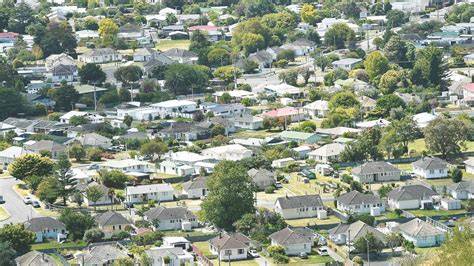
An elderly woman in Gisborne recently told the local paper that she had hoped life might become a little easier. Instead, she fears it is about to become more expensive. Solo parents interviewed about proposed social housing rent reforms expressed similar concerns. They were not discussing abstract questions of planning law or economic theory. They were worried about whether they would be able to afford rent, power and other essentials if the changes led to higher housing costs. Their concerns cut through the technical language that usually dominates housing debates and reveal something much more important. For most working-class people, housing is not an investment strategy or a policy problem. It is the question of whether they can remain in their community, keep a roof over their heads and live with a degree of security and dignity.
Not just in social housing but also in private people are feeling the pinch. Politicians tend to discuss housing through the language of markets. We hear about supply constraints, incentives, development opportunities and investment. The people most affected by housing policy rarely speak in those terms. A pensioner living on a fixed income knows that if rent rises, something else must give way. The heater may stay off for longer during winter. Food shopping becomes more restricted. Medical appointments might be postponed. A solo parent faces similar calculations. There is no spare money waiting in reserve and no simple way to absorb rising costs. Every increase has consequences. The concerns expressed by Gisborne residents are therefore not the product of misunderstanding or irrational fear. They arise from lived experience. They reflect decades of watching housing become steadily less affordable while politicians repeatedly promise that the next reform will solve the problem.
What makes these concerns significant is that they point towards the underlying reality of New Zealand’s housing system. The housing crisis is often presented as a complicated puzzle requiring technical expertise to understand. In reality, the central contradiction is remarkably simple. Most people need housing because they require shelter. A smaller group derives income and wealth from owning housing. A tenant looks at a house and sees somewhere to live. A landlord sees rental income. An investor sees an appreciating asset. A bank sees mortgage repayments. These competing interests shape every housing debate in the country. The problem is not that nobody understands how to provide homes. The problem is that housing has been transformed into a commodity whose primary purpose is increasingly to generate profit.
This transformation did not occur by accident. Over the past four decades successive governments have encouraged the treatment of housing as an investment vehicle. Rising property prices became a measure of economic success. Tax settings, lending practices and public policy all helped create conditions where property ownership became one of the most effective ways to accumulate wealth. For those fortunate enough to own multiple properties, this arrangement has been extremely rewarding. For tenants, young workers and low-income families, it has produced a very different reality. House prices have risen far faster than wages, rents consume an increasing proportion of household income and secure housing has become more difficult to obtain. The benefits and burdens of the system have been distributed unevenly, with those who own property accumulating wealth while those who do not are expected to shoulder the costs.
The situation is particularly acute in regional communities such as Gisborne. Political discussion often focuses on Auckland’s housing market because of its size and visibility, but many provincial towns face similar pressures while possessing fewer resources to absorb them. Wages are often lower, employment opportunities more limited and public services less accessible. Under these conditions, even relatively small increases in housing costs can have significant consequences. An elderly tenant in Gisborne may have far less capacity to absorb a rent increase than a professional homeowner in one of Auckland’s wealthier suburbs. Yet housing reforms are frequently debated as though they affect everyone equally. They do not. The costs of economic change are usually borne by those with the least power and the fewest resources.
For Māori communities these issues cannot be separated from the longer history of colonisation and land dispossession. Contemporary housing inequalities did not emerge in a historical vacuum. The colonisation of Aotearoa involved the large-scale transfer of land into private ownership through confiscation, coercion and unequal legal arrangements. Communities that had previously enjoyed collective relationships to land were progressively alienated from it. The consequences remain visible today in patterns of wealth, home ownership and housing insecurity. When Māori are disproportionately represented among those experiencing overcrowding, poor housing conditions and homelessness, this is not an unfortunate coincidence. It reflects historical processes that continue to shape the present. Any serious discussion of housing in New Zealand must therefore confront the reality that the housing crisis rests upon foundations laid long before the current generation was born.
Yet despite these structural realities, responsibility for housing insecurity is frequently pushed onto individuals. People struggling with rising rents are encouraged to examine their budgeting habits, employment choices or personal decisions. Politicians and commentators often frame housing hardship as a matter of individual responsibility rather than collective failure. This narrative serves an important ideological function because it obscures the role played by property relations themselves. A pensioner worried about rent increases is not struggling because of poor financial management. A young worker locked out of home ownership is not failing because they lack discipline. The problem is that access to a basic human necessity has been subordinated to the pursuit of profit. When housing is treated primarily as a commodity, affordability problems are not an unfortunate side effect. They are a predictable outcome.
The fears expressed by elderly people and solo parents in Gisborne should therefore be understood as part of a much broader social problem. Their concerns reveal the gap between the way housing is discussed by policymakers and the way it is experienced by ordinary people. For those at the top of society, housing represents wealth, investment opportunities and financial security. For those at the bottom, it increasingly represents anxiety, uncertainty and struggle. This divide lies at the heart of New Zealand’s housing crisis. It is not primarily a crisis of supply or planning regulations. It is a crisis produced by a system that treats homes as assets before it treats them as places for human beings to live.
As long as housing remains organised around profit, stories like the one emerging from Gisborne will continue to appear. There will always be another reform, another policy announcement and another promise that the market will eventually deliver affordable housing. Yet the experiences of tenants, pensioners and low-income families suggest a different conclusion. Housing insecurity is not the result of the system malfunctioning. It is the result of the system functioning exactly as intended. A society that allows wealth to be extracted from one of life’s most basic necessities will inevitably produce winners and losers. The elderly woman worrying about her future and the solo parent wondering how to make ends meet are not unfortunate exceptions to an otherwise successful model. They are among its most predictable outcomes.