A Kiwi Dies in Ukraine: The War Between Empires and the People Sent to Fight It

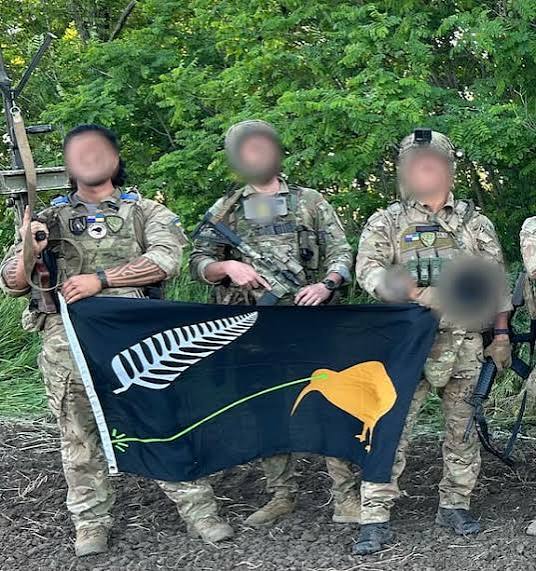
The death of a New Zealand man, Samuel Haines,  fighting in Ukraine was reported in the familiar language used whenever ordinary people are consumed by war. He was described through his personal history, his motivations, his family and his decision to travel across the world to take part in a conflict that had nothing to do with the daily lives of most people in Aotearoa. What was not highlighted was the fact that the tragedy of war is that those who suffer most are usually not the people who create wars. Politicians, generals and corporate interests make decisions from offices far away from the front lines, while working-class people are asked to sacrifice their bodies in the name of nations they did not create and systems they do not control.

The death of a Kiwi volunteer in Ukraine raises questions that go beyond one individual. Why are people from countries on the other side of the world being drawn into a conflict between major powers? Why has a war involving Russia, Ukraine, NATO and competing geopolitical interests been presented to millions of people as a simple battle between good and evil? And what does the presence of far-right nationalist forces within Ukraine’s military tell us about the way states use ideology and violence when they prepare societies for war?

For anarchists, the answers do not begin with choosing which flag deserves our loyalty. The history of the twentieth and twenty-first centuries shows that nationalism has repeatedly been used to convince ordinary people that the interests of their rulers are their own. Workers who have more in common with each other than with their own governments are encouraged to see each other as enemies because states require obedience, sacrifice and the willingness to kill. The war in Ukraine is no exception. It is a conflict shaped by Russian imperial ambitions, Ukrainian nationalism, NATO expansion, Western strategic interests and the wider competition between global powers. The people trapped inside this struggle are paying the price for decisions made by governments that claim to represent them.

Sam Haines ended up fighting and dying as a volunteer militia as part of the Azov battalion that emerged in 2014 during the conflict in eastern Ukraine. Its early period was associated with individuals and organisations connected to far-right nationalist politics. Some of its founders had histories linked to ultranationalist movements, and the organisation used symbols and imagery that attracted criticism because of their associations with European fascist traditions. Scholars, journalists and human rights organisations have documented these connections. When Azov was incorporated into Ukraine’s National Guard, it became an official military unit rather than an independent militia. Some argue that integration changed the organisation and that its fighters have since played a significant role in defending Ukrainian territory. Critics sttae that formal incorporation does not erase its ideological origins or the influence that nationalist movements gained through wartime conditions. Denying or minimising the reality of these movements serves the interests of those who want war narratives to remain simple and unquestionable.

The uncomfortable truth is that states have often relied on extremist movements when those movements are useful. Governments that present themselves as defenders of civilisation have repeatedly made alliances with forces they would condemn under different circumstances. During wartime, groups willing to use violence are often granted influence because military effectiveness becomes more important than political principles. This pattern is not unique to Ukraine. It has appeared throughout history wherever states have faced crises and sought to mobilise society around national struggle. The machinery of war creates conditions where authoritarian ideas can grow because war rewards hierarchy, obedience and the belief that violence can solve political problems.

The debate around NATO’s role in Ukraine is another area where discussion is often reduced to slogans. One side argues that NATO is a defensive alliance whose support for Ukraine is a necessary response to Russian aggression. The other argues that NATO expansion after the collapse of the Soviet Union created a security crisis that helped produce the conditions for war. An anarchist analysis should be sceptical of both state narratives because both begin from the assumption that the interests of governments and military institutions should determine the future of ordinary people.

NATO expansion did not happen in a vacuum. After the end of the Cold War, Western governments continued to extend their political and military influence into Eastern Europe. Countries that had once existed within the Soviet sphere joined a Western military alliance that Russia had long viewed as a strategic threat. From Moscow’s perspective, NATO’s movement closer to its borders represented a challenge to its regional power. From the perspective of countries that had experienced domination by the Soviet Union, joining NATO represented a search for security against future Russian aggression.

Great powers have always justified their actions as defensive. The United States has built military bases around the world while claiming to protect global security. NATO presents itself as a shield against authoritarianism while expanding its influence through military alliances. States rarely describe themselves as aggressors. They present their actions as necessary responses to the actions of others. This is how imperial competition operates. Each power claims it is responding. Each claims it is acting reluctantly. Each claims that its violence is necessary because the other side started it. Meanwhile, ordinary people are sent to die.

The idea that a worker from New Zealand, Britain, Poland, Russia or Ukraine should risk their life because of disputes between governments is one of the central illusions of nationalism. Nationalism asks people to identify with a territory, a flag and a ruling structure rather than with the people who share their workplaces, communities and struggles. A Ukrainian worker and a Russian worker may be told they are enemies, even though both face similar problems created by economic systems that concentrate wealth and power among elites.

The same applies to those who travel overseas to fight. Foreign volunteers often believe they are acting according to their values. Some are motivated by genuine opposition to invasion. Some are driven by adventure, ideology or a desire to find meaning through conflict. Some are drawn towards nationalist movements that promise belonging and purpose. War attracts people who are searching for something because war offers a powerful illusion, that that individual struggles can be transformed into a heroic mission. But the reality of war is rarely heroic. It is exhaustion, trauma, injury and death. It is young people being transformed into weapons by governments that will replace them when they are gone.

The arms industry understands this better than anyone. Every modern war creates opportunities for those who profit from weapons production. Governments spend billions on missiles, tanks, aircraft and military technology while claiming that such spending is necessary for security. The companies that manufacture these weapons do not lose when wars continue. Conflict becomes an economic system in itself, with entire industries dependent on permanent preparation for violence.

This is one reason anarchists have always opposed militarism. The problem is not simply that wars are tragic. The problem is that war is built into a political and economic order where power is concentrated in the hands of states and corporations. A society organised around competition, domination and profit will repeatedly produce conflicts because those conflicts serve the interests of powerful institutions.

The ordinary soldier is placed in an impossible position. They may genuinely believe they are defending their community. They may believe they are standing against injustice. They may have personal reasons for being there that outsiders cannot understand. But individual courage does not change the nature of the systems that send people into battle. A worker carrying a rifle does not become powerful because a government gives them a uniform. They become a tool of someone else’s power.

This is why anarchists reject the idea that the answer to imperialism is simply supporting a different imperial power. Opposing Russian aggression does not require celebrating NATO militarism. Criticising NATO expansion does not require supporting Russian nationalism. Rejecting far-right movements in Ukraine does not require accepting the authoritarian politics of the Russian state. A consistent anti-war position must reject the logic that ordinary people should become soldiers in struggles between competing rulers.

The tragedy of Ukraine is that millions of people have been forced into a conflict where their choices are shaped by forces far larger than themselves. Ukrainian civilians face the consequences of invasion and destruction. Russian civilians face the consequences of their government’s decisions and international isolation. Soldiers on both sides experience the reality of industrialised warfare. Refugees are displaced. Families lose loved ones. Meanwhile, political leaders continue to speak the language of victory.

The lesson anarchists draw from wars like Ukraine is not that people should ignore oppression or accept domination. The opposite is true. People have every right to resist invasion, exploitation and authoritarianism. But resistance does not have to mean replacing one hierarchy with another. The liberation of ordinary people will not come from stronger states, bigger armies or more powerful alliances. It will come from solidarity across borders.

The working class has no interest in endless competition between national elites. A Russian factory worker and a Ukrainian factory worker do not benefit from each other’s deaths. A New Zealand worker travelling thousands of kilometres to fight in someone else’s war is not advancing the interests of ordinary people here or anywhere else. The interests of workers are not found in the success of governments, military alliances or corporations. They are found in the possibility of a world where people no longer have to choose between obedience and destruction.

The death of a Kiwi in Ukraine should not simply be used as another piece of evidence in a debate between rival states. He was a person, not a symbol. His life mattered beyond the politics that surrounded his death. The question we should ask is why a world organised around borders, armies and competing powers continues to create situations where people believe that a meaningful path available to them is to travel across the world and risk dying in another country’s war.

The answer is not more nationalism. It is the opposite. The future belongs not to the flags that divide us, but to the solidarity that connects us.
For Anzac Day: The Fight For Anarchism is The Fight For Peace

Anzac Day always seems an appropriate occasion to restate the anarchist opposition to war, and reiterate that it is never in the interests of the working class to support war.

The anarchist case against war arises from our analysis of, and opposition to, capitalism. Capitalism is the cause of modern war. The insatiable hunger for profit generates a relentless search by the various capitalist powers for markets and sources of raw materials. Modern war is in reality an extension of “business under capitalism” carried to an extreme of violence, where the economic rivalries between the various national sections of the capitalist class can no longer be peacefully resolved or controlled.

Despite the story that the First World War started because of the assassination of the Austrian emperor’s nephew Archduke Ferdinand by Serbian nationalists, the reality was that it was the outcome of years of conflicting capitalist interests. British and French capitalism in New Zealand was being challenged by the rising expansion of Germany, both in Europe and abroad. When Germany showed in 1911, by sending a gunboat to the city of Agadir, that they intended to get a foothold in Morocco, the then Chancellor of the Exchequer in the UK, Lloyd George, at once reacted with a speech threatening war.

In this tense international environment the crisis that would produce war on a Global scale was probably inevitable. The “Austria-Serbia dispute” was merely the spark that ignited the conflagration.

Anyone who preaches peace and disarmament without calling for an overthrow of capitalism have yet to demonstrate how these objectives can be realised, or how trade and export of capital can expand without violence being the outcome.

The abolition of war, and the threat of war, will only be realised with the overthrow of capitalism and the restructuring of society on the basis of common ownership and production solely to meet human needs. Such a society would unite the human race without economic classes, or national barriers dividing us.

Whenever war is fought, for whatever false reasons that are presented to us, and whichever side is declared the victor, one side is always the loser, and that is us, the workers of the world.

As workers we need to realise that our enemy is not the worker in other lands; rather it is the capitalist class at home, and this is a far more important division than that separating nation from nation.

The fight for anarchism is inseparable from the fight against war. The only way to fight militarism is to fight capitalism and the state.

The fight for anarchism is the fight for peace.

No War but the Class War: Iran and the Crisis of Empire

There is a persistent arrogance embedded in the worldview of Western power that overwhelming violence can break the political will of entire societies. Again and again the same assumption appears. Israeli strategists believe that flattening Gaza will sever Palestinians from their land. Washington spent more than sixty years trying to strangle Cuba economically in the hope that its people would abandon their revolution. Now the same logic is driving the escalating war against Iran. The belief remains that bombs, assassinations and economic siege will eventually force a nation to submit.

These actions are usually described in the language of policy errors or strategic miscalculations. But that framing misses the deeper issue. What we are witnessing is not simply poor strategy. It is the continuation of a worldview shaped by centuries of colonial domination, one that still imagines Europe and its settler extensions as the natural centres of civilisation. That worldview continues to shape the political imagination of Western elites, producing a kind of ideological blindness whenever societies outside the Western sphere refuse to comply.

The current war against Iran illustrates this dynamic with disturbing clarity. The conflict erupted when the United States and Israel launched coordinated strikes on Iranian military and strategic sites, triggering retaliatory missile and drone attacks across the region and raising fears of a wider war. The ripple effects have already spread far beyond the Middle East, shaking global energy markets and disrupting shipping routes through the Strait of Hormuz, one of the most important oil transit chokepoints in the world.

Yet even as the war intensifies, the underlying logic driving it remains remarkably familiar. Western policymakers appear convinced that military force will compel Iran to abandon its political trajectory. This assumption persists despite decades of evidence showing that sanctions, assassinations and military threats have failed to achieve that outcome.

To understand why this pattern repeats itself, it is necessary to look beyond individual decisions and examine the ideological structure that underpins Western power. For centuries European empires justified their expansion through a belief in civilisational superiority. Colonised peoples were portrayed as irrational, backward or incapable of governing themselves. This narrative provided the moral cover for conquest, slavery and economic exploitation.

Although the formal colonial empires of Europe have largely disappeared, the assumptions that sustained them remain embedded in the political culture of the West. They shape how conflicts are interpreted and how resistance from non-Western societies is understood. When nations like Iran refuse to submit to Western dominance, their actions are often framed not as political resistance but as irrational fanaticism or extremism.

This mindset has profound consequences. It produces policies that consistently underestimate the resilience of the societies they target. The result is a cycle of escalation in which each failure leads to more coercion rather than reflection.

Iran occupies a particularly central place within this history of imperial confrontation. The modern conflict between Iran and the United States cannot be understood without remembering the 1953 coup that overthrew Iran’s democratically elected Prime Minister Mohammad Mossadegh after he attempted to nationalise the country’s oil industry. The coup, orchestrated by the CIA and British intelligence, restored the authoritarian rule of the Shah and laid the foundations for the 1979 revolution that created the Islamic Republic.

In other words, the very political system that Western governments now describe as a threat was itself shaped by earlier Western intervention. The present war is therefore not simply a confrontation between two states. It is part of a much longer historical struggle over sovereignty, resources and geopolitical power.

Energy lies at the heart of this struggle. Iran sits atop some of the world’s largest oil and gas reserves, making it a crucial player in global energy markets. Control over those resources, and over the financial systems that govern them, has long been central to US foreign policy. The dominance of the US dollar in international trade allows Washington to wield enormous economic power through sanctions and financial restrictions.

But that system is increasingly under strain. Countries targeted by sanctions are developing alternative financial arrangements designed to bypass Western control. Iran has strengthened economic ties with China and Russia while participating in broader discussions within the BRICS framework about alternative trade and currency systems. The more Washington attempts to isolate these states economically, the more incentive they have to construct parallel systems outside the reach of Western financial institutions.

From the perspective of American strategists, this represents an existential threat to the existing global order. The privileged position of the US dollar has allowed the United States to sustain massive deficits while maintaining global influence. Preserving that position requires control over energy flows and the prevention of rival economic blocs capable of challenging dollar dominance.

Seen in this light, the war against Iran appears less like a defensive response to security threats and more like an attempt to enforce the geopolitical architecture that has underpinned Western power since the end of the Second World War.

For people in Aotearoa New Zealand, these dynamics might appear distant. Yet our country is far from neutral in this global system. The New Zealand government has publicly supported the US-Israeli strikes as part of efforts to prevent Iran from threatening international security, while simultaneously calling for negotiations and restraint.

This response reflects a long-standing pattern in New Zealand foreign policy. Successive governments have cultivated the image of an independent, rules-based international actor while remaining firmly embedded within Western strategic alliances. Wellington may not deploy troops in every conflict, but it rarely challenges the fundamental assumptions of the imperial system that structures global politics.

The reaction to the current Iran war illustrates this balancing act. Official statements have avoided openly endorsing regime change while still framing the strikes as a response to Iranian behaviour. Critics, including former Prime Minister Helen Clark, have argued that the attacks constitute a clear violation of international law, drawing parallels with earlier Western interventions such as the invasion of Iraq.

This debate reveals the contradictions at the heart of New Zealand’s international identity. On the one hand, the country likes to present itself as a defender of international law and multilateral diplomacy. On the other hand, it remains politically and economically integrated into the Western alliance system that repeatedly violates those same principles.

These contradictions are not merely diplomatic curiosities. They reflect the material realities of a settler-colonial society embedded within the structures of global capitalism. New Zealand’s prosperity has long depended on participation in an international economic order dominated by Western powers. Our security relationships, intelligence partnerships and trade networks are deeply intertwined with that system.

From an anarcho-communist perspective, this raises uncomfortable questions. Can a state built on the colonisation of Māori land genuinely claim moral authority in global debates about sovereignty and self-determination? Can a society integrated into imperial economic networks meaningfully oppose the wars that sustain those networks?

The war against Iran forces us to confront these questions more directly. It exposes the reality that even small states like New Zealand are implicated in the geopolitical structures that produce global conflict.

This does not mean that the Iranian state itself should be romanticised. The Islamic Republic is a deeply authoritarian regime that suppresses dissent and enforces rigid social controls. Acknowledging that reality, however, does not justify foreign aggression. Opposition to imperial war does not require political support for the governments targeted by that war.

The real issue is the broader system that continually produces such conflicts. The same structures of global capitalism that generate inequality and ecological destruction also generate war. Competition over resources, trade routes and strategic influence drives states toward confrontation.

As that system enters a period of increasing instability, the political responses within Western societies are becoming more authoritarian. Governments expand surveillance powers, criminalise protest and tighten borders. The language of security becomes the justification for repression.

Empire and authoritarianism develop together. The violence inflicted abroad inevitably reshapes politics at home.

For people living in Aotearoa, this reality should not be abstract. Our own history is shaped by colonial conquest and the suppression of Indigenous sovereignty. The same ideological frameworks that justified the seizure of Māori land also underpinned the expansion of European empires across the world.

Recognising this connection does not mean collapsing all struggles into a single narrative. But it does require acknowledging that colonialism, capitalism and imperial war are historically intertwined.

The war against Iran is therefore more than a distant geopolitical event. It is part of a broader crisis within the global system that shapes our lives here as well.

As the conflict escalates, its economic consequences are already being felt around the world. Disruptions to oil supplies threaten to push up fuel prices and destabilise supply chains. Small economies like New Zealand’s are particularly vulnerable to such shocks.

Yet the deeper significance of the war lies not in its immediate economic effects but in what it reveals about the trajectory of global power. The post-Cold War era of uncontested American dominance is fading. New geopolitical blocs are emerging. Old alliances are shifting.

In this uncertain landscape, imperial powers are attempting to preserve their dominance through increasingly aggressive means. Military force, economic sanctions and political destabilisation remain the tools of choice.

But history suggests that such strategies rarely achieve the outcomes their architects intend. Attempts to crush resistance often strengthen it. Societies subjected to external pressure frequently become more determined to defend their sovereignty.

This is why decades of sanctions have not broken Cuba. It is why Venezuela has survived repeated attempts at regime change. And it is why Iran, despite relentless pressure, continues to resist submission.

The lesson is not that states are invincible. It is that the political will of entire populations cannot easily be destroyed through violence and coercion.

For radical movements around the world, including here in Aotearoa, the challenge is to confront the structures that make such wars possible. That means questioning the alliances, institutions and economic systems that bind our society to imperial power.

It also means building forms of solidarity that extend beyond national borders. The struggle against exploitation and domination is inherently international.

The war against Iran is a stark reminder of the stakes involved. It reveals the enduring arrogance of imperial power and the catastrophic consequences that arrogance can produce.

The question facing us is whether we continue to accept the structures that make such wars inevitable, or whether we begin to imagine and organise for a world beyond them.

The age of illusions is ending. The only meaningful response is clarity, solidarity, and resistance.

This article appears in the latest issue of our newsletter which can be found here: https://awsm.nz/awsm-newsletter-solidarity-march-2026/

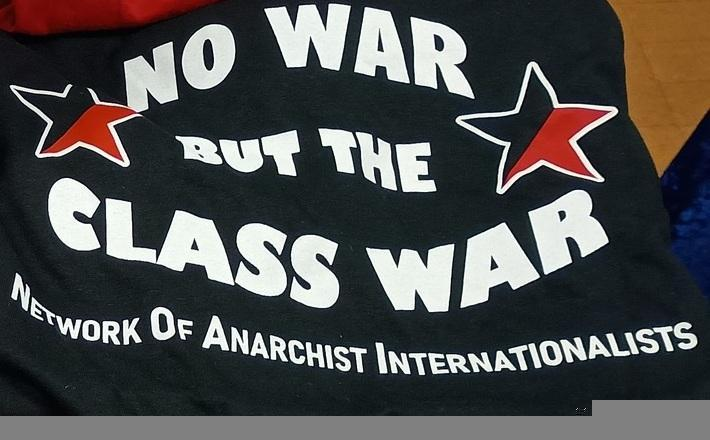
“For No War But the Class War”: Reflections on the Inaugural Meeting of the Network of Anarchist Internationalists

The inaugural meeting of the Network of Anarchist Internationalists (NAI), held on 9 November 2025, is to be welcomed. It arrives at a moment when the world is being marched towards deeper militarisation, permanent war, and the normalisation of mass death as a background condition of capitalism. The importance of this meeting is not that it produced something entirely new, but that it restated, with rare clarity, something anarchists have always known and too often failed to insist upon loudly enough: war is not a mistake, a deviation, or the result of bad leaders. War is a structural feature of capitalism in crisis, and internationalism is not a moral posture but a material necessity.

Across the globe, ruling classes are preparing their populations for sacrifice. The language differs, democracy, security, sovereignty, civilisation, but the demand is the same everywhere – accept falling living standards, accept repression, accept death, so that capital may survive its own contradictions. In this context, the NAI’s insistence on revolutionary defeatism and class internationalism cuts against the grain not only of mainstream politics, but of much of what passes for the contemporary left. It refuses the comforting lie that peace can be secured by choosing the right side in imperialist conflicts. It rejects the fantasy that workers share a meaningful interest with “their” state. And it insists, instead, that the only war worth fighting is the class war, waged from below against all states and all forms of capital.

This position matters precisely because the dominant political atmosphere is one of enforced alignment. Populations are told that neutrality is complicity, that refusal to choose between competing imperialisms is wrong, and that solidarity must be filtered through the interests of nation-states. The NAI’s intervention exposes this logic for what it is – the ideological conscription of the working class. When anarchists refuse to take sides in capitalist wars, we are not refusing solidarity, we are refusing to let solidarity be defined by generals, politicians, and arms manufacturers.

The network’s emphasis on supporting deserters, draft resisters, and war refusers on all sides is especially significant. These figures are rarely celebrated, even by much of the left, because they embody a politics that cannot be easily instrumentalised. The deserter does not die heroically for a flag. The refuser does not advance a national narrative. Instead, they act on the simple recognition that the enemy is not the worker in another uniform, but the system that put both of them there. To defend and organise around such acts is to affirm that internationalism begins not in abstract declarations, but in concrete refusals to kill and be killed for capital.

For anarcho-communists in Aotearoa, this analysis resonates deeply with our own position at the margins of the imperial core. The New Zealand state presents itself as benign, humanitarian, and peace-loving, even as it integrates itself more tightly into Western military alliances, expands surveillance powers, and prepares the ideological ground for future conflicts in the Pacific. The language of partnership and security masks the same underlying reality found elsewhere, that the state exists to manage capitalism, and capitalism requires violence to reproduce itself. There is no “clean” participation in this system, only varying degrees of distance from its most visible atrocities.

The value of the NAI is that it reasserts internationalism not as a sentimental attachment to distant struggles, but as a way of understanding our own conditions. War does not only happen “over there”. It happens in the ports, in the supply chains, in the factories producing weapons and components, in the austerity budgets justified by military spending, and in the police powers normalised in the name of security. The battlefield is not only the front line, it is the everyday life of the working class under capitalism. Recognising this dissolves the false separation between anti-war politics and local class struggle. They are the same fight, viewed from different angles.

Historically, anarchist internationalism emerged from precisely this understanding. From the First International through to the Saint-Imier split and beyond, anarchists rejected the idea that emancipation could be achieved through national projects or state power. The catastrophe of the First World War only confirmed this analysis, as socialist parties across Europe abandoned international solidarity in favour of patriotic mobilisation. The lesson was brutal but clear – without an uncompromising opposition to nationalism and the state, the working class will always be mobilised against itself.

What the NAI represents is a conscious attempt to recover that lesson in the present moment. This is not nostalgia, but necessity. Capitalism today is globalised to an extent unimaginable to earlier generations, and its crises are correspondingly international. Supply chains stretch across continents, financial shocks ripple instantly, and wars are fought not only with soldiers but with sanctions, debt, and energy markets. Any meaningful resistance must operate on the same scale, or it will be contained, co-opted, or crushed.

At the same time, the network avoids the trap of imagining internationalism as a centralised structure issuing directives from above. It speaks instead of coordination, communication, and mutual recognition between autonomous groups rooted in their own contexts. This is crucial. Anarchist internationalism cannot be a pale imitation of statist internationals, nor can it ignore the unevenness of global struggle. Solidarity must flow in multiple directions, shaped by listening as much as by speaking, and grounded in the understanding that no single movement or region holds the key to liberation.

From an anarcho-communist perspective, the NAI’s framework aligns with a broader commitment to abolishing not only war, but the social relations that make war inevitable. Capitalism fragments humanity into competing units, firms, nations, identities, each forced to struggle against the others for survival. War is simply this logic made explicit. To oppose war without opposing capitalism is therefore to treat the symptom while leaving the disease intact.

Of course, revolutionary internationalism faces real challenges. Nationalism remains powerful, especially in moments of crisis, and the pressure to “take sides” can fracture movements. There are also genuine questions about how anarchists relate to anti-colonial and national liberation struggles without reproducing statist logic or dismissing the lived realities of oppression. These tensions cannot be resolved through slogans alone. They require ongoing debate, humility, and a willingness to sit with contradiction without abandoning core principles.

What the NAI offers is not a finished programme, but a political compass. It points away from alignment with power and towards solidarity from below. It reminds us that the working class has no homeland, that borders are tools of domination, and that peace under capitalism is always temporary and conditional. Most importantly, it affirms that internationalism is not something to be postponed until “after the revolution”. It is the means by which revolution becomes possible at all.

For anarcho-communists in Aotearoa, the task is to take this perspective seriously, not as observers of a global process, but as participants in it. That means interrogating how our labour, our resources, and our silence may be implicated in global systems of violence. It means building links with comrades elsewhere that go beyond statements and into shared practice. And it means refusing the comforting illusion that we can insulate ourselves from the consequences of a world order built on exploitation and war.

The inaugural meeting of the Network of Anarchist Internationalists should be understood as an invitation to sharpen our analysis, deepen our commitments, and re-anchor anarchist politics in the uncompromising struggle against capitalism, the state, and all their wars.