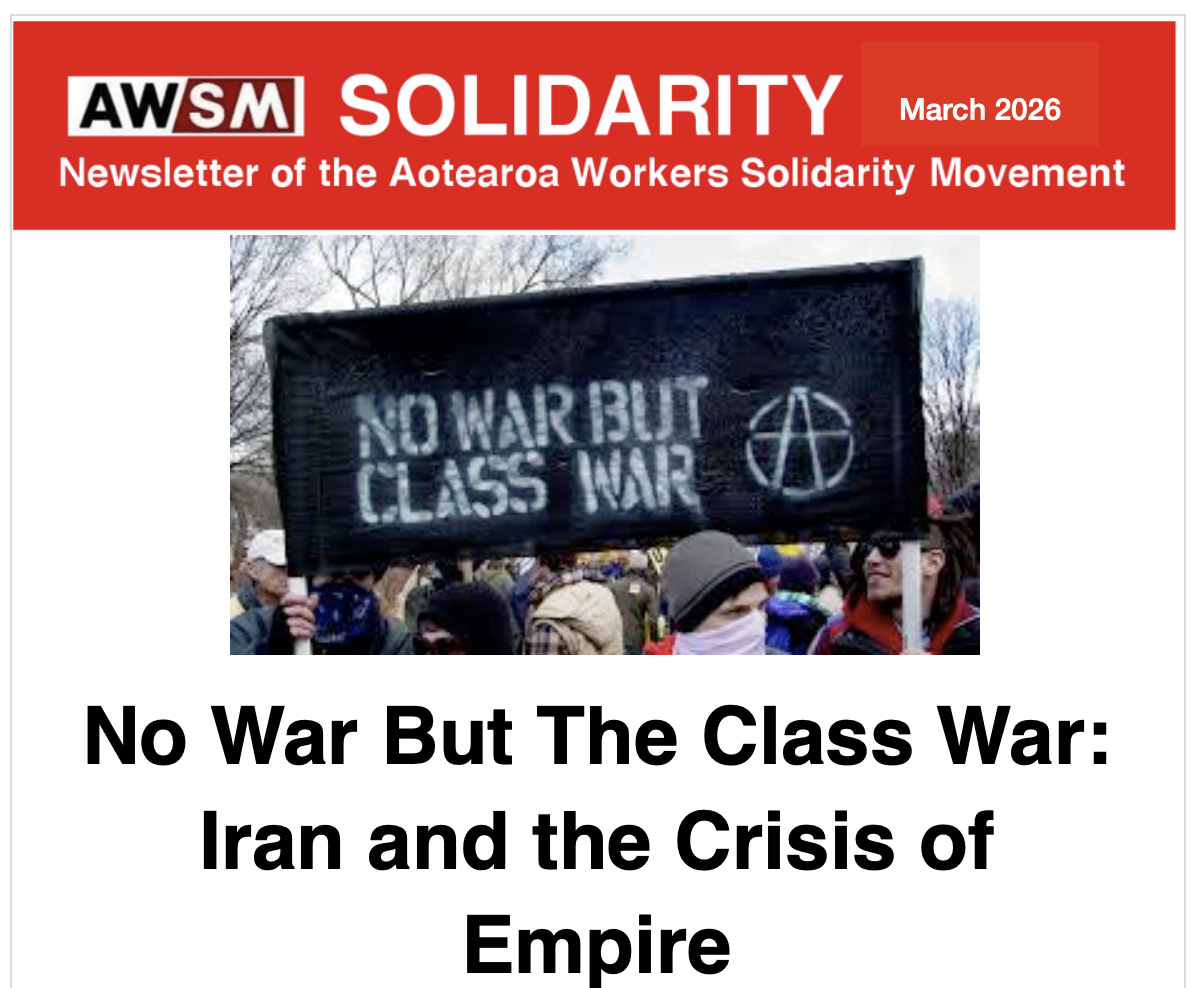
Our latest newsletter Solidarity is now available:
blog
Anarchy Is Not What You Think It Is
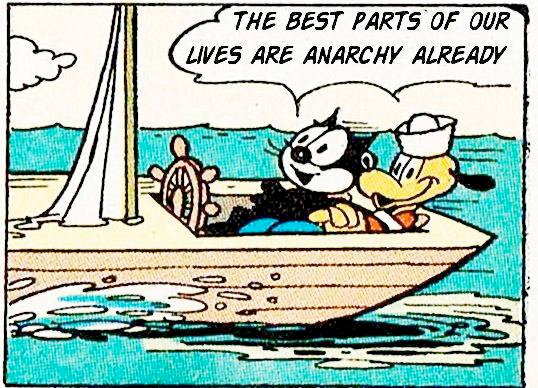
For most people, the word anarchy conjures chaos. Burning cars, smashed windows, shouting crowds, the collapse of all restraint. It is a word carefully trained to frighten. Politicians invoke it as a threat, newspapers as a warning, and police as a justification. Anarchy, we are told, is what happens when order disappears.
But we are making a simpler and more unsettling claim: anarchy is not the absence of order, but the absence of rulers. And far from being rare, it is woven through everyday life in Aotearoa New Zealand.
This is not about anarchism as an ideology, a movement, or a future revolution. We are not arguing that everyone should call themselves an anarchist, nor do we offer a blueprint for how society ought to be reorganised. Instead, we offer something quieter and more subversive. We look closely at how people already live, care, work, raise children, resolve conflict, and survive, often without asking permission, without formal authority, and without the state playing a central role at all. In other words, we argue that anarchism is a lived practice, not a doctrine.
The inspiration for this approach comes from the British writer and thinker Colin Ward, whose work Anarchy in Action refused the dramatic gestures of revolutionary politics and instead turned attention to the mundane. Ward was interested in housing co-operatives, playgrounds, allotment gardens, informal education, and the ways ordinary people organise their lives when institutions fail or intrude too heavily. His argument was disarmingly simple – if you want to understand anarchism, do not look to manifestos or barricades, look at everyday life.
Aotearoa offers a particularly clear view of this everyday anarchism. Not because it is uniquely radical or harmonious, but because the failures and violences of the state are so visible, and because people have had to rely on one another in spite of it. Mutual aid after floods, whānau stepping in where welfare systems fall short, informal housing arrangements that keep people off the streets, cash work and favours that bypass wage discipline, conflict resolved quietly without police or courts, these are not marginal or exceptional activities. They are normal. They are how life continues and yet they are rarely named as political.
One of the most powerful myths of modern society is that order comes from above. We are taught that without rules imposed by the state, without police, bureaucrats, managers, and experts, society would descend into violence and disorder. Cooperation is treated as fragile, conditional, and in need of constant supervision. When people help one another, it is framed as charity or kindness, never as a form of social organisation in its own right.
This myth serves a purpose. It legitimises authority while obscuring the fact that most of what keeps society functioning happens below the level of law and policy. The state depends heavily on unpaid care, informal cooperation, and community resilience, even as it claims credit for stability and threatens punishment for deviation. It is quick to intervene when people step outside permitted channels, but slow, or absent, when real support is needed.
Nowhere is this contradiction clearer than in moments of crisis. After earthquakes, floods, and fires in Aotearoa, it is neighbours, whānau, and community groups who act first. Food is shared, shelter organised, children looked after, elders checked on. These responses are not centrally planned. They emerge from relationships, trust, and local knowledge. The state arrives later, often to regulate, document, or withdraw support once the immediate danger has passed.
This is not an argument that the state does nothing, or that it is always irrelevant. It is an argument that social life is not produced by authority, even when authority claims ownership over it. The order we rely on most is informal, relational, and largely invisible to official accounts.
In Aotearoa, these dynamics are inseparable from colonisation. The settler state did not arrive to create order from chaos. It arrived to impose its own forms of order on societies that were already organised, often in ways that conflicted with European notions of property, hierarchy, and law. Māori social organisation, grounded in whānau, hapū, tikanga, and collective responsibility, represented a profound challenge to the authority of the colonial state. Land tenure without individual ownership, justice without prisons, governance without a sovereign rule, these were not abstract alternatives, but lived realities.
Colonisation sought to dismantle these systems, replacing them with wage labour, private property, policing, and bureaucratic control. Yet despite generations of violence, dispossession, and assimilation, non-state forms of social organisation persist. They persist not as relics of a pre-colonial past, but as adaptive, living practices shaped by ongoing resistance and survival.
It is important to be clear here. We are not claiming that Māori society is “anarchist” in any simple or ideological sense. Such a claim would be both inaccurate and disrespectful. What it does argue is that Māori social life exposes the limits and contradictions of the state by demonstrating that authority is not the only way to organise society, and that relational, non-statist forms of order are not only possible but enduring.
These practices are not confined to Māori communities. Working-class life across Aotearoa is full of informal systems that make survival possible in the face of rising rents, precarious work, and shrinking public services. People share childcare, tools, transport, and knowledge. They look after one another’s kids, cover shifts, lend money without contracts, and find ways around rules that would otherwise leave them stuck. Much of this activity exists in a legal grey area, tolerated when it is convenient and criminalised when it becomes too visible.
What links these practices is not ideology, but necessity. People do not organise this way because they have read anarchist theory. They do it because they have to, and because cooperation works better than competition when resources are scarce and institutions are hostile.
Anarchism, in this sense, is not a destination but a description. It describes what happens when people take responsibility for their own lives and for one another, rather than deferring to distant authorities. It describes social order that emerges from below, shaped by context, relationships, and mutual obligation. It is messy, imperfect, and often fragile, but so is life itself.
This perspective challenges both defenders and critics of the state. Against those who insist that authority is the source of all order, it offers abundant evidence to the contrary. Against those who imagine anarchism only as a future rupture or total collapse, it insists that much of what they desire already exists, quietly, in the present.
We are not trying to romanticise these practices. Informal systems can reproduce inequality, exclusion, and harm. They can fail, break down, or be overwhelmed. Nor do we deny the reality of violence, abuse, or exploitation within communities. What we do though is refuse the assumption that the state is the natural or necessary solution to these problems.
Instead, we ask a different set of questions. How do people actually manage harm when they do not call the police? How do families and communities regulate behaviour without formal authority? What happens when responsibility is collective rather than delegated upward? And why are these forms of organisation so often ignored, dismissed, or actively undermined?
These questions matter now more than ever. As faith in political institutions erodes, as economic inequality deepens, and as crises multiply, the gap between official systems and lived reality grows wider. Governments promise security while delivering precarity. Bureaucracies expand even as their capacity to care diminishes. In this context, the everyday anarchism of mutual aid and informal cooperation is not a fringe phenomenon, it is a lifeline.
We invite you to look differently at your own life and the lives around you. To notice the ways order is created without orders being given. To recognise that much of what feels natural or inevitable is in fact the result of collective effort without command. And to consider what might change if we took these practices seriously, not as temporary stopgaps, but as the foundations of social life.
We are not demanding agreement, but we do ask for attention. Because once you start to see anarchism in action, it becomes difficult to unsee it.
image c/o theslowburningfuse.wordpress.com
Homes for People, Not Profit: Why Basic Income Won’t End Homelessness

Scoop ran a piece on homelessness and basic income in Aotearoa by Basic Income New Zealand, which does something important – it acknowledges that poverty and housing insecurity are not marginal issues but central political questions. The mere fact that guaranteed income schemes are being discussed in relation to homelessness signals how deep the crisis has become. But from an anarcho-communist perspective, it is not enough to debate how much money the state should distribute. We have to ask why, in one of the wealthiest countries per capita in the world, so many people do not have a secure place to live in the first place.
Homelessness in Aotearoa is routinely framed as a failure of income support, a gap in the safety net, or an unfortunate by-product of economic turbulence. That framing is too polite. Homelessness is not a glitch in capitalism, it is one of its regular outputs. We live in a society where housing is treated first and foremost as a commodity, something to be bought, sold, speculated on, leveraged, and accumulated. Shelter is not organised around need but around profit. Land is hoarded, and rents are pushed as high as the market will bear. Under those conditions, it is not surprising that tens of thousands of people experience insecure housing, are shunted into motels at public expense, or end up sleeping rough. The surprise would be if they did not.
The attraction of a basic income in this context is obvious. If rents are extortionate and wages are stagnant, give people more money. If benefits are punitive and conditional, replace them with something universal and unconditional. Parties such as the Green Party and The Opportunity Party have floated versions of guaranteed minimum income schemes as a humane response to poverty and precarity. The idea that every person should have a material floor below which they cannot fall has moral force. It speaks to dignity. It gestures toward the principle that survival should not depend on pleasing a case manager or satisfying bureaucratic criteria. In a country where benefit sanctions and administrative cruelty have pushed people further into crisis, the appeal of unconditional income is understandable.
Yet we have to be clear about the limits of this approach. A basic income, introduced within the existing framework of capitalist property relations, does not de-commodify housing. It does not socialise land. It does not remove rental housing from the speculative market. It does not end the power of landlords to set prices according to what they can extract. Instead, it injects cash into a system that continues to operate according to profit. In such a system, there is every reason to expect that a significant portion of that cash will be absorbed by rising rents and costs. Without structural transformation, income supports risk becoming subsidies for property owners.
There is a deeper issue at stake. Capitalism does not simply generate poverty by accident, it requires insecurity as a disciplining mechanism. The threat of unemployment, debt, and eviction keeps workers compliant. When education is financed through loans, graduates begin their working lives already indebted. When housing is scarce and expensive, people are less likely to resist exploitative work for fear of losing their home. Homelessness, at the extreme end, is a warning written in human terms – fail to secure your place in the labour market and this is what awaits you. A basic income might blunt that threat at the margins, but if it leaves intact the wage system and the commodification of essentials, the underlying logic persists.
In Aotearoa, we have seen how state policy oscillates between paternalistic support and outright punishment. Benefit levels rise slightly, then are eroded by inflation or offset by cuts elsewhere. Administrative hurdles are lowered in one term of government and raised in the next. At the same time, proposals emerge to empower police to issue “move-on” orders to rough sleepers, effectively criminalising the visibility of poverty. The contradiction is stark, the state claims concern about homelessness while expanding its capacity to remove homeless people from sight. Under capitalism, social policy and policing often work hand in hand, one managing poverty, the other containing it.
Those who experience homelessness are not a random cross-section of the population. Women, children, disabled people and Māori are disproportionately affected. That fact alone should dispel the myth that homelessness is about individual failure. It is about structural inequality layered across race, gender and class. The legacy of colonisation in Aotearoa, the alienation of Māori land, and the concentration of property ownership in settler and corporate hands form part of the story. So too does the transformation of housing into an asset class that delivers untaxed capital gains to investors while locking others out. A cash transfer cannot undo that history.
This does not mean that anarcho-communists should dismiss basic income debates as irrelevant. On the contrary, any measure that immediately reduces hardship deserves serious consideration. An unconditional income could weaken the most degrading aspects of the welfare system and give people breathing space. It could reduce the power of employers to coerce workers into unsafe or underpaid jobs. It could create room for care work, community activity and political organising. These are not trivial gains. But we must resist the temptation to treat them as endpoints rather than footholds.
The fundamental problem is that capitalism organises life around exchange value rather than use value. Housing exists to generate rent, not simply to shelter. Land appreciates because it is scarce and privately owned, not because its value derives from community life. As long as these premises remain intact, homelessness will reappear in new forms. The system can tolerate a certain level of misery, but it cannot tolerate a challenge to property relations. That is why even the most generous reforms are carefully calibrated to avoid undermining the sanctity of private ownership.
A genuinely transformative approach to homelessness would start from the principle that housing must be de-commodified. That means large-scale public and community, controlled housing construction, not as a residual safety net but as a dominant form. It means taking land out of speculation and placing it under democratic stewardship. It means supporting hapū-led and community-led housing initiatives that reflect tino rangatiratanga and collective control rather than market dependency. It means confronting the political power of developers, landlords and banks rather than courting them.
Such a programme cannot be delivered solely through parliamentary manoeuvres. The history of social change in this country, from union rights to Māori land struggles, shows that gains are won through collective action. Tenant organising, occupations of vacant buildings, and solidarity networks that redistribute resources outside the market are not romantic gestures, they are practical challenges to the logic that treats shelter as a commodity. When communities occupy empty houses while families sleep in cars, they expose the absurdity of a system that protects property over people.
Worker power is central to this picture. Homelessness is tied not only to housing costs but to wages and job security. An economy built on precarious contracts, gig work and underemployment produces constant risk of eviction. Strengthening unions, building worker co-operatives, and demanding wages that reflect real living costs are essential components of any serious anti-homelessness strategy. Without shifting power in the workplace, income supports risk becoming permanent patches on a leaking boat.
There is also a cultural battle to be fought. Capitalist ideology frames independence as individual self-reliance and dependence as personal failure. A basic income can be sold within that framework as a tool to help individuals “get back on their feet,” but the deeper truth is that none of us survive alone. Housing, like healthcare and education, is a collective good. It depends on shared labour, shared infrastructure and shared land. Reclaiming that understanding is part of dismantling the moral narrative that justifies homelessness.
The Scoop article gestures toward compassion, and compassion matters. But compassion without structural analysis can slide into technocracy. It asks how to administer poverty more efficiently rather than how to abolish it. Anarcho-communism insists that homelessness is not inevitable, not natural, and not the result of insufficient managerial finesse. It is the outcome of deliberate choices about ownership, profit and power. Those choices can be reversed, but not without confronting entrenched interests.
In the end, the debate over basic income in Aotearoa is a test of political imagination. Are we prepared to see housing as a right rooted in collective ownership and democratic control? Or will we settle for cash transfers that leave the architecture of inequality untouched? The answer will determine whether homelessness continues to haunt our cities as a managed crisis or recedes as a relic of a system we chose to leave behind.
If we are serious about ending homelessness, we must move beyond tinkering. We must challenge the commodification of land, the wage system that disciplines through scarcity, and the punitive apparatus that criminalises poverty. We must build networks of solidarity that meet needs directly while organising for deeper transformation. A basic income may be part of that struggle, but it cannot be its horizon. The horizon must be a society in which no one’s right to shelter depends on their capacity to pay, and where collective care replaces market logic as the organising principle of life.
Another Year, Same System

The New Year arrives each January like an official decree. It is announced by fireworks and by media outlets rehearsing the same tired narrative of fresh starts and personal reinvention. The calendar flips, the numbers change, and we are told that something has begun anew. But for the working class, for the colonised, for those ground down by rent, debt, policing, and war, the New Year is not a rupture. It is a continuity. The same relations of domination carry over at midnight without so much as a pause for breath.
Capitalism loves the New Year because it individualises time. It turns history into a sequence of private moral challenges. This year you will do better, work harder, save more, heal yourself, improve your brand. If last year was difficult, the problem is framed as personal failure or poor choices rather than the structural violence of an economic system that extracts value from our lives while returning precarity, exhaustion and alienation. The New Year resolution is the ideological cousin of neo-liberalism – a demand that we fix ourselves rather than abolish the conditions that harm us.
For anarcho-communists, the New Year cannot be approached as a neutral or innocent moment. Time itself has been colonised. The Gregorian calendar, the fiscal year, the quarterly report, the deadline and the productivity cycle are tools of governance. They discipline our bodies and our expectations, teaching us to measure life in output rather than meaning, compliance rather than freedom. Even celebration is regimented. We are permitted a controlled release of joy, alcohol and fireworks before returning obediently to work, debt and surveillance.
Yet it would be a mistake to dismiss the New Year entirely as mere spectacle. People do feel something at the turn of the year, and that feeling matters. Beneath the manufactured optimism there is often grief, anger, exhaustion and a quiet recognition that life cannot continue indefinitely as it is. The desire for change is real, even if the system works relentlessly to misdirect it inward. Our task is not to sneer at that desire, but to collectivise it, politicise it, and turn it outward against the structures that make renewal impossible.
From an anarcho-communist perspective, the only meaningful “new year” is one that breaks with the social relations of the old. Without the abolition of wage labour, private property, the state and colonial domination, no year is truly new. The boss remains a boss on January 1st. The landlord still extracts rent. The police still enforce property relations with violence. The prison gates do not open because the calendar has changed. The bombs do not stop falling because politicians wish peace on social media.
In Aotearoa New Zealand, the New Year also sits awkwardly atop unresolved colonial violence. The land remains stolen, despite decades of settlement processes designed more to stabilise capitalism than to restore tino rangatiratanga. Māori over-representation in prisons, child removals and poverty statistics does not reset at midnight. The state continues to manage inequality rather than abolish it, presenting incremental reform as justice while defending the fundamental structures of dispossession. To speak of a “fresh start” without confronting this reality is to participate in historical erasure.
Anarcho-communism rejects the idea that history progresses automatically through calendar time. There is nothing inevitable about improvement. Things get better only when people organise collectively to make them better, often at great cost. Every gain made by working people – shorter hours, safer conditions, welfare, and collective rights – was won through struggle, not optimism. And every gain can be taken away when struggle recedes. The New Year should therefore not be treated as a passive hope for improvement, but as a moment to recommit to active resistance.
This does not mean adopting the language of grim duty or joyless militancy. On the contrary, anarcho-communism insists that liberation must be lived now as well as fought for. The problem with capitalist New Year narratives is not that they promise happiness, but that they isolate it. They tell us to heal alone, to improve alone, to cope alone. Anarchist politics insists that joy, care and renewal are collective practices. We do not become free by perfecting ourselves under oppression, but by dismantling oppression together.
The turn of the year can therefore be reclaimed as a time for collective reflection rather than individual self-discipline. Not “how will I be more productive,” but “how did power operate last year, and how did we resist it?” Not “what are my goals,” but “what do we need each other to survive and fight?” This kind of reflection does not fit neatly into social media posts or corporate planners, but it is far more dangerous to the existing order.
Globally, the context in which this New Year arrives is bleak. Militarisation accelerates, from Ukraine to Gaza to the Pacific. Climate collapse advances while states prepare not to prevent it, but to police its consequences. Borders harden, prisons expand, and fascist movements gain confidence by feeding on despair and alienation. Liberal democracy offers little beyond managerial cruelty and moral theatre. Social democracy promises protection while administering the same underlying violence. The system is not broken; it is functioning exactly as designed.
In such a context, calls for unity without class struggle are worse than useless. The New Year speeches of politicians speak of “bringing the country together” while passing laws that weaken workers, criminalise protest and protect capital. Unity under capitalism always means unity on the terms of the powerful. Anarcho-communists reject this false unity in favour of solidarity and a commitment forged through shared struggle against common enemies, not polite agreement with them.
The New Year is often framed as a clean slate, but there are no clean slates under capitalism. We begin each year already entangled in histories we did not choose. Anarcho-communism does not promise purity or innocence. It promises struggle with our eyes open. It promises a politics grounded not in fantasy, but in material reality and collective capacity.
In this sense, the most radical New Year gesture is not to declare who we will become, but to reaffirm who we stand with and what we stand for. To choose solidarity over self-improvement, resistance over resignation, and collective liberation over individual escape. To recognise that the future will not be given to us as a gift wrapped in fireworks and slogans, but taken through organised, sustained struggle.
If there is to be a genuinely new year, it will not begin on a calendar. It will begin when people refuse to live as they are told they must. It will begin when workplaces become sites of resistance rather than obedience, when communities defend each other against the state, when land is returned and borders are rendered meaningless by collective care. It will begin when the logic of profit is replaced by the logic of need.
Until then, we enter the New Year not with hope in abstraction, but with commitment in practice. Not asking what this year will bring, but what we are willing to fight for together. Not promising ourselves personal transformation, but building the collective power required for social transformation. That is the only resolution worth keeping, and the only sense in which the New Year can truly be new.
Against the State, Against Electoral Illusions

For much of the socialist movement’s history, the question of the state has acted like a fault line running beneath every strategy, every party, every programme. Again and again, the Left has been pulled back towards the idea that emancipation can be delivered through the machinery of government, that the capitalist state can be captured, redirected, and made to serve the interests of labour. However there is a growing recognition of the hollowness of that belief. It reflects an unease that has been quietly accumulating for decades – that parliamentary socialism, however well intentioned, remains structurally trapped within institutions designed to preserve capitalism rather than abolish it. For anarcho-communists, this is not a new insight but a confirmation of something long understood. The state is not a neutral arena waiting to be occupied by the Left; it is a form of social power built to discipline labour, defend property, and stabilise exploitation.
The capitalist state is not simply a set of elected officials or a collection of policies. It is a dense network of bureaucracies, legal systems, police forces, financial institutions, and ideological norms that together reproduce class domination. Even when staffed by socialists, it remains bound to the imperatives of capital accumulation, economic growth, and social order. This is why left governments, from post-war social democracy to more recent reformist projects, so often find themselves retreating, compromising, or outright capitulating. They inherit a machine whose purpose is to manage capitalism, not dismantle it. To imagine that such a machine can be repurposed for socialism is to misunderstand its very function.
The appeal of the state has always been understandable. It offers immediacy, visibility, and the illusion of control. Winning an election feels tangible in a way that slowly building collective power does not. Legislation can be passed, budgets allocated, nationalisations announced. Yet these victories remain fragile precisely because they leave the underlying relations of power intact. Capital retains its mobility, its ownership of production, its ability to withhold investment, relocate, sabotage, and discipline. The state, even under left leadership, is forced to respond to these pressures or face economic crisis, capital flight, and political destabilisation. What is presented as political realism is in fact structural blackmail.
AWSM gestures towards this reality by insisting that socialism cannot be reduced to electoral success. We point to the necessity of building power outside the state, in workplaces, unions, and communities, to support and sustain any meaningful transformation. This is an important recognition, but it remains incomplete. From an anarcho-communist perspective, the problem is not merely that the state is insufficient on its own, but that it actively undermines the development of genuine collective power. The more movements orient themselves towards parliamentary outcomes, the more their energies are channelled into leadership contests, messaging discipline, and electoral cycles. Popular participation is narrowed to voting, while decision-making is centralised and professionalised. The result is demobilisation, not empowerment.
Social democracy offers a clear historical lesson. Its great post-war achievements in welfare provision and public ownership were real, but they were also shallow. Workers were not given control over production, they were given managed security within capitalism. Industries were nationalised but remained hierarchical and bureaucratic, run by state managers rather than workers themselves. When neoliberalism arrived, these arrangements were easily dismantled because the working class had never been organised as a ruling power in its own right. The state could give, and the state could take away.
This dynamic was not just confined to Europe. In Aotearoa New Zealand, the legacy of Labour governments tells a similar story. The welfare state, built on colonial foundations and exclusion, provided limited security while entrenching bureaucratic control over Māori and working-class communities. The neoliberal counter-revolution of the 1980s did not emerge from nowhere, but it was enabled by a state apparatus already accustomed to managing society from above. The lesson is not that reforms are meaningless, but that reforms delivered by the state are always contingent, reversible, and ultimately subordinate to capital.
Anarcho-communism begins from a different premise. It understands socialism not as a policy programme but as a transformation of social relations. The abolition of capitalism requires the abolition of the state because both rest on hierarchy, coercion, and alienation. The state concentrates decision-making in the hands of a few, separates people from control over their own lives, and enforces obedience through law and violence. Capitalism does the same in the economic sphere. To dismantle one while preserving the other is impossible.
This does not mean waiting for a mythical moment of total collapse. It means recognising that socialism must be built through practices that prefigure the world we want. Workers controlling their workplaces, communities organising their own resources, people collectively meeting their needs without mediation by state or market. These practices are not supplementary to political struggle, they are its substance. They create the material basis for a society without bosses or bureaucrats.
The parliamentary left need to draw on the idea of extending democracy into the economy, an argument that resonates strongly with anarcho-communist thought. But democracy, if it is to mean anything, cannot be confined to representative structures. Real democracy is direct, participatory, and rooted in everyday life. It is exercised in assemblies, councils, and federations where people have immediate control over decisions that affect them. It is incompatible with institutions that monopolise authority and enforce compliance from above.
Historically, moments of revolutionary rupture have demonstrated this possibility. Workers’ councils, neighbourhood committees, and communal structures have repeatedly emerged in periods of intense struggle, from Russia in 1905 and 1917 to Spain in 1936. These were not spontaneous miracles but the product of long-term organising and collective confidence. They showed that ordinary people are capable of managing society without bosses or states, when given the opportunity and necessity to do so.
The tragedy of much of the twentieth-century Left is that these moments were either crushed by reaction or absorbed into new state structures that replicated old hierarchies under socialist rhetoric. The promise of the state withering away became a justification for its expansion. Anarcho-communists reject this logic entirely. The state does not wither; it entrenches itself. Power, once centralised, resists dissolution.
This is why the strategy of dual power remains crucial. Rather than aiming to take over the state and transform society from above, anarcho-communism seeks to build alternative forms of power that make the state increasingly irrelevant. Mutual aid networks that meet material needs without bureaucratic mediation. Workplace organisations that challenge managerial authority directly. Community assemblies that coordinate housing, food, and care. These structures do not wait for permission, they assert collective autonomy in the here and now.
In the context of Aotearoa, this approach must be inseparable from decolonisation. The colonial state was imposed through violence, land theft, and the destruction of Māori social structures. Any socialist project that centres the state risks reproducing these colonial dynamics, even when wrapped in progressive language. Anarcho-communism aligns with tino rangatiratanga not as a symbolic gesture, but as a practical commitment to autonomy, self-determination, and the dismantling of imposed authority. Supporting iwi and hapū control over land and resources is not a concession within the state framework, but it is a challenge to the legitimacy of the colonial state itself.
The fixation on elections often obscures these deeper questions. Some argue that voting can be a tactic, but it cannot be a strategy. When movements orient themselves primarily towards winning office, they internalise the priorities of the system they seek to oppose. Radical demands are softened to appeal to swing voters, direct action is discouraged to maintain respectability, and organisational energy is funnelled into campaigns that dissipate once the ballot boxes are packed away. Disappointment follows, then cynicism, then retreat.
Direct action, by contrast, builds confidence and capacity. Strikes, occupations, blockades, and collective refusal confront power where it actually operates. They force concessions not through persuasion but through disruption. More importantly, they teach participants that change comes from their own collective strength, not from benevolent leaders. This is the pedagogical function of struggle, one that no parliamentary process can replicate.
Socialism must be rooted in mass participation rather than elite management. Where anarcho-communism diverges is in its refusal to subordinate that participation to the state at all. The goal is not to pressure governments into doing the right thing, but to render them increasingly obsolete. Every time people organise to meet their needs directly, they weaken the ideological and material foundations of state power.
This does not mean ignoring the reality of repression. The state will defend itself, often brutally. Police, courts, and prisons exist precisely to contain challenges from below. Anarcho-communist strategy therefore emphasises solidarity, decentralisation, and resilience. Movements that are horizontal and federated are harder to decapitate. Networks of mutual support reduce vulnerability to repression. Collective defence becomes a shared responsibility rather than the domain of specialists.
Capitalism is entering a period of deep instability, marked by ecological collapse, widening inequality, and permanent crisis. States respond not by resolving these contradictions but by managing them through austerity, surveillance, and repression. In this context, the fantasy that the state can be the vehicle for emancipation becomes increasingly untenable. The machinery is being retooled not for redistribution but for control.
Socialism against the state is therefore not a slogan but a necessity. It means recognising that freedom cannot be legislated into existence. It must be constructed through collective struggle that dismantles hierarchy in all its forms. Anarcho-communism offers not a blueprint but a direction towards a society organised around mutual aid, collective ownership, and direct democracy, without rulers and without classes.
The task before us is not to perfect the art of governance but to abolish the conditions that make governance necessary. To replace domination with cooperation, coercion with solidarity, and representation with participation. In doing so, we move beyond the narrow horizons of state-centred socialism and reclaim the revolutionary heart of the communist project.
The Employment Relations Amendment Bill – A Class War on Workers in Aotearoa

The Employment Relations Amendment Bill currently before Parliament represents one of the most aggressive and naked assaults on working-class power in Aotearoa in a generation. While it has been framed by government ministers and business lobbyists as a necessary “modernisation” of employment law, its real function is far more transparent. This is not about flexibility, efficiency, or productivity. It is about reasserting employer domination over labour at a time when capital feels threatened by rising costs, worker resistance, and the slow unravelling of the neoliberal settlement that has underpinned New Zealand capitalism since the 1980s. As the Council of Trade Unions has correctly identified, this Bill rivals, and in some respects surpasses, the Employment Contracts Act of the 1990s in its hostility to organised labour. That alone should set alarm bells ringing for anyone with even a passing interest in working-class survival.
At its core, the Bill seeks to rewrite the basic terms on which workers and employers relate to one another, not by correcting an imbalance of power, but by deepening it. The mythology of employment law under capitalism has always rested on the idea of a “fair bargain” between two equal parties. In reality, the employment relationship has never been equal. One side owns capital, controls access to wages, and can absorb risk; the other sells their labour because the alternative is poverty. The Employment Relations Act, for all its limitations, at least acknowledged this structural inequality and attempted to moderate it through collective bargaining rights, good faith obligations, and mechanisms for challenging unjust treatment. The Amendment Bill strips away even these modest concessions, exposing the raw class logic beneath the law.
One of the most dangerous elements of the Bill is its deliberate erosion of the distinction between employee and contractor. By introducing a new category of “specified contractor” and weakening the long-established “real nature” test, the legislation opens the door to widespread misclassification. This is not accidental. It is a direct response to workers who have successfully challenged their bogus contractor status, most notably gig economy workers such as Uber drivers. Rather than accept court decisions affirming that these workers are employees entitled to basic protections, the state has chosen to intervene on behalf of capital, rewriting the law to ensure future claims fail before they begin. This is class power operating exactly as designed. When workers win through the courts, the rules are changed to prevent it happening again.
The implications of this shift are enormous. Once workers are pushed into contractor status, they lose access to minimum wage protections, paid leave, sick leave, personal grievance rights, and collective bargaining. They are atomised, isolated, and forced to negotiate individually with companies that hold all the cards. This is particularly devastating for migrant workers, Māori workers, women, and young people, who are already overrepresented in insecure and low-paid work. The Bill does not simply allow exploitation – it actively facilitates it, embedding precarity as a legal norm rather than an aberration.
Equally destructive is the weakening of the personal grievance system. The right to challenge unjust dismissal has long been one of the few protections workers possess against arbitrary employer power. Under the Amendment Bill, that right is significantly curtailed, especially for higher-income workers, who may be excluded entirely unless their employer agrees otherwise. This so-called “mutual agreement” is a farce. In a labour market defined by power imbalance, the employer’s consent is not a neutral condition but an assertion of authority. The message is clear, if you earn above a certain threshold, your job security exists only at your boss’s discretion. Speak up, organise, resist, and you can be removed without meaningful recourse.
The removal of the 30-day rule further exposes the Bill’s anti-union intent. That rule ensured new workers were automatically covered by collective agreements during their first month of employment, giving them immediate access to union-negotiated conditions and a breathing space in which to decide whether to join. Its abolition is a calculated strike at union density. By forcing new hires onto individual contracts from day one, employers gain the upper hand before workers have time to understand their rights or build collective confidence. This is union-busting by legislative stealth, achieved not through overt repression but through procedural manipulation.
Taken together, these changes amount to a systematic dismantling of collective labour power. They weaken unions, fragment the workforce, and normalise insecure employment relationships that favour capital accumulation at the expense of human need. This is not an accidental outcome of poorly drafted legislation. It is the intended result of a political project that treats labour as a cost to be minimised rather than as human beings whose lives depend on stable and dignified work.
The broader political context makes this trajectory even clearer. The Employment Relations Amendment Bill does not exist in isolation but forms part of a wider rollback of worker protections. Pay equity mechanisms have been gutted under urgency, undermining decades of feminist struggle for wage justice. Fair Pay Agreements have been repealed before they could take root, denying entire sectors the chance to lift conditions collectively. Sick leave entitlements and strike protections have been repeatedly targeted, all in the name of “economic growth” that somehow never translates into better lives for those who actually produce society’s wealth. Each reform follows the same pattern of take from workers, give to employers, and dress the outcome up as common sense.
From an anarcho-communist perspective, none of this is surprising. The state is not a neutral arbiter between competing interests but an instrument shaped by and for the ruling class. When capital feels confident, it tolerates limited concessions to labour. When it feels threatened, it reasserts control. The current wave of employment “reforms” reflects a capitalist system under strain, facing declining productivity, global instability, and growing discontent. Rather than addressing these crises structurally, the state has chosen the easiest path – intensifying exploitation.
Trade unions have rightly condemned the Bill as a historic attack, but condemnation alone is not enough. Parliamentary opposition, submissions to select committees, and appeals to fairness will not stop a government committed to disciplining labour. The history of working-class gains in Aotearoa and elsewhere teaches a clear lesson: rights are not granted from above; they are forced from below. The eight-hour day, the weekend, minimum wages, health and safety protections — all were won through struggle, not persuasion. They were secured by workers organising, striking, and refusing to accept the terms imposed upon them.
This moment demands a revival of that tradition. Rank-and-file organising, militant unionism, and solidarity across sectors are not optional extras but necessities. Where the law is used to weaken workers, direct action becomes not only legitimate but essential. Strikes, work stoppages, slowdowns, and collective refusal remain the most effective tools available to the working class. They disrupt the flow of profit and remind capital that without labour, nothing moves.
At the same time, resistance must extend beyond the workplace. Mutual aid networks, strike funds, and community support structures can help mitigate the risks workers face when they challenge employer power. Political education is equally crucial. Workers must understand that what is happening is not the result of bad leadership or poor policy choices, but the predictable outcome of a system built on exploitation. Without that clarity, resistance risks being defused into nostalgia for a kinder capitalism that never truly existed.
Ultimately, the Employment Relations Amendment Bill is not just about employment law. It is about who holds power in society and whose interests the state exists to serve. By stripping away collective protections and normalising insecurity, the Bill seeks to discipline labour into submission, ensuring that workers remain fragmented, fearful, and compliant. The response cannot be limited to defending the remnants of a compromised system. It must point beyond it, toward a society in which work is organised for human need rather than profit, and where the power to decide how we live and labour rests with workers themselves.
The stakes are high. If this Bill passes unchallenged, it will embolden further attacks on workers’ rights and deepen the erosion of collective power. But resistance is not futile. History shows that even the most entrenched systems can be shaken when workers act together. The question is not whether the law is unjust, that is already clear, but whether the working class is prepared to organise, resist, and fight back.
“For No War But the Class War”: Reflections on the Inaugural Meeting of the Network of Anarchist Internationalists
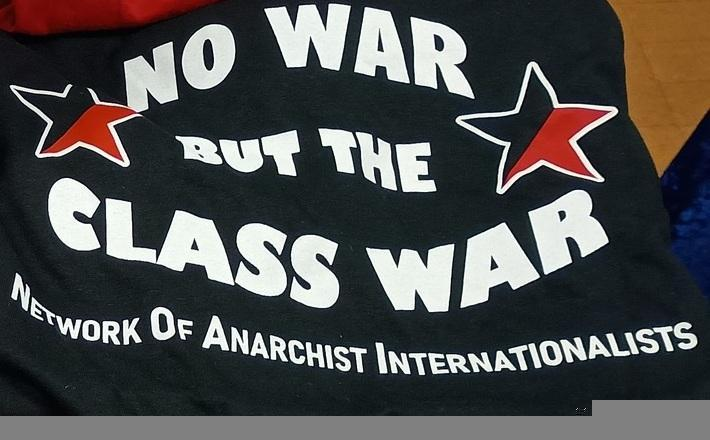
The inaugural meeting of the Network of Anarchist Internationalists (NAI), held on 9 November 2025, is to be welcomed. It arrives at a moment when the world is being marched towards deeper militarisation, permanent war, and the normalisation of mass death as a background condition of capitalism. The importance of this meeting is not that it produced something entirely new, but that it restated, with rare clarity, something anarchists have always known and too often failed to insist upon loudly enough: war is not a mistake, a deviation, or the result of bad leaders. War is a structural feature of capitalism in crisis, and internationalism is not a moral posture but a material necessity.
Across the globe, ruling classes are preparing their populations for sacrifice. The language differs, democracy, security, sovereignty, civilisation, but the demand is the same everywhere – accept falling living standards, accept repression, accept death, so that capital may survive its own contradictions. In this context, the NAI’s insistence on revolutionary defeatism and class internationalism cuts against the grain not only of mainstream politics, but of much of what passes for the contemporary left. It refuses the comforting lie that peace can be secured by choosing the right side in imperialist conflicts. It rejects the fantasy that workers share a meaningful interest with “their” state. And it insists, instead, that the only war worth fighting is the class war, waged from below against all states and all forms of capital.
This position matters precisely because the dominant political atmosphere is one of enforced alignment. Populations are told that neutrality is complicity, that refusal to choose between competing imperialisms is wrong, and that solidarity must be filtered through the interests of nation-states. The NAI’s intervention exposes this logic for what it is – the ideological conscription of the working class. When anarchists refuse to take sides in capitalist wars, we are not refusing solidarity, we are refusing to let solidarity be defined by generals, politicians, and arms manufacturers.
The network’s emphasis on supporting deserters, draft resisters, and war refusers on all sides is especially significant. These figures are rarely celebrated, even by much of the left, because they embody a politics that cannot be easily instrumentalised. The deserter does not die heroically for a flag. The refuser does not advance a national narrative. Instead, they act on the simple recognition that the enemy is not the worker in another uniform, but the system that put both of them there. To defend and organise around such acts is to affirm that internationalism begins not in abstract declarations, but in concrete refusals to kill and be killed for capital.
For anarcho-communists in Aotearoa, this analysis resonates deeply with our own position at the margins of the imperial core. The New Zealand state presents itself as benign, humanitarian, and peace-loving, even as it integrates itself more tightly into Western military alliances, expands surveillance powers, and prepares the ideological ground for future conflicts in the Pacific. The language of partnership and security masks the same underlying reality found elsewhere, that the state exists to manage capitalism, and capitalism requires violence to reproduce itself. There is no “clean” participation in this system, only varying degrees of distance from its most visible atrocities.
The value of the NAI is that it reasserts internationalism not as a sentimental attachment to distant struggles, but as a way of understanding our own conditions. War does not only happen “over there”. It happens in the ports, in the supply chains, in the factories producing weapons and components, in the austerity budgets justified by military spending, and in the police powers normalised in the name of security. The battlefield is not only the front line, it is the everyday life of the working class under capitalism. Recognising this dissolves the false separation between anti-war politics and local class struggle. They are the same fight, viewed from different angles.
Historically, anarchist internationalism emerged from precisely this understanding. From the First International through to the Saint-Imier split and beyond, anarchists rejected the idea that emancipation could be achieved through national projects or state power. The catastrophe of the First World War only confirmed this analysis, as socialist parties across Europe abandoned international solidarity in favour of patriotic mobilisation. The lesson was brutal but clear – without an uncompromising opposition to nationalism and the state, the working class will always be mobilised against itself.
What the NAI represents is a conscious attempt to recover that lesson in the present moment. This is not nostalgia, but necessity. Capitalism today is globalised to an extent unimaginable to earlier generations, and its crises are correspondingly international. Supply chains stretch across continents, financial shocks ripple instantly, and wars are fought not only with soldiers but with sanctions, debt, and energy markets. Any meaningful resistance must operate on the same scale, or it will be contained, co-opted, or crushed.
At the same time, the network avoids the trap of imagining internationalism as a centralised structure issuing directives from above. It speaks instead of coordination, communication, and mutual recognition between autonomous groups rooted in their own contexts. This is crucial. Anarchist internationalism cannot be a pale imitation of statist internationals, nor can it ignore the unevenness of global struggle. Solidarity must flow in multiple directions, shaped by listening as much as by speaking, and grounded in the understanding that no single movement or region holds the key to liberation.
From an anarcho-communist perspective, the NAI’s framework aligns with a broader commitment to abolishing not only war, but the social relations that make war inevitable. Capitalism fragments humanity into competing units, firms, nations, identities, each forced to struggle against the others for survival. War is simply this logic made explicit. To oppose war without opposing capitalism is therefore to treat the symptom while leaving the disease intact.
Of course, revolutionary internationalism faces real challenges. Nationalism remains powerful, especially in moments of crisis, and the pressure to “take sides” can fracture movements. There are also genuine questions about how anarchists relate to anti-colonial and national liberation struggles without reproducing statist logic or dismissing the lived realities of oppression. These tensions cannot be resolved through slogans alone. They require ongoing debate, humility, and a willingness to sit with contradiction without abandoning core principles.
What the NAI offers is not a finished programme, but a political compass. It points away from alignment with power and towards solidarity from below. It reminds us that the working class has no homeland, that borders are tools of domination, and that peace under capitalism is always temporary and conditional. Most importantly, it affirms that internationalism is not something to be postponed until “after the revolution”. It is the means by which revolution becomes possible at all.
For anarcho-communists in Aotearoa, the task is to take this perspective seriously, not as observers of a global process, but as participants in it. That means interrogating how our labour, our resources, and our silence may be implicated in global systems of violence. It means building links with comrades elsewhere that go beyond statements and into shared practice. And it means refusing the comforting illusion that we can insulate ourselves from the consequences of a world order built on exploitation and war.
The inaugural meeting of the Network of Anarchist Internationalists should be understood as an invitation to sharpen our analysis, deepen our commitments, and re-anchor anarchist politics in the uncompromising struggle against capitalism, the state, and all their wars.
A World of Plenty, Organised for Poverty
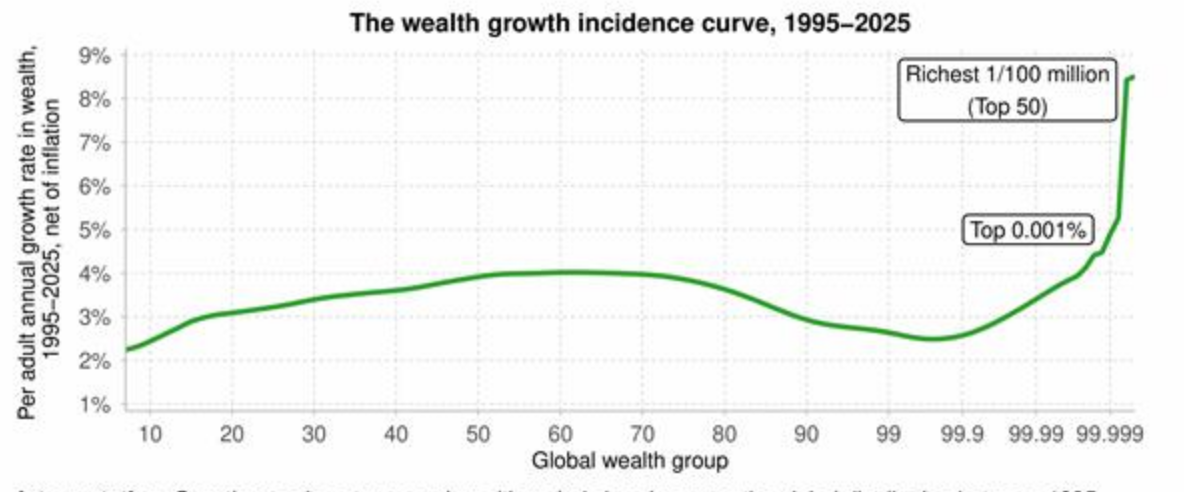
Extreme inequality is no longer a trend that economists cautiously warn about or a distant moral concern for charity campaigns. It is now the defining feature of global capitalism. The latest World Inequality Report, discussed by Michael Roberts in “Extreme Inequality – and what to do about it”, confirms what working people have long known from lived experience: wealth is being hoarded at the top at a scale unprecedented in human history, while the majority are expected to accept stagnation, precarity and ecological collapse as the normal price of “economic growth”.
Today, the richest ten percent of the world’s population take more income than the remaining ninety percent combined. A tiny elite of roughly sixty thousand people controls more wealth than half of humanity. These numbers are so grotesque that they almost lose meaning through repetition, yet they describe a reality that structures everyday life from housing unaffordability and crumbling health systems to climate breakdown and permanent insecurity for workers. Inequality is not an abstract statistic; it is the background condition shaping how we live, work and survive.
What is striking about the current moment is not just how extreme inequality has become, but how openly it is now defended. We are told that billionaires are “job creators”, that obscene wealth is the reward for “innovation”, and that any attempt to limit accumulation will harm everyone else. This ideological cover has become thinner over time, precisely because the material outcomes are impossible to hide. Productivity rises, profits soar, and yet wages flatline. Wealth multiplies at the top, while public services are stripped back and people are blamed for failing to thrive in an economy rigged against them.
The World Inequality Report makes clear that this concentration of wealth is not accidental. Since the 1980s, the deliberate dismantling of labour protections, the privatisation of public assets, and the globalisation of capital have allowed wealth to flow upwards with remarkable efficiency. Tax systems have been re-engineered to favour capital over labour. Financial markets have been deregulated, enabling speculative profits divorced from any social use. States have become managers of inequality rather than restraints on it, ensuring that the conditions for accumulation remain intact even during crises.
This global picture has local resonance in Aotearoa New Zealand. While politicians still trade on myths of fairness and opportunity, wealth inequality here has steadily deepened since the neoliberal restructuring of the 1980s and 1990s. Housing has become a primary vehicle for accumulation, locking entire generations out of secure shelter while landlords extract rent as a form of unearned income. Māori and Pasifika communities continue to experience disproportionately worse outcomes across health, housing and income, a direct legacy of colonial dispossession compounded by capitalist exploitation. None of this is a policy failure, rather it is the logical outcome of a system designed to concentrate ownership.
One of the most politically useful insights from the inequality data is the way it exposes the connection between wealth concentration and climate destruction. The richest layers of society are not only the primary beneficiaries of capitalist growth, they are also its most destructive agents. The top ten percent are responsible for the vast majority of emissions linked to private consumption and investment, while the poorest half of the world contributes almost nothing to the climate crisis. Yet it is the poor who face the harshest consequences, from rising food prices to displacement and environmental collapse.
This alone should demolish the moral blackmail that frames climate action as a sacrifice demanded of ordinary people. The problem is not that “we all consume too much”, it is that capital demands endless expansion, and the wealthy profit from it. Any serious response to climate change must therefore confront inequality at its root. Green capitalism, carbon trading schemes, and market incentives merely repackage the same logic of accumulation under a different aesthetic. They do nothing to challenge who owns, controls and benefits from production.
Michael Roberts is clear that mainstream responses to inequality, while often well-intentioned, fail to address these structural realities. Proposals for wealth taxes, improved public services, and international cooperation on tax avoidance are important, but they remain defensive measures within a system that constantly regenerates inequality. Even where such reforms are implemented, they are fragile and reversible. Capital is mobile, organised and politically powerful; gains made through reform can be undone the moment they threaten profitability.
From an anarcho-communist perspective, this limitation is fundamental. Redistribution after the fact does not change the underlying relations of power. As long as a small minority owns the means of production – land, housing, infrastructure, factories, finance – inequality will reassert itself. The state, no matter how progressive its rhetoric, exists to manage these relations, not abolish them. This is why decades of social democratic compromise have failed to halt the upward transfer of wealth.
The deeper question, then, is not how to make capitalism fairer, but why we continue to accept a system that requires inequality to function. Capital accumulation depends on exploitation. Profit is extracted from labour by paying workers less than the value they create. This surplus is then reinvested to generate more profit, concentrating wealth and power in fewer hands over time. No amount of moral appeal or technocratic adjustment can change this basic mechanism.
Anarcho-communism begins from a different premise: that the resources and productive capacity of society should be held in common and democratically controlled by those who use them. This is not an abstract utopia but a practical alternative rooted in cooperation, mutual aid and collective self-management. Rather than redistributing wealth after it has been hoarded, anarcho-communism aims to prevent hoarding altogether by abolishing private ownership of productive assets.
Under such a system, production would be organised around human need rather than profit. Housing would exist to shelter people, not to generate rent. Food would be grown to feed communities, not to maximise export returns. Energy systems would be designed for sustainability and collective benefit, not shareholder dividends. The obscene accumulation of wealth that defines our current reality would simply be impossible.
Critics often respond that this vision is unrealistic, yet what could be more unrealistic than a system that concentrates vast wealth in the hands of a few while pushing the planet toward ecological collapse? Capitalism presents itself as inevitable only because alternatives have been systematically marginalised or violently suppressed. History is full of examples of cooperative production, commons-based resource management and non-hierarchical organisation. These practices persist today, often invisibly, wherever people organise to meet their needs outside the market.
The challenge, of course, is scale and power. Capitalism is not merely an economic system but a social order enforced by law, police and military force. Dismantling it requires organised collective resistance. This is where the struggle against inequality becomes inseparable from class struggle. Workers withholding labour, tenants organising against landlords, communities defending land and water from extraction – these are not isolated issues but interconnected fronts in the same conflict.
In Aotearoa, this also means confronting the ongoing reality of colonial capitalism. The theft of Māori land was not a historical aberration but a foundational act of accumulation. Any genuine movement against inequality must therefore be anti-colonial, supporting tino rangatiratanga and recognising that capitalism and settler colonialism are deeply intertwined. Re-indigenisation is not an optional add-on to class struggle; it is central to dismantling the structures that produce inequality here.
What, then, is to be done? Not in the sense of policy recommendations, but in terms of building power. The answer is not to wait for better leaders or kinder governments, but to organise where we are. Strengthening unions, supporting strikes, building tenant and community organisations, creating networks of mutual aid. These are not symbolic gestures but concrete steps toward a different social order. They challenge capital directly by asserting collective control over labour and resources.
Internationally, solidarity matters more than ever. Capital moves freely across borders, exploiting differences in wages, regulation and political stability. Resistance must be equally internationalist, rejecting nationalist narratives that pit workers against each other. Global inequality is not caused by migrants or foreign workers, but by a system that extracts wealth from the Global South and concentrates it in imperial centres. An anarcho-communist politics insists on solidarity across borders, recognising shared interests against a common enemy.
The data on extreme inequality should not lead us to despair, but to clarity. The problem is not that we lack wealth or productive capacity; it is that wealth is controlled by a class whose interests are fundamentally opposed to human flourishing. Ending extreme inequality is not a matter of better distribution within capitalism, but of abolishing the system that creates it.
The choice before us is stark. Either we accept a future of deepening inequality, ecological collapse and permanent insecurity, or we organise to build something different. Capitalism will not collapse on its own, nor will it reform itself into justice. It must be confronted, resisted and replaced.
There is no technocratic fix for a system built on exploitation. There is only struggle, solidarity and the collective creation of a world where no one hoards while others go without. Extreme inequality is not an unfortunate outcome, it is capitalism working exactly as intended. Our task is to make it unworkable.
The Odds Are Better with Revolt: Why Anarchism Beats Lotto Every Time

Last night’s massive Lotto draw was one of those oddly unifying moments in Aotearoa when, for a brief period, the country holds its breath together. The anticipation, the chatter in dairies, the queues for tickets, and the speculative fantasies people share about what they would do with the winnings all point to something far more interesting than simple entertainment. Lotto sells the promise of liberation. It packages relief, security, dignity, time, and agency into a brightly coloured ticket and tells people that the life they long for might, with enough luck, finally fall into their hands. But the fantasy sold on those slips of paper is not merely improbable; it is structurally impossible. Under capitalism, most people will never experience the freedom that Lotto advertises, no matter how many tickets they buy. The game persists not because of its statistical plausibility but because of the deep emotional hunger it feeds, a hunger created by the very social and economic order that Lotto quietly reinforces.
What stands out is not the size of the jackpot, but the fact that so many people felt compelled to invest in the possibility of escape. Lotto’s hold on the public is rooted in a broad sense of powerlessness, the creeping belief that life cannot be changed through ordinary human effort. The routine pressures of capitalism, rising rents, stagnant wages, impossible working hours, insecure housing, and the growing sense that one is simply surviving rather than living, all push people to grasp for anything that promises a different existence. Lotto is the state-sanctioned pressure valve through which that desire for change is released safely, individually, and harmlessly. Instead of directing dissatisfaction into collective organising, community building, or structural challenge, Lotto channels it into a fantasy of miraculous individual uplift. The entire institution functions as a kind of secular prosperity gospel: if you are patient and lucky enough, one day the universe will reward you. If not, better luck next week.
This logic reveals its political usefulness. Lotto encourages people to abandon the idea that their conditions could be changed through their own agency or through collective struggle. It replaces the notion of solidarity with the notion of luck. Where political movements would ask people to confront the systems that produce inequality, Lotto tells them instead to buy a small moment of hope. And since most people will never win, they end up returning week after week for another hit of possibility, trapped in a quiet cycle of hope and disappointment. This cycle is perfect for maintaining the existing order. A public that is hoping for luck is far less likely to demand justice. A public that is waiting to “win” is far less likely to organise to win.
Where Lotto offers fantasy, anarchism offers practice. Where Lotto insists on the extraordinary, anarchism insists on the everyday. Anarchism begins with the premise that people can build the lives they want not through chance but through cooperation, solidarity, and the dismantling of hierarchical power structures. It treats freedom as something constructed, not awarded by randomness. The odds of improving one’s life through collective action are astronomically higher than the odds of winning a jackpot. If one participates in collective struggle, one will almost certainly experience tangible improvements: stronger connections, greater support, practical resources, and the sense of being an active agent in one’s own life. These outcomes are not speculative. They are observable, repeatable, and grounded in the entire history of working-class and Indigenous movements in Aotearoa and internationally.
The contrast becomes stark when you consider what people actually desire when they buy a Lotto ticket. It is rarely about the money for its own sake. People want time with their families, the end of financial anxiety, a secure home, freedom from exploitative labour, the ability to rest, to create, to breathe. Lotto markets these desires as prizes, but anarchism understands them as collective political goals. The desire to escape precarity is not pathological; it is rational. It is capitalism that is irrational for producing conditions in which escape seems possible only through improbable miracles.
Lotto’s emotional appeal is so strong precisely because capitalism has denied people meaningful control over their lives. When you are exhausted, underpaid, overworked, and constantly anxious about housing, it makes a certain sense to fantasise about being plucked from misery by blind luck. Lotto fills the vacuum left by the erosion of collective power. But where Lotto instrumentalises that desire in order to reproduce the very system that generated it, anarchism channels it toward restructuring society so that people need neither miracles nor jackpots to live well.
What anarchism proposes is that the world most New Zealanders fantasise about after buying a Lotto ticket could actually be built, not won. Secure housing could exist through decommodification and cooperative control. Labour could be reorganised around human need rather than profit, with workplaces democratically controlled by workers rather than owners. Communities could develop localised systems of mutual support, resource sharing, and autonomous decision-making. Time could be freed from the tyranny of wage labour and redirected toward collective flourishing. These changes do not require divine intervention. They require people organising together.
And crucially, this kind of organising already works. Workers’ movements have historically won every meaningful labour right we now consider basic – the weekend, the eight-hour day, sick leave, safety standards, and more. Māori land occupations and kaupapa Māori movements have reclaimed land, language, and cultural autonomy. None of these victories came through luck, all of them came through collective struggle.
When people join such movements, the “odds” of transforming their lives shift radically. The likelihood of finding community, support, and empowerment becomes almost guaranteed. The sense of isolation so common under capitalism dissolves. People begin to see themselves as participants in shaping the world rather than passengers hoping for an unlikely upgrade. The contrasts with Lotto could not be more pronounced. A Lotto ticket builds nothing. A movement builds everything.
There is another dimension to consider: Lotto’s function as a political pacifier. It offers a simulation of agency, a momentary belief that one’s life might change without confronting any structures of power. The more desperate people become under capitalism, the more appealing this fantasy grows. In this way, Lotto acts as a safety valve that relieves pressure without altering the system that generates it. The state acknowledges economic suffering but directs people to seek salvation through luck rather than justice. The Lotto kiosk becomes a substitute for political imagination.
Anarchism disrupts this dynamic by insisting that people do not have to wait. They do not need permission from the state, a political party, a boss, or a jackpot draw. They can act now, with the people around them, to carve out alternative ways of living. Every garden, every cooperative, every free store, every occupation, every strike, every blockade, is a concrete step toward the world Lotto only pretends to offer. This is why anarchism is threatening to the established order: it gives back to ordinary people the one thing Lotto, capitalism, and the state all require them to surrender – agency.
The irony of last night’s draw is that millions of New Zealanders experienced the same emotion simultaneously: the longing for a better life. The fantasy may have been individual, but the feeling was collective. If people shared that desire not in queues for tickets but in movements, unions, collectives, and neighbourhood assemblies, the country would be unrecognisable within a generation. The same hope that fuels Lotto could fuel revolution, if redirected.
The lesson is not that people should feel foolish for buying tickets, it is that their desire for change is entirely legitimate. The political question is what they are taught to do with that desire. Lotto teaches them to dream privately. Anarchism teaches them to act publicly. Lotto tells them change must be granted by chance. Anarchism tells them change is made by people. Lotto produces one winner and millions of losers. Anarchism rejects the very premise of winning and losing as capitalist distortions that pit people against each other. Lotto sells fantasy. Anarchism builds reality.
It is no exaggeration to say that you are far more likely to build the life you want through anarchist organising than through Lotto. The former has a track record of success measurable in every labour right, every community project, and every instance of collective solidarity in our history. The latter has odds so infinitesimal that the human brain cannot meaningfully comprehend them. Lotto asks for money and gives back dreams. Anarchism asks for participation and gives back power.
The life people imagine when they hold a Lotto ticket in their hands, a life with security, dignity, and control, is not absurd or unrealistic. What is absurd is the idea that such a life might be delivered by randomness. What is unrealistic is the belief that an economy built on exploitation might one day produce fairness spontaneously. What is fantastical is the notion that a ticket purchased at a dairy could do more to transform your life than collective struggle ever could.
If last night’s draw revealed anything, it is that millions of people in Aotearoa are yearning for liberation. The task is to show that liberation is not granted by luck but made by people. The future is not a jackpot to be won, it is a world to be built. Lotto wants you to wait. Anarchism wants you to act. And if you want the life you dream about when the draw is announced, your chances are infinitely better if you organise, not if you pick numbers.
Symbolic States, Real Genocide: The Empty Politics of Palestine Recognition

The New Zealand government, like many others across the imperialist West, has refused to recognise a Palestinian state. At first glance, this appears to be a diplomatic slight or a moral failure. In truth, it is far deeper, it is the calculated refusal of a settler-colonial state to recognise the legitimacy of another colonised people’s struggle, precisely because doing so would expose the contradictions at the heart of its own existence. But while the refusal is damning, we must also reckon with a more sobering truth that even when states do offer recognition, it is little more than a symbolic gesture – a hollow act that does nothing to halt the bombs, lift the siege, or stop the machinery of genocide grinding on. Recognition without action is a cruel theatre of humanitarian concern, designed to pacify outrage while ensuring business as usual for empire.
Since 1988, over 140 UN member states have recognised the State of Palestine in some form. In 2012, Palestine was granted “non-member observer state” status at the United Nations, a symbolic victory after decades of lobbying. Yet in 2025, Palestinians remain stateless, occupied, and subject to one of the most violent genocides of the modern era. Recognition has not stopped the killing. Recognition has not ended the blockade of Gaza. Recognition has not secured the right of return for refugees. Recognition has not dismantled Israel’s apartheid laws or halted its expansion of illegal settlements.
Instead, recognition has been reduced to a diplomatic fig leaf. Countries such as Ireland, Spain, and Norway have made headlines by announcing recognition of Palestine, but their governments continue to trade with Israel and the corporations profiting from occupation. The European Union as a whole continues to treat Israel as a key trading partner, granting it access to markets and research funds. Even those states who present themselves as “friends of Palestine” refuse to enact the kinds of measures that could meaningfully challenge Israeli power: arms embargoes, sanctions, cutting of diplomatic and economic ties, or the expulsion of ambassadors.
The futility of recognition is that it leaves intact the very structures of global capitalism and imperialism that uphold Israeli apartheid. By recognising Palestine, Western states can signal virtue without challenging their military alliances, their corporations’ profits, or their own complicity in settler-colonial violence. It is not solidarity, it is performance.
New Zealand has consistently followed the lead of larger imperial powers in matters of international recognition. It has recognised Kosovo, South Sudan, and even Ukraine’s sovereignty claims, yet it refuses to recognise Palestine. The reason is not a mystery, recognition of Palestine is not just about international diplomacy, it is about admitting that colonised people have a right to resist and reclaim stolen land.
New Zealand, itself a settler-colonial project built on the dispossession of Māori, has no interest in affirming this principle. To do so would invite uncomfortable parallels with its own history of land theft, broken treaties, and ongoing colonial violence. A government that relies on the fiction of legitimacy over stolen land cannot afford to legitimise Palestinian claims to sovereignty. Recognition would shine too bright a light on the contradictions of Aotearoa’s own foundations.
Successive governments, Labour and National alike, have hidden behind the rhetoric of “supporting a two-state solution,” while refusing to take the step of recognising Palestine as a state. This duplicity serves two purposes. First, it allows New Zealand to maintain its loyalty to the United States, its primary imperial ally. Second, it avoids alienating the business and military interests tied to Israel and its Western backers. New Zealand’s military companies profit from involvement in weapons development; its intelligence networks are linked into the Five Eyes alliance that shields Israeli crimes. Recognition would be a symbolic rebuke to these interests, and so it is avoided.
The refusal of recognition is obscene, but there is a further obscenity – the idea that recognition, even if granted, could matter in the midst of genocide. Since October 2023, Israel has unleashed unrelenting mass killing in Gaza, bombing homes, schools, hospitals, and refugee camps. The death toll has risen into the hundreds of thousands. Famine, displacement, and disease are the daily reality for survivors. International law has been shredded, and yet no state has intervened to stop the massacre.
What would recognition mean in this context? Would a proclamation from New Zealand or any other government bring back the dead, rebuild the rubble, or open the borders for aid? Clearly not. Recognition during genocide is not liberation, rather it is a sickly moral gesture that allows governments to pretend they have done “something” while the killing continues unchecked.
If recognition had any weight, the dozens of states that have recognised Palestine since 1988 would have already transformed the material conditions of occupation. Instead, recognition has been powerless precisely because it was never intended to be power. It is designed to look like solidarity while ensuring nothing fundamental changes.
Recognition without action is worse than nothing, because it obscures the machinery of complicity. States that recognise Palestine while continuing to fund, arm, and trade with Israel are enablers of genocide. The United States sends billions in military aid every year. Germany exports weapons that are used to bomb Palestinian civilians. Britain provides diplomatic cover at the UN. Australia trains alongside Israeli forces. New Zealand, though smaller, is tied into this web through its alliances and intelligence networks.
Every state that claims to support a “peace process” while maintaining ties to Israel is complicit. Every state that recognises Palestine without imposing sanctions or embargoes is complicit. Recognition is not solidarity; solidarity would mean dismantling the political and economic systems that enable occupation. Recognition is not resistance; resistance would mean arming boycott movements, cutting trade, and isolating Israel as a pariah state. Recognition is not liberation; liberation can only come from below, from the struggles of Palestinians themselves, supported by international movements of workers, students, and communities.
The question of recognition cannot be separated from the realities of Aotearoa. This country was built on the dispossession of Māori land, the imposition of foreign law, and the suppression of Indigenous resistance. To this day, Māori face structural violence in housing, health, education, and the justice system. The state that refuses to recognise Palestine is the same state that refuses to honour Te Tiriti o Waitangi in substance.
Solidarity with Palestine in Aotearoa cannot be limited to calls for governmental recognition. It must mean confronting the settler-colonial structures here at home. It must mean standing with Māori struggles for tino rangatiratanga, land back, and sovereignty. The refusal to recognise Palestine is not an aberration, it is consistent with a settler state that denies Indigenous rights everywhere.
If recognition is futile, what then is the path forward? For anarcho-communists, the answer is clear: liberation will not come from the recognition of states but from the destruction of states, empires, and the capitalist system they defend. Palestine will not be free because Ireland or Spain or New Zealand declares it so. Palestine will be free when the people of Palestine, supported by global solidarity movements, dismantle the systems of occupation and apartheid that oppress them.
This requires building movements of boycott, divestment, and sanctions from below. It requires disrupting the flow of weapons, money, and political legitimacy to Israel. It requires solidarity strikes by dock workers refusing to load arms, by students occupying campuses to demand divestment, by communities blockading military shipments. It requires connecting the struggle in Palestine to all struggles against colonialism, racism, and exploitation.
Recognition is empty; direct action is power. Recognition is symbolic; material solidarity is transformative. Recognition keeps faith in governments; liberation requires their overthrow.
The New Zealand government’s refusal to recognise Palestine is a mark of cowardice and complicity. Yet even if it were to grant recognition tomorrow, the futility of such a gesture would remain. Recognition does not stop bombs, lift sieges, or return land. It is a hollow act, designed to placate outrage while preserving empire.
The path to Palestinian liberation does not run through parliaments or ministries. It runs through the streets, the workplaces, the universities, and the fields where ordinary people confront the machinery of imperialism. It runs through the linking of struggles – Māori sovereignty in Aotearoa, Black liberation in the United States, Indigenous resistance in Latin America, and anti-imperialist movements worldwide.
Palestine will not be free when governments say it is a state. Palestine will be free when the people overthrow apartheid, and when the global system that sustains it is brought down. Recognition is not liberation. Liberation is struggle. And it is only through that struggle, everywhere, that the chains of empire can be broken.