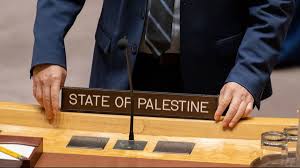
Symbolic States, Real Genocide: The Empty Politics of Palestine Recognition

The New Zealand government, like many others across the imperialist West, has refused to recognise a Palestinian state. At first glance, this appears to be a diplomatic slight or a moral failure. In truth, it is far deeper, it is the calculated refusal of a settler-colonial state to recognise the legitimacy of another colonised people’s struggle, precisely because doing so would expose the contradictions at the heart of its own existence. But while the refusal is damning, we must also reckon with a more sobering truth that even when states do offer recognition, it is little more than a symbolic gesture – a hollow act that does nothing to halt the bombs, lift the siege, or stop the machinery of genocide grinding on. Recognition without action is a cruel theatre of humanitarian concern, designed to pacify outrage while ensuring business as usual for empire.

Since 1988, over 140 UN member states have recognised the State of Palestine in some form. In 2012, Palestine was granted “non-member observer state” status at the United Nations, a symbolic victory after decades of lobbying. Yet in 2025, Palestinians remain stateless, occupied, and subject to one of the most violent genocides of the modern era. Recognition has not stopped the killing. Recognition has not ended the blockade of Gaza. Recognition has not secured the right of return for refugees. Recognition has not dismantled Israel’s apartheid laws or halted its expansion of illegal settlements.

Instead, recognition has been reduced to a diplomatic fig leaf. Countries such as Ireland, Spain, and Norway have made headlines by announcing recognition of Palestine, but their governments continue to trade with Israel and the corporations profiting from occupation. The European Union as a whole continues to treat Israel as a key trading partner, granting it access to markets and research funds. Even those states who present themselves as “friends of Palestine” refuse to enact the kinds of measures that could meaningfully challenge Israeli power: arms embargoes, sanctions, cutting of diplomatic and economic ties, or the expulsion of ambassadors.

The futility of recognition is that it leaves intact the very structures of global capitalism and imperialism that uphold Israeli apartheid. By recognising Palestine, Western states can signal virtue without challenging their military alliances, their corporations’ profits, or their own complicity in settler-colonial violence. It is not solidarity, it is performance.

New Zealand has consistently followed the lead of larger imperial powers in matters of international recognition. It has recognised Kosovo, South Sudan, and even Ukraine’s sovereignty claims, yet it refuses to recognise Palestine. The reason is not a mystery, recognition of Palestine is not just about international diplomacy, it is about admitting that colonised people have a right to resist and reclaim stolen land.

New Zealand, itself a settler-colonial project built on the dispossession of Māori, has no interest in affirming this principle. To do so would invite uncomfortable parallels with its own history of land theft, broken treaties, and ongoing colonial violence. A government that relies on the fiction of legitimacy over stolen land cannot afford to legitimise Palestinian claims to sovereignty. Recognition would shine too bright a light on the contradictions of Aotearoa’s own foundations.

Successive governments, Labour and National alike, have hidden behind the rhetoric of “supporting a two-state solution,” while refusing to take the step of recognising Palestine as a state. This duplicity serves two purposes. First, it allows New Zealand to maintain its loyalty to the United States, its primary imperial ally. Second, it avoids alienating the business and military interests tied to Israel and its Western backers. New Zealand’s military companies profit from involvement in weapons development; its intelligence networks are linked into the Five Eyes alliance that shields Israeli crimes. Recognition would be a symbolic rebuke to these interests, and so it is avoided.

The refusal of recognition is obscene, but there is a further obscenity – the idea that recognition, even if granted, could matter in the midst of genocide. Since October 2023, Israel has unleashed unrelenting mass killing in Gaza, bombing homes, schools, hospitals, and refugee camps. The death toll has risen into the hundreds of thousands. Famine, displacement, and disease are the daily reality for survivors. International law has been shredded, and yet no state has intervened to stop the massacre.

What would recognition mean in this context? Would a proclamation from New Zealand or any other government bring back the dead, rebuild the rubble, or open the borders for aid? Clearly not. Recognition during genocide is not liberation, rather it is a sickly moral gesture that allows governments to pretend they have done “something” while the killing continues unchecked.

If recognition had any weight, the dozens of states that have recognised Palestine since 1988 would have already transformed the material conditions of occupation. Instead, recognition has been powerless precisely because it was never intended to be power. It is designed to look like solidarity while ensuring nothing fundamental changes.

Recognition without action is worse than nothing, because it obscures the machinery of complicity. States that recognise Palestine while continuing to fund, arm, and trade with Israel are enablers of genocide. The United States sends billions in military aid every year. Germany exports weapons that are used to bomb Palestinian civilians. Britain provides diplomatic cover at the UN. Australia trains alongside Israeli forces. New Zealand, though smaller, is tied into this web through its alliances and intelligence networks.

Every state that claims to support a “peace process” while maintaining ties to Israel is complicit. Every state that recognises Palestine without imposing sanctions or embargoes is complicit. Recognition is not solidarity; solidarity would mean dismantling the political and economic systems that enable occupation. Recognition is not resistance; resistance would mean arming boycott movements, cutting trade, and isolating Israel as a pariah state. Recognition is not liberation; liberation can only come from below, from the struggles of Palestinians themselves, supported by international movements of workers, students, and communities.

The question of recognition cannot be separated from the realities of Aotearoa. This country was built on the dispossession of Māori land, the imposition of foreign law, and the suppression of Indigenous resistance. To this day, Māori face structural violence in housing, health, education, and the justice system. The state that refuses to recognise Palestine is the same state that refuses to honour Te Tiriti o Waitangi in substance.

Solidarity with Palestine in Aotearoa cannot be limited to calls for governmental recognition. It must mean confronting the settler-colonial structures here at home. It must mean standing with Māori struggles for tino rangatiratanga, land back, and sovereignty. The refusal to recognise Palestine is not an aberration, it is consistent with a settler state that denies Indigenous rights everywhere.

If recognition is futile, what then is the path forward? For anarcho-communists, the answer is clear: liberation will not come from the recognition of states but from the destruction of states, empires, and the capitalist system they defend. Palestine will not be free because Ireland or Spain or New Zealand declares it so. Palestine will be free when the people of Palestine, supported by global solidarity movements, dismantle the systems of occupation and apartheid that oppress them.

This requires building movements of boycott, divestment, and sanctions from below. It requires disrupting the flow of weapons, money, and political legitimacy to Israel. It requires solidarity strikes by dock workers refusing to load arms, by students occupying campuses to demand divestment, by communities blockading military shipments. It requires connecting the struggle in Palestine to all struggles against colonialism, racism, and exploitation.

Recognition is empty; direct action is power. Recognition is symbolic; material solidarity is transformative. Recognition keeps faith in governments; liberation requires their overthrow.

The New Zealand government’s refusal to recognise Palestine is a mark of cowardice and complicity. Yet even if it were to grant recognition tomorrow, the futility of such a gesture would remain. Recognition does not stop bombs, lift sieges, or return land. It is a hollow act, designed to placate outrage while preserving empire.

The path to Palestinian liberation does not run through parliaments or ministries. It runs through the streets, the workplaces, the universities, and the fields where ordinary people confront the machinery of imperialism. It runs through the linking of struggles – Māori sovereignty in Aotearoa, Black liberation in the United States, Indigenous resistance in Latin America, and anti-imperialist movements worldwide.

Palestine will not be free when governments say it is a state. Palestine will be free when the people overthrow apartheid, and when the global system that sustains it is brought down. Recognition is not liberation. Liberation is struggle. And it is only through that struggle, everywhere, that the chains of empire can be broken.

Palestine: The No State Solution

For decades, the world has been captivated by proposed solutions to the Israeli-Palestinian conflict, ranging from the two-state solution to the one-state solution. These ideas, while superficially promising, fundamentally fail because they cling to the notion that state structures,whether Israeli or Palestinian, can bring liberation. Anarchism offers a crucial critique of this reliance on states and borders, envisioning a world where people, not institutions, dictate their destinies. In this context, the No-State Solution emerges as the only path toward real justice and freedom.


Mainstream conversations often revolve around the two-state solution, which, despite being heavily promoted internationally, remains deeply flawed. Even if implemented, it would still perpetuate the colonial and capitalist frameworks that created the problem. The creation of two separate states entrenches nationalism and hierarchies of power, rather than dismantling them. Similarly, the one-state solution, which imagines a unified state where Palestinians and Israelis coexist with equal rights, still operates within the framework of a capitalist, hierarchical system. Anarchists recognise that true freedom cannot be found within the confines of any state structure.


The No-State Solution is not an abstract fantasy. It draws from historical precedents and the lived experience of Palestinians themselves. Despite decades of colonisation and displacement, Palestinians have maintained resilient communities through systems of mutual aid and solidarity. In refugee camps across Lebanon, Jordan, and Syria, informal systems of governance emerged without the presence of a state. Property rights, social traditions, and even revolutionary movements were organised autonomously.


These camps, often neglected or subjected to external control, have become hubs for autonomous organisation where Palestinians manage their own affairs. Despite the lack of official recognition or state enforcement, Palestinian refugees have created functioning communities based on mutual aid, solidarity, and traditional practices, demonstrating the potential for anarchist principles to flourish in the most adverse conditions.

In Lebanon, for example, the Shatila and Ein el-Hilweh camps have developed their own internal governance structures. These camps operate with localised councils that manage everything from dispute resolution to infrastructure maintenance. Property rights, though unofficial, are respected within the community through oral agreements and mutual recognition. No central authority dictates who owns what; instead, land and housing distribution relies on informal negotiations based on trust and communal decision-making. This decentralisation of power is an inherently anarchistic approach to governance, where the community collectively handles its own needs without state interference.
Similarly, in Jordan’s Baqa’a camp, which houses tens of thousands of Palestinian refugees, traditional social structures have been repurposed to address contemporary challenges. Families and extended kinship networks play a significant role in maintaining order and supporting those in need. This reliance on social traditions, such as collective child-rearing and communal sharing of resources, reflects the principles of mutual aid and cooperation. These informal systems ensure that, despite the state’s neglect, basic needs are met, and social cohesion is maintained.


In Syria, the Yarmouk refugee camp was once considered a “capital” for Palestinian refugees, where revolutionary movements took root alongside everyday communal life. Before its destruction in the Syrian civil war, Yarmouk was a thriving community where political movements like the Popular Front for the Liberation of Palestine (PFLP) organized resistance against both Israeli occupation and oppressive state forces in the region. This revolutionary spirit coexisted with a strong tradition of self-help and mutual support. Even without formal political recognition, Yarmouk’s residents managed healthcare, education, and social welfare through grassroots efforts, often in direct defiance of both Syrian state control and external political pressures.


These examples of self-organisation in Palestinian camps show the anarchist potential that exists within the Palestinian society. In the absence of a functioning state, Palestinians have demonstrated that they can organise effectively, build social structures, and foster solidarity. This self-reliance, born out of necessity, embodies anarchist ideals of rejecting top-down authority and building power from the grassroots. It proves that communities can thrive through mutual aid, cooperation, and the rejection of hierarchical control.

The No-State Solution builds on these lived experiences, showing that the Palestinian people have already laid the groundwork for a future without state domination. By scaling up these examples of autonomous governance and mutual aid, Palestinians could forge a path to liberation that transcends the traditional state-based models of control. These refugee camps provide a living blueprint for how a stateless society can function, even in the face of immense external pressure. The challenge now is to expand these principles beyond the camps and into the broader struggle for Palestinian liberation, rejecting both Israeli colonialism and the authoritarian tendencies of nationalist governance.


These examples of self-organisation highlight the anarchist potential that already exists within Palestinian society. The idea of a No-State Solution isn’t about rejecting organisation but about rejecting authoritarianism. It’s about moving towards a future where communities govern themselves, free from the oppression of state power.


At the heart of this solution is the rejection of nationalism as a liberating force. While the Palestinian resistance has historically embraced nationalism as a response to Israeli occupation, anarchists understand that nationalism inherently divides people. It reinforces borders, exclusion, and hierarchy—the very structures anarchism seeks to dismantle. Instead, we should focus on decolonizing social relations, removing not just the physical borders but also the mental ones that divide Palestinians and Israelis. The future must be built on solidarity, where people see each other not as enemies defined by national identity, but as fellow human beings in a shared struggle for freedom.


In practice, the No-State Solution offers the opportunity for true autonomy. It’s a vision where communities manage their own resources, resolve conflicts through dialogue rather than military force, and live without the domination of a ruling class. The solution to the Israeli-Palestinian conflict, therefore, lies not in creating another state but in erasing the structures that necessitate one. This means dismantling capitalism, patriarchy, and colonialism, not just in Palestine, but globally.
Anarchists across the world have a role to play in this struggle. Solidarity with the Palestinian cause cannot be limited to calls for statehood but must support the broader fight against all forms of domination. Boycotts, divestments, and sanctions (BDS) are valuable tools in applying pressure on Israel’s apartheid regime, but they must be paired with direct action and international solidarity efforts. Anarchists must amplify the voices within Palestine that challenge both Israeli colonialism and the oppressive aspects of Palestinian governance under the Palestinian Authority. It is not enough to simply oppose Israel’s occupation, we must oppose the structures of power that maintain it.


We can see a powerful parallel to the No-State Solution in the revolutionary example of the Zapatistas in Chiapas, Mexico. For decades, the Zapatistas have created autonomous zones governed by the principles of direct democracy, rejecting both the Mexican state and capitalist forces. Their movement, born from the resistance of Indigenous people to state violence, has built a functioning society based on horizontal structures, mutual aid, and communal decision-making. The Zapatistas provide a living example of how communities can self-govern without relying on a state, and how they can thrive through cooperative networks rooted in autonomy. Like the Zapatistas, Palestinians can resist both colonialism and the authoritarianism that often arises within their own ranks, building systems of mutual aid and self-determination that do not rely on the violent apparatus of the state.


The Zapatistas’ struggle reminds us that autonomy and statelessness are not abstract concepts but achievable realities. Their success has shown that when communities come together to resist both external oppression and internal hierarchies, they can create new worlds outside of state control. The Zapatistas’ emphasis on decentralisation and the rejection of top-down governance echoes the potential for Palestinians to organise outside of the state paradigm, forging a future based on self-management, communal solidarity, and true liberation.


The model for a No-State Solution can also be seen in revolutionary experiments like Rojava in Northern Syria. Rojava’s decentralised, multi-ethnic federation provides a glimpse of what a stateless society could look like in practice, where communities govern themselves based on principles of direct democracy, gender equality, and ecological sustainability. Just as the people of Rojava have rejected the nation-state, so too must Palestinians and Israelis reject the false promise of statehood as the path to liberation.


This isn’t just about tearing down borders or toppling governments. It’s about building a world where power flows horizontally, not vertically. Where decisions are made collectively, resources shared equitably, and no one group dominates another. For Palestinians, this means rejecting the notion that their liberation can come through the creation of a new state, and instead embracing a future of genuine autonomy, free from the yoke of Israeli colonialism and the authoritarianism of any Palestinian ruling class.

Anarchists, in Palestine, Israel and globally, must stand firm in our rejection of the state as a liberating force. We must advocate for a world beyond borders, beyond nations, and beyond oppression. The No-State Solution is not a utopian dream, but a necessary step toward real freedom, a freedom that can only be realised when we dismantle the power structures that keep us divided and oppressed.

Republished from: https://awsm4u.noblogs.org/post/2024/10/20/palestine-the-no-state-solution/