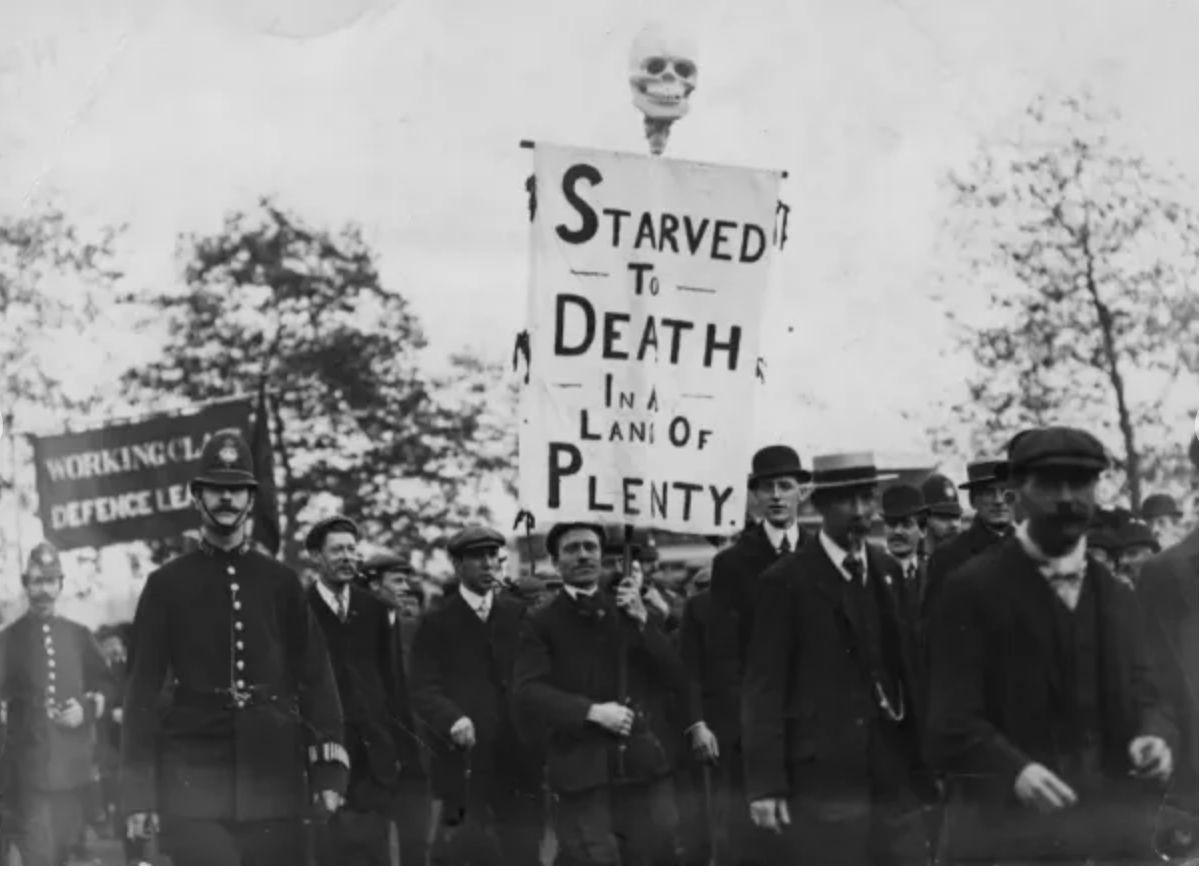
There is a number sitting in a new report that deserves to stop you in your tracks. One in three New Zealand households struggled to access affordable, nutritious food in the past year. Not one in a hundred. Not a marginal statistical blip that policy wonks can argue over in committee rooms. One in three. In a country that exports enough food to feed tens of millions of people beyond its own borders, roughly a third of households here could not reliably put adequate meals on the table. If that does not clarify something fundamental about the society we live in, it is hard to know what would.
The Hunger Monitor, described as the country’s first comprehensive tally of food insecurity, surveyed three thousand people late last year and was commissioned by the New Zealand Food Network. The numbers it produced surprised even the people working on the frontlines of food poverty. Gavin Findlay, chief executive of the Food Network, described it as confronting. Ian Foster, who has run the South Auckland Christian Foodbank for eighteen years and distributed forty thousand food parcels last year alone, said he was taken aback to learn how wide the problem had spread. These are people who deal with hunger every single day. And they were surprised. That tells you something about the scale of what we are actually dealing with.
Nearly one in five households (eighteen percent) had experienced what the report calls severe food insecurity. Two thirds of households that struggled to afford food had experienced it for the first time last year. And among those going hungry for the first time, many were reluctant to seek help, held back by shame and embarrassment. They had not expected to find themselves in this position. They had played by the rules, done everything they were supposed to do, and still found themselves unable to feed their families.
That shame is not accidental. It is a feature, not a bug. The ideology of individual responsibility, the idea that poverty is fundamentally a personal failure rather than a structural condition, serves capital extremely well. When people blame themselves for their hunger, they do not organise. They do not agitate. They queue quietly at the foodbank, grateful for the charity of strangers, and internalise the lesson that the system has dispensed to them – that their suffering is their own fault.
The Hunger Monitor blows a hole through this fiction, even if it does not quite name it as such. Nearly half of low-income households faced food insecurity, yes but so did just under a third of full-time workers. Read that again. People who are employed. People who are going to work every day, fulfilling their end of a bargain that was never fair to begin with, and still coming home to empty cupboards. The report even found that twelve percent of households earning over $156,000 a year had experienced some form of food insecurity when burdened by debt. The hunger problem in New Zealand is not a story about laziness or poor choices. It is a story about a system that extracts labour and wealth from working people while delivering less and less in return.
Tracey Phillips, chief executive of the Henderson Budget Service, put it plainly. In the five years she has been working with families in financial hardship, the population seeking help has shifted. It used to be primarily people out of work going through a rough patch. Now it is working whānau. Families with children who, after paying rent, power, and fuel to get to work, have under a hundred dollars left at the end of the week. A hundred dollars. For food, for clothing, for anything unexpected, for the small dignities of ordinary life. The arithmetic of survival under contemporary capitalism has become this brutal, and still the dominant political conversation treats it as a problem of individual budgeting rather than one of structural exploitation.
Phillips names the core contradiction clearly – the cost of living has driven food prices up, but wages and benefits have not kept pace. There is a disconnect, she says, between money coming in and what is needed to put food on the table. This is not a mystery. It is capitalism functioning exactly as it is designed to. Wages are a cost to be minimised. Profit is a value to be maximised. The distance between the two is where shareholders get rich and workers go hungry. Every supermarket duopoly price rise, every landlord rent increase, every energy company quarterly profit report represents a transfer of resources away from working people and towards capital. The hungry households in this report are not the victims of a system gone wrong. They are the product of a system working exactly as intended.
From his warehouse in Manukau, Ian Foster described a transformation that has accelerated dramatically in recent years. During the Covid pandemic, the South Auckland Christian Foodbank was distributing a hundred parcels a day, and staff were staggered by the demand. They are now averaging a hundred and seventy-seven a day. The pandemic-era spike turned out not to be a spike at all. It was a new floor. And the floor keeps rising.
Foster identifies something important in how he talks about the people coming through the doors. Budgeters, he says, have done everything they can. The people seeking food parcels are not people who have failed to manage their money. They are people who have managed their money meticulously, found that there still is not enough, and are now at the door of a charity as a last resort. “Until we turn that around,” he says, “we’ve got a major problem.” The politeness of that framing is understandable for someone in his position, dependent on goodwill and donations. But the blunter version is this – until we fundamentally restructure who owns what and who gets what, we will keep having this problem. And it will keep getting worse.
Brook Turner from Vision West has seen a fifty percent jump in households seeking food help since this time last year. Fifty percent, in a single year. He articulates something that cuts to the heart of the matter, he does not understand why food is not seen as a legitimate need. He is right to be bewildered, though the explanation is not difficult to find. Food is not treated as a right under capitalism because treating it as a right would mean guaranteeing it regardless of a person’s capacity to pay, which would mean decommodifying it, which would mean undermining the logic of the market itself. Food is a commodity. Hunger is leverage. If you are hungry enough, you will take whatever wage is offered. You will accept whatever conditions your employer imposes. You will be grateful. The food bank exists not to challenge this logic but to maintain it, to keep the hungry functional enough to return to work on Monday morning without the desperation becoming so acute that it tips into open revolt.
None of this is to disparage the people running food banks. They are doing necessary work under impossible conditions, driven by genuine care for their communities. But it is worth naming clearly what they are doing and what they are not doing. They are providing emergency relief within a system that generates the emergency. They cannot, by their nature, address the causes of hunger. And increasingly, they know this. Turner says food banks are needed for people who fall through the system, and he hopes the government can hear that. This is the language of appeal to power, which is the only language available to charities dependent on state funding. But the subtext is evident, the system has holes in it large enough for a third of the population to fall through.
The food charities asking the government to extend their funding beyond June this year face a grim irony. They are organisations created to manage the fallout of policy decisions, wage suppression, benefit inadequacy, housing costs left to the market, now dependent on the political goodwill of the same class of people whose decisions created the crisis in the first place. If the government does not extend funding, Vision West and others face reducing services or closing entirely, precisely at the moment when demand has never been higher. This is the bind that charity always finds itself in under capitalism – it fills gaps that should not exist while remaining structurally unable to close them.
What would it actually mean to solve the problem of food insecurity in Aotearoa? It would mean wages that genuinely reflect the cost of living, set not by what the market will bear but by what people actually need to live well. It would mean benefits sufficient to eat on, housed in an adequate and affordable home, without choosing between rent and food. It would mean a housing system that serves people rather than investors, because housing costs are eating the money that families need for food. It would mean confronting the supermarket duopoly that has consistently prioritised shareholder returns while squeezing suppliers and charging working people ever more for basic groceries. It would mean, ultimately, an economy organised around meeting human needs rather than accumulating private wealth.
The Hunger Monitor is described as a benchmark, a baseline against which future years can be measured. There is something quietly devastating about that framing. We are now at the stage of formally documenting and tracking mass hunger in one of the wealthiest countries on earth, and treating this documentation as progress. In a way, it is progress of a kind. You cannot solve a problem you refuse to see. But measurement is not a solution. A spreadsheet tracking the depth of the crisis each year is not a substitute for dismantling the conditions that created it.
One in three households. In a country that grows and exports food in extraordinary abundance. The land is not the problem. The farmers are not the problem. The workers who pack and transport and stock and sell food are not the problem. The problem is who owns the land, who controls the supply chains, who sets the wages, who collects the rents, who pockets the difference between what things cost to produce and what they are sold for. The problem has a name, and the Hunger Monitor, for all its value, is not permitted to say it.
We can say it. The problem is capitalism. The solution begins with understanding that food, like shelter, like healthcare, like all the things human beings need to survive and flourish, belongs to everyone. Not as a charity. Not as a conditional gift from the state. Not as a commodity dispensed to those with the means to pay. As a right, inseparable from the fact of being human, and guaranteed by a society that has organised itself around meeting the needs of all its members rather than the profits of a few.
Until then, the warehouses in Manukau will keep running. The numbers will keep climbing. And a country with enough food for everyone will keep watching a third of its people go without.
Going Hungry In A Land Of Plenty: food Insecurity in Aotearoa New Zealand