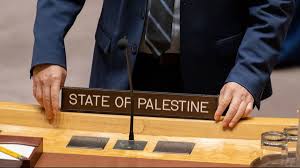
Symbolic States, Real Genocide: The Empty Politics of Palestine Recognition

The New Zealand government, like many others across the imperialist West, has refused to recognise a Palestinian state. At first glance, this appears to be a diplomatic slight or a moral failure. In truth, it is far deeper, it is the calculated refusal of a settler-colonial state to recognise the legitimacy of another colonised people’s struggle, precisely because doing so would expose the contradictions at the heart of its own existence. But while the refusal is damning, we must also reckon with a more sobering truth that even when states do offer recognition, it is little more than a symbolic gesture – a hollow act that does nothing to halt the bombs, lift the siege, or stop the machinery of genocide grinding on. Recognition without action is a cruel theatre of humanitarian concern, designed to pacify outrage while ensuring business as usual for empire.

Since 1988, over 140 UN member states have recognised the State of Palestine in some form. In 2012, Palestine was granted “non-member observer state” status at the United Nations, a symbolic victory after decades of lobbying. Yet in 2025, Palestinians remain stateless, occupied, and subject to one of the most violent genocides of the modern era. Recognition has not stopped the killing. Recognition has not ended the blockade of Gaza. Recognition has not secured the right of return for refugees. Recognition has not dismantled Israel’s apartheid laws or halted its expansion of illegal settlements.

Instead, recognition has been reduced to a diplomatic fig leaf. Countries such as Ireland, Spain, and Norway have made headlines by announcing recognition of Palestine, but their governments continue to trade with Israel and the corporations profiting from occupation. The European Union as a whole continues to treat Israel as a key trading partner, granting it access to markets and research funds. Even those states who present themselves as “friends of Palestine” refuse to enact the kinds of measures that could meaningfully challenge Israeli power: arms embargoes, sanctions, cutting of diplomatic and economic ties, or the expulsion of ambassadors.

The futility of recognition is that it leaves intact the very structures of global capitalism and imperialism that uphold Israeli apartheid. By recognising Palestine, Western states can signal virtue without challenging their military alliances, their corporations’ profits, or their own complicity in settler-colonial violence. It is not solidarity, it is performance.

New Zealand has consistently followed the lead of larger imperial powers in matters of international recognition. It has recognised Kosovo, South Sudan, and even Ukraine’s sovereignty claims, yet it refuses to recognise Palestine. The reason is not a mystery, recognition of Palestine is not just about international diplomacy, it is about admitting that colonised people have a right to resist and reclaim stolen land.

New Zealand, itself a settler-colonial project built on the dispossession of Māori, has no interest in affirming this principle. To do so would invite uncomfortable parallels with its own history of land theft, broken treaties, and ongoing colonial violence. A government that relies on the fiction of legitimacy over stolen land cannot afford to legitimise Palestinian claims to sovereignty. Recognition would shine too bright a light on the contradictions of Aotearoa’s own foundations.

Successive governments, Labour and National alike, have hidden behind the rhetoric of “supporting a two-state solution,” while refusing to take the step of recognising Palestine as a state. This duplicity serves two purposes. First, it allows New Zealand to maintain its loyalty to the United States, its primary imperial ally. Second, it avoids alienating the business and military interests tied to Israel and its Western backers. New Zealand’s military companies profit from involvement in weapons development; its intelligence networks are linked into the Five Eyes alliance that shields Israeli crimes. Recognition would be a symbolic rebuke to these interests, and so it is avoided.

The refusal of recognition is obscene, but there is a further obscenity – the idea that recognition, even if granted, could matter in the midst of genocide. Since October 2023, Israel has unleashed unrelenting mass killing in Gaza, bombing homes, schools, hospitals, and refugee camps. The death toll has risen into the hundreds of thousands. Famine, displacement, and disease are the daily reality for survivors. International law has been shredded, and yet no state has intervened to stop the massacre.

What would recognition mean in this context? Would a proclamation from New Zealand or any other government bring back the dead, rebuild the rubble, or open the borders for aid? Clearly not. Recognition during genocide is not liberation, rather it is a sickly moral gesture that allows governments to pretend they have done “something” while the killing continues unchecked.

If recognition had any weight, the dozens of states that have recognised Palestine since 1988 would have already transformed the material conditions of occupation. Instead, recognition has been powerless precisely because it was never intended to be power. It is designed to look like solidarity while ensuring nothing fundamental changes.

Recognition without action is worse than nothing, because it obscures the machinery of complicity. States that recognise Palestine while continuing to fund, arm, and trade with Israel are enablers of genocide. The United States sends billions in military aid every year. Germany exports weapons that are used to bomb Palestinian civilians. Britain provides diplomatic cover at the UN. Australia trains alongside Israeli forces. New Zealand, though smaller, is tied into this web through its alliances and intelligence networks.

Every state that claims to support a “peace process” while maintaining ties to Israel is complicit. Every state that recognises Palestine without imposing sanctions or embargoes is complicit. Recognition is not solidarity; solidarity would mean dismantling the political and economic systems that enable occupation. Recognition is not resistance; resistance would mean arming boycott movements, cutting trade, and isolating Israel as a pariah state. Recognition is not liberation; liberation can only come from below, from the struggles of Palestinians themselves, supported by international movements of workers, students, and communities.

The question of recognition cannot be separated from the realities of Aotearoa. This country was built on the dispossession of Māori land, the imposition of foreign law, and the suppression of Indigenous resistance. To this day, Māori face structural violence in housing, health, education, and the justice system. The state that refuses to recognise Palestine is the same state that refuses to honour Te Tiriti o Waitangi in substance.

Solidarity with Palestine in Aotearoa cannot be limited to calls for governmental recognition. It must mean confronting the settler-colonial structures here at home. It must mean standing with Māori struggles for tino rangatiratanga, land back, and sovereignty. The refusal to recognise Palestine is not an aberration, it is consistent with a settler state that denies Indigenous rights everywhere.

If recognition is futile, what then is the path forward? For anarcho-communists, the answer is clear: liberation will not come from the recognition of states but from the destruction of states, empires, and the capitalist system they defend. Palestine will not be free because Ireland or Spain or New Zealand declares it so. Palestine will be free when the people of Palestine, supported by global solidarity movements, dismantle the systems of occupation and apartheid that oppress them.

This requires building movements of boycott, divestment, and sanctions from below. It requires disrupting the flow of weapons, money, and political legitimacy to Israel. It requires solidarity strikes by dock workers refusing to load arms, by students occupying campuses to demand divestment, by communities blockading military shipments. It requires connecting the struggle in Palestine to all struggles against colonialism, racism, and exploitation.

Recognition is empty; direct action is power. Recognition is symbolic; material solidarity is transformative. Recognition keeps faith in governments; liberation requires their overthrow.

The New Zealand government’s refusal to recognise Palestine is a mark of cowardice and complicity. Yet even if it were to grant recognition tomorrow, the futility of such a gesture would remain. Recognition does not stop bombs, lift sieges, or return land. It is a hollow act, designed to placate outrage while preserving empire.

The path to Palestinian liberation does not run through parliaments or ministries. It runs through the streets, the workplaces, the universities, and the fields where ordinary people confront the machinery of imperialism. It runs through the linking of struggles – Māori sovereignty in Aotearoa, Black liberation in the United States, Indigenous resistance in Latin America, and anti-imperialist movements worldwide.

Palestine will not be free when governments say it is a state. Palestine will be free when the people overthrow apartheid, and when the global system that sustains it is brought down. Recognition is not liberation. Liberation is struggle. And it is only through that struggle, everywhere, that the chains of empire can be broken.
Fight the Power: Aotearoa’s Struggle Against Authority, Capital, and Colonialism

Fight the power” is more than a slogan. It’s a lifeline. A declaration. A refusal. It’s the rallying cry of the dispossessed and defiant. In Aotearoa, it means confronting every institution built on theft, control, and exploitation—from the colonial state to the capitalist system, to the social hierarchies that divide us.

The Power We’re Fighting

To fight the power is to understand it. The power we oppose in Aotearoa didn’t arrive by accident or evolve peacefully, it was forged through violence, cemented by colonisation, and polished into “respectability” through the institutions of state, law, education, and media.

In Aotearoa, power wears a number of faces: the Crown, the police, Parliament, capital, the landlord class, the boss. But its structure is always the same – some rule, most obey. It is enforced from above and justified with myths: that it’s inevitable, that it’s for our own good, that it’s democratic, even benevolent.

But power in this system means the right to hoard land stolen from tangata whenua. It means landlords profiting off a housing crisis while whānau sleep in cars. It means police shooting young Māori men and then being “investigated” by their mates. It means an economy designed not to meet human need but to produce endless growth for the few while the many go hungry, cold, and overworked.

It means people are told they’re failures when they can’t survive a system designed to fail them.

To fight the power is to unmask this system and burn away the illusion of neutrality.

Colonisation Was the Original Power Grab

The colonial state didn’t arrive with democracy. It arrived with rifles, missionaries, and contracts written in bad faith. Te Tiriti o Waitangi was supposed to establish a partnership. Instead, it became the legal smokescreen for land theft, militarised invasion, and economic domination.

In the 1800s, Māori land was stolen under the guise of “civilising” missions. But the real mission was profit. Māori were forced off their whenua so settlers could plant sheep and wheat for the Empire. When iwi resisted, the Crown sent in troops. Resistance was met with massacres. Mana motuhake was criminalised. Indigenous authority was replaced by British law. Tino rangatiratanga was ignored.

Colonisation isn’t just a historic event—it’s a present-tense system. It lives on in state structures that still deny Māori sovereignty. In prisons disproportionately filled with Māori. In urban planning that displaces Māori communities. In the exploitation of Māori labour and the suppression of tikanga in schools and workplaces.

Anarcho-communism in Aotearoa must begin with decolonisation. Not as a metaphor, but as a practical, ongoing process of dismantling Pākehā authority and returning land and power to Māori.

Fighting the power in this context means refusing to play the role of the “good settler” and instead standing in solidarity with indigenous resistance movements. It means recognising that our liberation is bound up with theirs, and that without land back, there is no justice.

The Police Protect Power, Not People

Let’s be clear: the police are not neutral. They were created to protect property and enforce colonial control, not to keep people safe. In fact, the first New Zealand police forces were established to suppress Māori resistance in the mid-1800s. Their mission hasn’t changed.

Every time the cops evict a family from a Kāinga Ora home, arrest a protester, or shoot a young Māori man, they are enforcing capitalist and colonial order. Every time they patrol poor neighbourhoods instead of investigating corporate tax fraud, they remind us who they really serve.

Police violence is not an aberration. It’s the system working as intended.

Calls to “reform” the police misunderstand their purpose. You can’t reform a colonial militia. You abolish it. You defund it. You dismantle the carceral state and replace it with community-led approaches to harm, justice, and safety.

Real safety comes from solidarity, not surveillance. It comes from housing, health care, kai sovereignty, and connection—not from tasers and tear gas.

Capitalism Is the Daily Power Drain

Capitalism is the great battery of power. It drains us of our time, our health, our energy to charge the bank accounts of the rich.

Every week in Aotearoa, thousands of people wake up exhausted, anxious, and dreading work they hate. Not because they’re lazy. Because the economy demands they trade their lives away for survival. Rent, debt, food, bills, these aren’t just costs. They’re chains.

The average wage doesn’t cover the cost of living, and benefits are kept below the poverty line by design. Meanwhile, the 1% accumulate wealth at a rate that would make even colonial governors blush.

Capitalism turns need into profit. You need housing? Here’s a landlord who’ll drain half your income. You need food? Here’s a supermarket cartel price-gouging your weekly shop. You need work? Here’s a boss who’ll surveil your bathroom breaks and fire you for being late.

There is no ethical capitalism. There’s no just version of wage labour. Capitalism is structured around coercion. You work or you starve. You rent or you freeze.

Fighting the power means fighting capitalism. Not by appealing to Labour governments or “kind capitalism” or ESG investing. But by building dual power: co-ops, mutual aid networks, food forests, tenant unions, worker solidarity networks. Every moment we reclaim from profit is a moment of real freedom.

The Power of Patriarchy and White Supremacy

Domination doesn’t only come from above; it’s also reinforced laterally between us. Patriarchy and white supremacy are systems of control that fracture our class, our resistance, and our capacity to build collective futures.

White supremacy in Aotearoa is not just in slurs and swastikas. It’s in who gets the job. Who gets listened to. Who gets stopped by police. Who has access to intergenerational wealth and who has trauma from generations of dispossession and violence.

Likewise, patriarchy is in the power imbalance in relationships, the undervaluing of care work, the expectation that women and gender-diverse people must manage emotion, keep the peace, and clean up the mess created by men trained to dominate.

To fight the power means confronting these systems not just in society, but in ourselves. It means decolonising our relationships. Unlearning dominance. Learning to listen, to be accountable, to be soft where we were taught to be hard.

Anarcho-communism is a relational politics. Our goal is not just to destroy hierarchy but to build new, liberated ways of being that are non-hierarchical, feminist, anti-racist, queer-affirming, interdependent.

Parliament Is a Power Trap

Every election cycle, the system dusts itself off and asks for your trust. Parties pitch their platforms. Billboards go up. Promises are made. And then nothing really changes.

Housing gets worse. Benefits stagnate. Prisons expand. Police budgets grow. The climate burns. The left tells you to vote harder. But Parliament is not where power lives. It’s where resistance goes to die.

Even the most well-meaning MPs are caught in the machinery of a settler-capitalist state. The job of Parliament is to manage capitalism and maintain order. The job of radicals is to smash that order and build something better.

That doesn’t mean doing nothing. It means building outside the ballot box. Strikes. Occupations. Direct action. Autonomous spaces. Land back. It means organising in ways that can’t be bought off, silenced, or co-opted.

The state will never give us liberation. We take it, together, from below.

The Power of Solidarity

Fighting the power is not a solo mission. It’s collective. Power isolates. Solidarity unites.

We build power not through hierarchy, but through horizontal organising. Not through charismatic leaders, but through shared responsibility. Not through control, but through consent.

In every tenancy union that forces a landlord to back down, every picket line that wins higher pay, every decolonial hui that reclaims tikanga from colonial erasure, we see it. Real power lies with the people. When we move together, we can’t be stopped.

Mutual aid, too, is a revolutionary act. Not because it’s charity—but because it decentralises care, redistributes resources, and reminds us of our collective strength. Every community fridge, every radical childcare collective, every zine distro, every seed bank – these are the seeds of the world we want.

The revolution won’t look like a Hollywood explosion. It will look like a thousand hands sowing liberation together.

The Power of Refusal

Sometimes, the most radical thing you can do is say no.

No to the boss who wants you to work unpaid overtime.
No to the cop who asks where you’re going.
No to the landlord who raises your rent.
No to the state that wants to register, track, and control you.
No to the inner voice that says you’re alone, powerless, or crazy for dreaming of something better.

Refusal is a muscle. The more we practice it, the stronger we become.

We refuse to be cogs in their machines.
We refuse to be soldiers for their wars.
We refuse to be obedient voters in their rigged games.

We refuse to live lives defined by their violence.

The Power We Build

To fight the power is to build another one in its place. Not a copy. Not a new party or ideology. But a whole new logic – one based on autonomy, mutual aid, direct democracy, and care.

It’s a slow, messy, beautiful process.

We build worker co-ops where profit doesn’t dominate.
We build community housing on stolen land returned.
We build free clinics where care isn’t rationed.
We build schools where curiosity thrives, not compliance.

We build with the understanding that liberation is not a future destination—it’s a way of moving now.

Final Words

“Fight the power” is not just a slogan to chant. It’s a lens. A practice. A politics of refusal and creation.

In Aotearoa, it means fighting the colonial state, the capitalist economy, the gendered and racialised violence that props it all up—and building something else from the ground up – a society without prisons, without landlords, without bosses, without borders.

We fight not because we believe we will win overnight.

We fight because we cannot unsee what this world does to the people we love.

We fight because we believe, deeply, in each other.

We fight the power—because the power has never fought for us.