Digital ID – The New Chains of Capitalist Surveillance

The world is entering an era where identity is no longer a matter of personal relationships, lived experience, or even paperwork. Increasingly, it is reduced to biometric scans, algorithmic verification, and digital tokens. Across the globe, governments and corporations are rolling out digital identification systems, facial recognition passports, biometric driver’s licences, app-based vaccine passes, QR-coded welfare access, and unified digital wallets. The language that accompanies these projects is familiar – efficiency, convenience, modernisation, inclusion. We are told that digital ID will make life easier, reduce fraud, and open new opportunities.

The reality, however, is far more sinister. Identification has never been neutral, it has always been a weapon of power, wielded by states and capitalists to monitor, control, and discipline populations. From passports to colonial passbooks, from welfare cards to border regimes, the apparatus of identification has always been tied to domination. Digital ID is simply the latest iteration of this long history, but with a scale and sophistication that makes its dangers even more profound. Far from liberating us, it is forging new chains and binding us more tightly to systems of surveillance, exclusion, and exploitation.

Identification as Domination

To grasp what digital ID represents, we must situate it within the longer history of identification as a tool of authority. The passport, now normalised as a necessary object of travel, was originally a way for states to restrict movement. In medieval Europe, peasants and serfs required written permission to leave their estates. Colonial regimes across Africa, Asia, and the Pacific perfected these systems of control, forcing indigenous people to carry passes while settlers roamed unhindered. In apartheid South Africa, the “pass laws” criminalised Black South Africans for existing outside their assigned zones, reducing life itself to a bureaucratic calculation of permission.

Identification has never been about protecting the individual; it has been about protecting property relations. States have needed to know who people are in order to tax them, conscript them, and deny them rights. Employers demanded papers to guarantee that workers were legally exploitable. Landlords used identification to screen tenants, banks to gate-keep credit, police to track dissenters. The notion of “identity” under capitalism has always been bound up with surveillance and discipline.

Digital ID does not break from this tradition but it intensifies it. What once required a physical stamp or signature now demands a biometric scan or QR code. Where once a police officer demanded to see your papers, now an algorithm silently determines your access. The shift is not from control to freedom, but from analogue domination to digital domination.

The Logic of Digital ID

Behind the rhetoric of convenience lies the hard logic of capital and the state. Digital ID is not being built for us, it is being built to extend the power of those who already govern our lives.

At its core, digital ID represents the enclosure of access. Increasingly, the essentials of life, healthcare, housing, employment, welfare, travel, are gated behind digital checkpoints. Without the correct identification, people are excluded. This transforms existence itself into a series of permissions, each mediated by algorithmic verification. Access to food, shelter, or work becomes conditional on whether a machine recognises your fingerprint or face.

It also expands surveillance capitalism. Every scan, swipe, or login generates data. This data is stored, tracked, and monetised. Digital ID reduces human beings to data streams, feeding the profits of corporations like Microsoft, Mastercard, and Accenture, companies deeply embedded in global ID initiatives. Far from empowering individuals, digital ID empowers corporations by turning our lives into commodities to be sold.

Digital ID also disciplines labour. By tying welfare payments, work permits, or banking access to digital identity, states and corporations acquire powerful new tools to coerce populations. In India, the Aadhaar biometric system has left millions excluded from rations and pensions when fingerprints failed to scan, producing not efficiency but hunger. Migrant workers across the world are increasingly monitored through digital verification, making precarious labour even more vulnerable.

Perhaps most insidiously, digital ID normalises surveillance itself. By embedding digital checkpoints into daily life, whether entering a building, logging into a service, or accessing healthcare, surveillance becomes routine. What once might have provoked outrage becomes ordinary. Control does not need to be imposed violently when it is integrated seamlessly into the everyday functions of existence.

The consequences of digital ID are not abstract. Around the world, its implementation reveals the sharp edges of exclusion and control.

As already mentioned India’s Aadhaar project, the largest biometric ID system in history, covers over a billion people. It was presented as a means of reducing corruption and expanding access to welfare. In reality, it has excluded millions of poor and rural people from food rations and pensions because their fingerprints did not register. Reports have documented starvation deaths when families were denied grain for lack of proper authentication. For the poor, the system is not convenience, it is a death sentence.

In Europe, digital ID takes a different but equally insidious form. The EU is developing a unified “digital identity wallet” for banking, healthcare, and travel, promoted as freedom for citizens. At the same time, the Eurodac database stores the fingerprints of asylum seekers to enforce deportations and prevent secondary movement. Digital ID here is double-edged, advertised as seamless mobility for the privileged, but functioning as chains for migrants.

Across Africa, the World Bank and multinational corporations are funding digital ID projects under the guise of “financial inclusion.” Tied to mobile money systems, these IDs are less about inclusion than about expanding debt markets and integrating populations into circuits of extraction. They replicate colonial practices where identification was a prerequisite for resource exploitation and labour discipline.

In settler-colonial states like New Zealand and Australia, digital driver’s licences and facial recognition technologies are being trialled under the language of security and convenience. But both countries maintain extensive databases of their populations, and both have long histories of surveillance and repression against indigenous peoples and political activists. Digital ID here strengthens existing patterns of racialised and political control, embedding them in everyday transactions.

The Role of the State

For anarchists, it is no surprise that the state is at the centre of these developments. The state has never been a neutral provider of services. It is a machinery of class rule, designed to enforce property relations and maintain hierarchy. Digital ID offers the state new levels of efficiency in population management. Welfare can be rationed through digital checkpoints, ensuring that only the “deserving” poor receive aid. Policing is strengthened through biometric databases, making dissent and protest more dangerous. Borders become omnipresent, extending into every workplace, clinic, and street corner. Even the ritual of voting is increasingly tied to digital verification, further legitimising the state’s hold.

But the state does not act alone. The infrastructure of digital ID is outsourced to corporations, tech giants and consultancy firms whose profits depend on extracting and selling data. ID2020, the flagship global digital ID initiative, is a partnership between Microsoft, Accenture, Gavi, and Mastercard. This fusion of state power and corporate capital creates a techno-bureaucratic regime that is incredibly difficult to resist at the level of the individual. It is not simply your government demanding your data, it is a web of global corporations embedding control into the infrastructure of daily life.

Resistance and Its Possibilities

And yet, systems of domination are never total. The chains of digital ID can be resisted, but the struggle requires collective defiance. Individuals cannot simply opt out when access to food, housing, or healthcare is increasingly contingent on digital verification. Resistance must be social, coordinated, and rooted in solidarity.

It begins with exposing the lie of convenience. The marketing of digital ID depends on people believing it is in their interests. By revealing its function as surveillance, exclusion, and profit-making, we can puncture the narrative that it is a neutral technological advance. Convenience is the sugar that coats the poison pill.

Resistance also means standing with those most affected by exclusion. When people are denied access to food or healthcare because a machine rejects them, solidarity demands that communities step in. Mutual aid networks, food distribution, and grassroots healthcare can undermine the state’s monopoly on survival. By caring for each other without demanding documents, communities demonstrate the possibility of life beyond identification.

Direct action has its place as well. Surveillance infrastructure can be disrupted, whether through physical sabotage, digital hacktivism, or leaks that expose the collusion of states and corporations. Every act that slows the expansion of digital ID chips away at its inevitability.

Perhaps most crucially, resistance means refusing to internalise the normalisation of surveillance. We must continue to feel anger each time a new checkpoint is introduced, each time a new biometric system is trialled, each time a new database is constructed. The greatest victory of power is not when it controls us, but when it convinces us that control is natural.

Digital ID is not a neutral innovation. It is the frontier of capitalist surveillance and state control. It deepens exploitation, excludes the vulnerable, and integrates every aspect of life into the machinery of profit and domination. Identification has always been a tool of authority, from medieval passes to apartheid laws, and digital ID is the most sophisticated form yet.

The ruling class wants us to believe digital ID is inevitable. But inevitability is the language of power. Systems of domination can be resisted, sabotaged, dismantled. The struggle against digital ID is not about nostalgia for the days of paper documents; it is about defending the very possibility of living without being constantly monitored, verified, and reduced to data.

What is at stake is not simply privacy, but freedom itself.

Trump’s Promise to Crack Down on the “Radical Left” Post–Charlie Kirk Shooting

On 10 September 2025, the political landscape of the United States was shaken when conservative activist Charlie Kirk was fatally shot during an event at Utah Valley University. The public reaction was swift and intense. President Donald Trump delivered a formal statement, decrying the violence as a “dark moment for America,” blaming what he termed the “radical left” for fostering an environment of incendiary rhetoric, and pledging measures to crack down on those he holds responsible. Trump’s words and actions in the wake of the tragedy have raised alarm bells among many, especially on the left. Trump’s promise is not merely about bringing a shooter to justice, it represents a broader shift towards authoritarian suppression of dissent, a red-baiting of progressive movements, and a tightening of state power that anarchists have long warned against.

Trump’s immediate reaction followed a familiar script of public grief, heroic framing, and blame. He said he was “filled with grief and anger,” that Kirk was a “tremendous person,” and called his killing “heinous” and “dark.” But while mourning publicly, he also issued pointed blame. The “radical left,” according to Trump, had created an atmosphere in which violence is normalised towards those on the right. In his words, “radical left” actors were comparing “wonderful Americans like Charlie to Nazis and the world’s worst mass murderers and criminals,” which he suggested contributed to political violence.

Beyond rhetoric, Trump did not stop at words. He has restated his intention to build on earlier measures designed to suppress what his administration calls subversive ideologies. Already in 2025, early in his second term, Trump signed Executive Order 14190, titled Ending Radical Indoctrination in K-12 Schooling, which bans educational material deemed “anti-American or subversive,” especially teachings related to critical race theory and “gender ideology.” In August 2025, he declared a crime emergency in Washington, D.C., federalising law enforcement there and deploying National Guard units, actions which the administration justified as an attempt to restore “safety” amid rising violent crime. The pieces were already in place. The Kirk tragedy has simply become the catalyst for promises of even more sweeping crackdowns.

To anarcho-communists, who advocate a society free from hierarchical, authoritarian structures, and in which people govern themselves democratically, a Trump crackdown against the “radical left” is deeply ominous. What might it look like?

1. Criminalisation of Dissent

   The history of modern American politics is replete with precedents. Black activists, anarchists, anti-war protestors, and labour organisers have been surveilled, infiltrated, and prosecuted, not for violence, but for dissent. Under such a crackdown, legal, and even extra-legal, tools could be used to define certain ideas, protests or organisations as “subversive.” Speech could be policed, universities censored, organisers arrested. The Executive Order on indoctrination already signals that schools and teachers may face legal consequences for teaching certain ideas.

2.Surveillance State Expansion

   In order to suppress what is labelled as “radical left,” the state must monitor it through social media monitoring, intelligence gathering, data mining of activist networks, infiltrating groups suspected of “extremist” leanings. Already, debates over what constitutes domestic extremism have created broad tools that can encompass many progressive or leftist actions.

3. Policing and Militarisation

   Deploying federal agents and the National Guard for political ends, often under the guise of crime control, can result in the militarisation of civil life. Police raids, mass arrests, checkpoint-style law enforcement, and heavier penalties for protest actions could become normalised. The conversion of political conflict into policing conflict is a set piece in the authoritarian playbook.

4. Targeted Suppression

   Not all “radical left” actors are the same – anarcho-communists, ecological activists, labour radicals, anti-imperialists. Trump’s framing tends to lump together all left-wing dissent in a way that makes specificity irrelevant. But practically, suppression might target groups that are militant, overtly revolutionary, or highly visible. Media outlets, collectives, unions, mutual aid networks, any visible organisation that does not conform, could come under official suspicion.

5. Chilling Political Culture

   Even without outright laws or arrests, the promise of repression chills speech. Teachers may self-censor, protestors may avoid engaging, organisers may be more cautious. Solidarity becomes risky. Activists might face social or legal ostracisation just for being affiliated with controversial causes.

From an anarcho-communist perspective, which seeks the abolition of hierarchy, capitalism, and coercive state power, Trump’s crackdown is not just another instance of political repression; it is a legitimation of deeper systemic violence.

  Anarcho-communism holds that the state is a tool of class power. Laws, police, and courts function to defend property rights and capital accumulation, not equitable justice. Under a crackdown, these tools disproportionately harm the working class, marginalised communities, and political dissidents. Trump’s promise furthers this inherent authoritarian impulse by expanding repressive apparatuses, legal, police, ideological, in the name of “law and order.”

  Trump blames left-wing rhetoric for violence after Kirk’s death, yet has previously supported rhetoric that demonises political opponents as existential enemies, dehumanising rhetoric that can serve as moral groundwork for repression. Trump’s blaming of alleged leftist rhetoric for violence, and simultaneous political mobilisation against the left, equates dissent with danger. This slippery slope often leads to punishment without proof. Who defines “radical left” anyway? Already Trump’s definitions, indoctrination, anti-American, subversive, are dangerously broad. Ideological labels are wielded to erase nuance and dissent. What begins as targeting “extremists” can rapidly expand to cover civil libertarians, anti-capitalists, radical ecologists, or anyone questioning the status quo.

  Anarcho-communism depends on horizontal structures: mutual aid, communal self-organisation, autonomous spaces independent of state or capitalist control. All these are vulnerable in a crackdown. Organisations rooted in community care, radical ecology, or direct action may be labelled extremist or subversive, and suppressed via legal harassment, funding cut-offs, or policing.

If the promises intensify into policy, as often happens, the ramifications are profound. Executive Orders like Ending Radical Indoctrination are already  in place and could be used as precedents to broaden definitions of subversion. Legal doctrines around “dangerous speech,” “national security,” or “public order” can be stretched.

  Once suppressive measures are introduced, they tend to outlast their initial pretext. Laws enacted under crisis often survive by bureaucratic inertia. Then surveillance, ideological policing, and militarised enforcement become normalised features of everyday life.

Trump’s promise to crack down on the “radical left” in response to the shooting of Charlie Kirk is more than a conventional political manoeuvre. It amplifies a discourse that conflates dissent with threat, ideology with violence, and invites state power to suppress voices it fears. For anarcho-communists, invested in a vision of society free from coercion and hierarchy, this moment should not merely be one of analysis, but of fierce mobilisation.

Why We Should Care Here

Some will say: “That’s America’s problem. It won’t happen here.” But we know better. Global capitalism is networked. Authoritarianism spreads. And our ruling class is always eager to import tools of repression from abroad. Anti-terror laws, protest bans, surveillance systems, they circulate between the US, the UK, Australia, and Aotearoa like products on the same supply chain.

Already, New Zealand politicians echo Trumpian rhetoric. They attack “radical activists,” “extremist protestors.” They frame anyone who questions capitalism or colonisation as a threat to “social order.” If Trump normalises a new Red Scare in the US, rest assured it will wash up on our shores.

The nightmare scenario is not inevitable. Resistance can push back, not only through protest, but by building alternative social relations, demystifying the language of repression, and refusing to internalise the frame that the state defines what is radical. When the ruling class centralises power under the guise of security, it is up to social movements to decentralise power, reaffirm autonomy, and confirm that dissent is not violence, but democracy refusing its chains.

Digital Licences and the New Panopticon: The Move to Smartphone IDs in Aotearoa

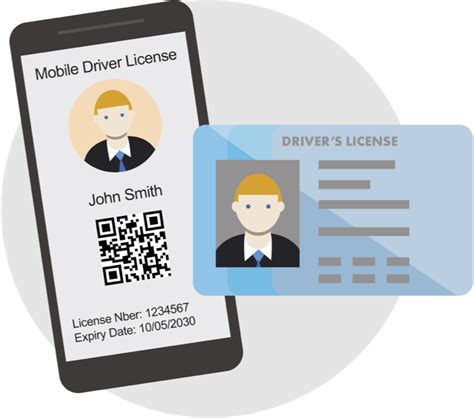
On 23 August 2025, the New Zealand Government announced that it would legislate to allow driver’s licences, Warrants of Fitness (WoFs), and certificates of fitness to be carried digitally on smartphones. For the first time, drivers will no longer be legally bound to keep a physical licence on them when driving. Prime Minister Christopher Luxon lauded the change as “a common sense thing,” while Transport Minister Chris Bishop celebrated New Zealand’s status as a global pioneer, boasting that this country would be among the first in the world to embrace fully digital licensing.

At face value, this appears to be a harmless modernisation – a reform designed to make people’s lives easier by reducing dependence on plastic cards and paper certificates. It is framed as an update that reflects the ubiquity of smartphones, the rise of digital wallets, and the growing impatience of a society accustomed to instant services. Yet as with many reforms dressed up in the language of efficiency and convenience, there is far more at stake. The digitisation of licences and WoFs is not a neutral step forward but a calculated extension of surveillance, exclusion, and state control under the guise of modernisation.

Digital licences are part of a broader project of normalising surveillance, deepening inequality, and further embedding capitalist and statist domination in everyday life. Apparent “progress” in the realm of digital governance must be treated with suspicion.

The Convenience Rhetoric – Efficiency Masking Control

The state’s central justification for introducing digital licences rests on convenience. Ministers speak of making life “easier,” aligning New Zealand with other technologically advanced countries, and saving citizens from the supposed hassle of carrying physical cards. Yet convenience has long been a rhetorical cloak for policies that in fact increase state oversight.

Carrying a plastic card may be mildly inconvenient, but it grants a measure of independence. A physical licence exists in your wallet, outside the control of any network, app, or database. It is vulnerable to being lost or stolen, but it is also tangible and self-contained. A digital licence, however, is never entirely yours. It resides in an app designed by the state in collaboration with private contractors, linked to databases beyond your control. Every time it is accessed or presented, a record can be generated, stored, and potentially cross-referenced with other information about you.

We need to be suspicious of reforms that increase the visibility of individuals to the state. As Michel Foucault’s analysis of the panopticon reminds us, surveillance does not need to be continuous to be effective. The knowledge that one could be watched at any time is enough to regulate behaviour. By moving licences and WoFs into digital systems, the state extends its capacity to watch, to record, and ultimately to discipline.

Surveillance in the Digital Age

The dangers of digital identity systems are not speculative. Across the world, we see how centralised databases and digital credentials become tools of authoritarianism. In India, the Aadhaar biometric ID system has been used to deny welfare to those who fail fingerprint scans, while in China, digital IDs integrate seamlessly into the wider “social credit” apparatus that punishes dissent and rewards conformity.

New Zealand is not immune from these dynamics. Once the infrastructure for digital licences is built, it becomes relatively simple to integrate it with other state systems – benefit records, voting enrolments, even health data. What begins as a “driver’s licence on your phone” can evolve into a full-spectrum digital ID. This is the logic of scope creep, in which technologies introduced for limited purposes expand into wider domains of control.

Supporters argue that digital systems increase security, but security for whom? For the state, digital records create more reliable trails of evidence, more opportunities to cross-check compliance, and more ways to punish non-conformity. For citizens, however, they mean less privacy, less autonomy, and a deepening sense that one’s movements and activities are permanently recorded.

The Digital Divide and Structural Exclusion

Another aspect neglected in the Government’s triumphant rhetoric is the question of access. Digital licences presume that every citizen owns and can operate a smartphone capable of running government apps. Yet this is far from true.

Low-income families, elderly people, rural Māori and Pasifika communities, and those who simply cannot afford constant device upgrades risk being excluded. While the Government insists that digital licences will be an option, the reality of social expectation and bureaucratic inertia is that physical licences will soon be sidelined. Once police officers, rental agencies, or even nightclubs grow used to checking digital credentials, those without them will find themselves marginalised, regarded as backward, or even treated as suspicious.

From an anarcho-communist perspective, this reveals the class nature of digital reforms. Technologies presented as universally beneficial often reinforce existing inequalities. The wealthy, connected, and tech-savvy gain additional convenience, while the marginalised are forced into new layers of exclusion. This reflects the logic of capitalism itself – reforms that appear progressive on the surface conceal their real function of stratifying society and entrenching hierarchies.

Corporate Capture and the Commodification of Identity

No digital system operates in isolation from capitalism. Developing and maintaining the infrastructure for smartphone licences will inevitably involve private contractors, cloud providers, and app designers. The state presents the rollout as a neutral act of governance, but in reality it is another transfer of public dependence to private capital.

Corporations benefit in two ways. First, through direct contracts to design and maintain the systems. Second, and more insidiously, through the monetisation of data. Once people’s identities are digitised, the temptation to link them with consumer behaviour, financial transactions, and social media activity becomes immense. Even if New Zealand’s government swears to protect data, we know from countless international examples that privatisation by stealth soon follows.

The commodification of identity, where our very capacity to move, drive, or prove who we are becomes a profit centre, is utterly at odds with anarcho-communist principles. Identity should be a common resource, held in trust by communities, not a product managed by states and exploited by corporations.

Fragility and Dependence

Proponents of digital licences often argue that they are “more secure” than physical cards. Yet this overlooks the fragility of digital systems. Smartphones run out of battery, apps crash, servers go offline, and systems can be hacked. A plastic card does not depend on Wi-Fi, 4G coverage, or the latest OS update.

Digital dependence is not resilience, it is vulnerability. By tying essential credentials to devices and networks, the state makes citizens more dependent on fragile infrastructures that can and do fail. This fragility is often downplayed in the rush to appear modern, yet it will be the public who bear the cost when outages or cyber-attacks occur.

Resilience lies in decentralisation, not in brittle centralised systems. A physical licence, however imperfect, embodies a kind of autonomy that digital systems cannot replicate.

The Myth of Technological Leadership

Minister Bishop boasted that New Zealand would be among the first in the world to implement such a system. This pride in being an early adopter is revealing. The state frames technological acceleration as inherently virtuous, as though being first confers moral superiority. Yet being first to adopt a flawed or authoritarian technology is not a triumph but a danger.

Technological hubris leads governments to adopt systems before their risks are fully understood. By the time negative consequences emerge, the system is already embedded, and reversal becomes politically and technically difficult. This is the path dependency of digital governance, once society is locked into an infrastructure, it becomes almost impossible to opt out.

Rather than rushing to be first, a genuinely emancipatory politics would ask whether such systems are needed at all, and whether they truly enhance human freedom.

Towards Alternatives: Community-Centred Identity

If society requires systems of identity and accountability, they must be built from the ground up in ways that protect autonomy rather than erode it. Community-issued credentials, overseen by local collectives rather than centralised states, offer one possibility. Such systems could be physical or digital but must remain open-source, transparent, and non-commodified. Instead of being managed by corporations, identity could be treated as a commons, owned and governed collectively.

Equally, communities could experiment with non-identitarian methods of accountability. Rather than proving identity through documents, individuals could be recognised through relationships of trust, mutual responsibility, and local accountability. These may appear impractical in the context of modern nation-states, but they remind us that bureaucratic identity systems are not natural or eternal. They are historical constructs that can be resisted, dismantled, or replaced.

Resistance and Praxis

How, then, should anarcho-communists respond to the rollout of digital licences? Resistance must operate on multiple levels.

First, there is the work of education and agitation by exposing the real dangers of digital IDs and challenging the narrative of convenience. This means writing, speaking, and organising within communities to ensure people see beyond the government’s glossy rhetoric.

Second, there is the demand for genuine choice – that physical licences remain permanently available, with no penalty or stigma for using them. Any attempt to phase out physical options must be resisted as coercion.

Finally, we must connect this issue to the wider struggle against surveillance capitalism and state power. Digital licences are not an isolated reform but part of a continuum of control that includes facial recognition, biometric passports, and algorithmic policing. Only by linking these struggles together can we mount an effective resistance.

The Government’s proposal to allow driver’s licences and WoFs to be stored on smartphones has been heralded as a pragmatic modernisation, a step toward convenience in a digital world. Yet beneath this rhetoric lies a far more troubling reality. Digital licences deepen surveillance, reinforce inequality, transfer public functions to private capital, and render citizens dependent on fragile technologies.

These developments are not neutral. They are extensions of a broader system in which the state and capital collaborate to regulate and commodify everyday life. The convenience narrative obscures the erosion of autonomy, the deepening of exclusion, and the entrenchment of hierarchical power.

We must therefore reject the framing of digital licences as a “common sense” reform. Instead, we should see them as another frontier in the struggle between liberation and control. Our task is not merely to criticise but to resist, to imagine alternatives, and to build systems rooted in community, autonomy, and mutual aid.

The state wants us to believe that progress lies in carrying our identities in our pockets, ready to be displayed at the tap of a screen. We must insist that true progress lies elsewhere – in dismantling the apparatus of surveillance and building a society in which identity is not a weapon of control but a shared resource of freedom.